Fresh-Cut vs. Pre-Cut Sod: Why Harvest Timing Makes or Breaks a Florida Lawn
Fresh cut sod in Florida beats a pallet that sat overnight. Here is why harvest timing decides whether your Tampa Bay lawn roots or browns.
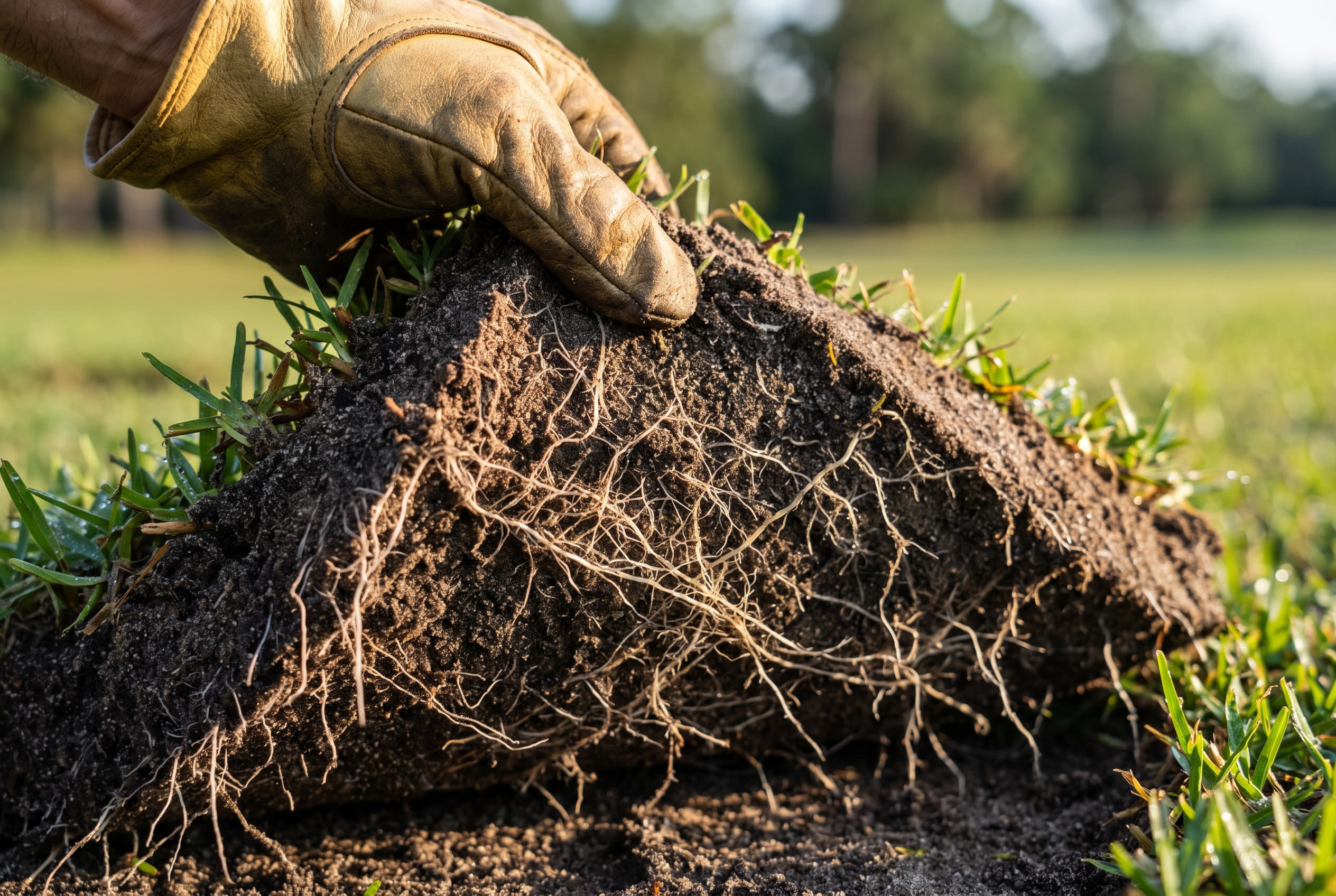
Fresh cut sod in Florida gives you a real advantage over a pre-cut pallet that sat overnight at a depot, and the reason is simple: sod is a living, perishable crop, and the clock starts the moment it leaves the field. A pallet cut this morning still has its stored sugars and its color. A pallet cut yesterday and trucked around in the heat has already started spending both. That gap is invisible in the driveway. It shows up three weeks later, in whether your lawn knits down or browns at the seams.
We are a family-owned sod crew working out of the Riverview and Wimauma area, and this is the single most common thing we explain when a homeowner is comparing two quotes. The sod can look identical on paper. What separates them is harvest timing, and that is worth understanding before you sign anything.
What “cut to order” actually means at the farm
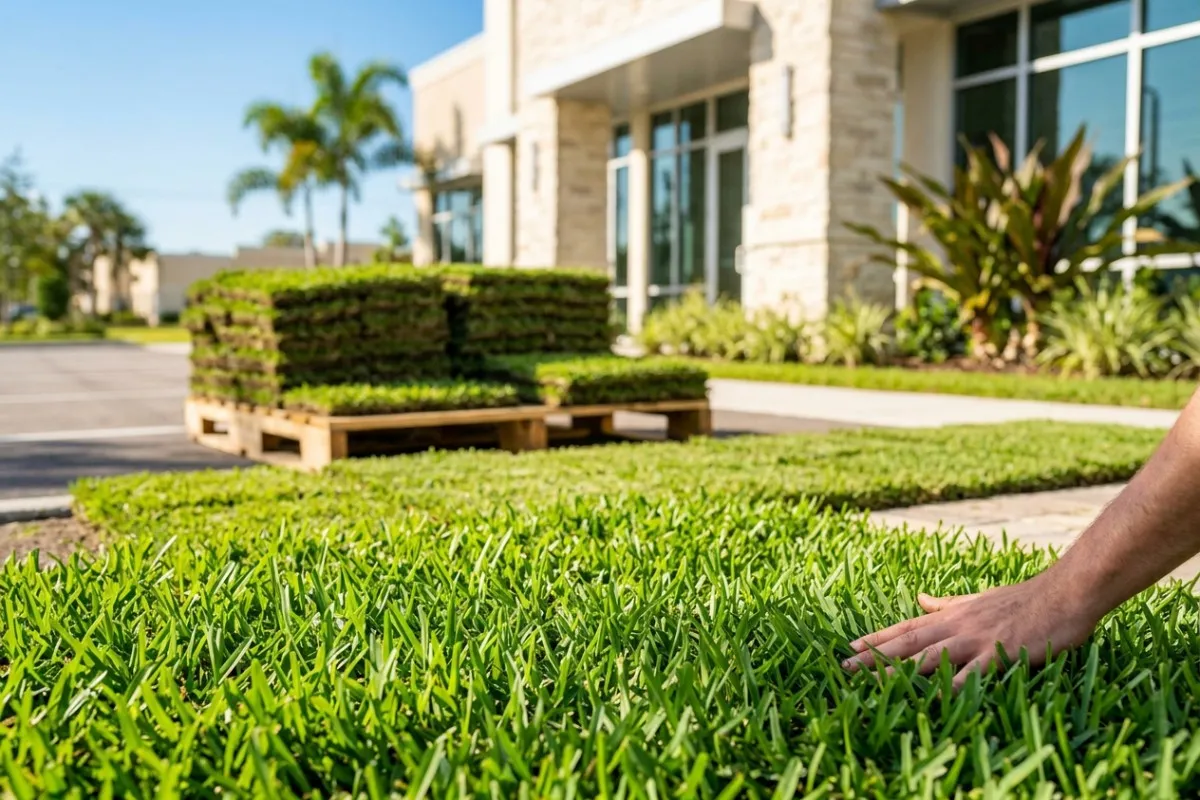
Sod is not sitting in a warehouse waiting to be sold. It grows in the ground until someone orders it, and only then does the harvester roll through and cut it. Reputable growers cut to order, on the day of delivery, because the crop starts declining the instant it is separated from the field (CT Sod).
That model has real logistics behind it. A single pallet of sod runs roughly 2,800 to 3,000 pounds and covers about 450 square feet, and wet sod can weigh 50 percent more (The Grass Outlet). Multiply that across a full truckload and the tight schedule explains itself. Harvester to flatbed to your property, in hours. There is no retail middle step, no stack baking on hot asphalt while it waits for a buyer.
When we order for a Brandon or Apollo Beach install, that same discipline is why we cut fresh right before we lay it. The sod we install is sand-bottom sod, and we time the harvest to the install so the window between the two stays short.
How long can sod sit on a pallet before it goes bad?
Short answer: not long. Far shorter in a Florida summer than the internet’s tidy “24 to 48 hours” suggests, because that range quietly assumes the mild spring or fall weather most of the country enjoys. In summer heat above 80 degrees, sod begins declining within 6 to 12 hours and is often past saving after 24 (CT Sod). UF/IFAS gives installers the same instruction: lay sod within roughly 24 hours of harvest (UF/IFAS ENH03/LH013). Half a day, not two.
The mechanism is worth picturing. A stacked pallet is an insulated box. All that living tissue is still respiring, burning stored sugars and throwing off heat, and with 40-plus slabs pressed tight against one another there is nowhere for that heat to escape and no light for the grass buried in the middle. Core temperatures inside a pallet can climb past 100 degrees within hours in full sun (CT Sod). Starved of light, the middle slabs start burning through their reserves. By 48 hours the chlorophyll has broken down and the yellowing sets in from the inside out, long before it reaches the surface you can see.
If a pallet ever has to wait, you can slow the clock without stopping it. Break the stack down into single layers, move them into shade, and keep the soil side damp. The worst case is a full pallet left banded and baking in open sun, cooking itself from the core out. Even done right, you are buying a few hours, not another day.
None of that shows on the top slab, which is exactly the problem. The piece you inspect at delivery is the healthiest one on the pallet. It is also the only one you get to inspect.
Why fresh cut sod in Florida outperforms a pallet that sat
Tampa Bay is the hardest place in the country to cut corners on this. We sit in USDA hardiness zones 9b to 10a with a growing season near 330 days (USDA Plant Hardiness Zone Map), which is wonderful for a lawn once it is rooted and brutal on a pallet before it is.
Our summers pair high heat with high humidity, and that combination does two things to sitting sod. The heat accelerates respiration, so the crop spends its stored energy faster. Then the trapped moisture and warmth invite the microbial activity and fungal pressure we already fight in Florida’s rainy season, so a pallet that sat overnight can arrive already stressed and already yellowing at the core, primed for the disease pressure a new lawn cannot afford. Here is the cruel part. A stressed slab still greens up for a few days after it is laid, which fools people. Then its thin reserves run out before new roots take hold. That is when the browning starts.
A slab cut that morning skips the entire decline curve. It goes into your graded soil with full sugars and full color, and it puts its energy into rooting instead of surviving the pallet. On sandy Central Florida soil, where the goal is deep roots in that critical first year, the head start is the whole game.
How our crew reads peak-health sod versus stock that sat
Field experience fills the gap that a delivery photo cannot. We handle fresh sod constantly, so the crew reads a slab by feel before it ever goes down. A few of the tells we check on every job:
- Temperature in the hand. Peak-health sod is cool and damp through the slab. A pallet that has been sitting runs warm in the core, and warm sod is a warning.
- Color under the top layer. We look past the green top and check the blades pressed inside the stack, where yellowing shows up first.
- Root and soil moisture. Fresh sod holds together with moist soil clinging to living white roots. Sod that sat pulls apart dry and crumbly, and the roots have started to gray.
- Smell. A sour, composting odor means the microbes have already gone to work inside the pallet.
That last one is the most honest test. Healthy fresh sod smells like cut grass and clean soil. Sod that cooked smells like a mistake, and no amount of watering brings it back once the core has gone anaerobic. We would rather send a bad pallet back than lay it and hope.
Same-day sod installation and the short window
The real reason we push same-day sod installation is not marketing. It is the only way to keep the harvest-to-ground window inside the range where the crop stays at peak health. Most residential projects across Valrico, Riverview, and Sun City Center wrap in a single day, and we sequence the harvest so the sod arrives and goes down before the afternoon heat can touch it.
That sequence is deliberate. We grade and prep the soil first, confirm your water is ready, then lay and roll the fresh slabs the same day they were cut, and start the first deep soak before we pull out. If you want to see exactly how that unfolds from the driveway, we walk through it step by step in our guide to what happens on install day. The short version: dirt in the morning, rooted-in grass by the time you get home.
This is also why we are cautious about big guarantees built around sod that was never fresh. When a seller offers a broad warranty on a lawn, ask what happened to that sod between the field and your yard. Harvest timing decides more about the outcome than any warranty language ever will.
The question to ask any sod provider
One question sorts the good from the risky. When was this sod cut, and how long between the field and my yard? A provider running fresh cut sod in Florida the right way answers plainly, because the schedule is the product. A vague answer means the pallet spent a night somewhere warm.
Planning a new lawn across Hillsborough or Manatee County? We will walk your yard and map out a same-day install. That part we refuse to rush.

Fresh-cut sod installation, replacement, and delivery in the Tampa Bay area.
Continue reading
How Florida Sod Is Grown, and Why Freshness Matters
How sod is grown in Florida, from field soil to fresh-cut pallet, and why the harvest-to-install window decides whether your lawn roots or struggles.
Sod Delivery Day in Tampa Bay: How to Prepare Your Property Before the Pallets Arrive
Sod delivery preparation in Tampa Bay, step by step: clear crew access, stage 3,000-lb pallets safely, and moisten soil so fresh sod goes down fast.
Commercial Sod Supplier in Tampa Bay: A Buyer's Guide
Choosing a commercial sod supplier in Tampa Bay: volume logistics, pallet yield math, species specs for high-traffic turf, and realistic warranty terms.