Golf-Course Turf at Home: High-Performance Sod Varieties for Active Tampa Bay Yards
The high-performance sod varieties Tampa Bay active yards need, measured against the golf-course standard for wear and recovery. Our honest read.
The high-performance sod varieties Tampa Bay yards need when dogs and kids run them hard are the same two grasses that carry golf-course traffic: hybrid Bermuda and Zoysia. Both spread by runners, so they knit worn ground closed on their own. That is the whole trick behind a lawn that still looks good in August. We are a family-owned crew, and plenty of the yards we walk across Riverview and Brandon get used like small ballfields. This guide borrows the standard a golf-course superintendent uses to pick turf, then walks you through applying it to your own lot.
Tampa Bay sits in USDA Hardiness Zones 9b-10a, and every grass worth considering here is warm-season, growing most actively from spring through fall (UF/IFAS). Our winters stay mild. Sod roots into local soil in nearly every month of the year, so a high-use lawn can go down whenever you need it, not in some narrow seasonal window.
The Golf-Course Standard, in Three Traits
A superintendent does not pick fairway grass on looks. The turf has to survive carts, mowers, and steady foot traffic without turning to dirt, and it has to do it on a water budget. That judgment comes down to three measurable traits:
- Wear tolerance: how much traffic the blades and crowns take before they thin.
- Recovery rate: how fast the grass refills a worn patch once the damage is done.
- Drought hardiness: how deep the roots run, and how long the lawn holds color between rains or irrigation days.
Bermudagrass, Zoysiagrass, and seashore paspalum all rate as wear tolerant and are built for low mowing, which is why they dominate sports surfaces (USGA). The trait that separates them is recovery. Hold that thought, because it is the one that matters most in a family yard.
Match the Standard to How You Actually Use the Yard
Translate the golf terms into home terms and the choice gets simple. Cart tolerance is a dog that runs the same fence line. Cleat wear is a backyard soccer game. A divot is the bare patch under the trampoline.
Here is the part most variety charts skip. Wear is not really the problem in an active yard. Recovery is. Every grass gets torn up eventually by the same repeated use, so the durable lawn is not the one that never wears. It is the one that grows the damage back before the bare spot spreads. That is why a grass with runners beats a bunch-type grass in a yard full of kids and dogs, and it is why we steer active families toward the same two grasses the courses use.
Step One: Bermuda for the Open, Sun-Baked Lot
Bermuda is the most-used turf on American golf courses, and the reason is recovery (Pennington). It spreads by rhizomes and stolons, the underground and above-ground runners, and it recuperates from wear faster than any other warm-season grass we install in our zone. A fairway heals a divot. Your Bermuda lawn heals the lane your dog patrols.
It is also the drought workhorse. Most of a Bermuda plant’s roots sit in the top six inches, but under deep, infrequent watering they chase moisture down several feet, which is what lets the grass ride out a dry stretch (Pennington). On our sandy Central Florida soil, that downward habit is a real advantage.
The catch is sun, and it is not negotiable. Bermudagrass has poor shade tolerance and needs roughly six to eight hours of direct sun to hold density (UF/IFAS). It also earns its toughness with upkeep. Hybrid Bermudas perform best cut low, at 0.5 to 1.5 inches, and want 4 to 6 pounds of nitrogen per 1,000 square feet a year, more than most lawns here ask for (UF/IFAS). If your lot is open and run hard, this is our first call. Our Bimini Bermuda field read covers one cultivar with exactly that golf-course and athletic-field pedigree.
Step Two: Zoysia for Traffic Plus a Little Shade
Zoysia is the balance pick, and for most Tampa Bay yards it is where we land. It takes traffic well, holds a dense, carpet-like canopy that hides minor wear, and its deep root system gives it strong drought tolerance once established (UF/IFAS). It also tolerates a little more shade than any Bermuda, and the fine blade feels good under bare feet.
Be honest about one trade-off. Zoysia grows slowly, so it recovers from damage slower than Bermuda (USGA). It still refills worn ground faster than St. Augustine, which is why it works for families who want durability without committing to a full-sun-only grass. Newer cultivars are closing the recovery gap, but the classic warning holds: if your yard is pounded daily and bakes in full sun, Bermuda knits back quicker. For the slower-growing, lower-input side of the family, see our Empire Zoysia care guide.
Step Three: Run the Sun-Hours Check Before You Choose
Before a pallet leaves the truck, we count sun. This is the step that saves a lot of money and heartbreak.
Stand in the part of the yard that takes the most use and watch where the shadows fall through the day. A grass does not care how good it looks on install day. It cares whether it gets the light it needs every day after. Bermuda thins under a mature live oak or a screened lanai and hands the gap to weeds. Zoysia takes filtered light better but is not a true shade grass either. Plenty of lots in Valrico and Lithia carry enough oak and palm cover that a shade-selected St. Augustine is the safer play, even though it wears thinner, and we will tell you that straight (UF/IFAS). If the high-use zone is shaded, no performance grass fixes it. Our sod variety comparison guide maps sun against traffic the way our project managers do on a site walk.
Step Four: Budget for the Maintenance Performance Turf Demands
The golf-course look has a golf-course price, and it is paid in mowing, not just dollars. This is the honest part of the pitch that catalog pages tend to leave out.
Both of these grasses perform their best when mowed lower and more often than a typical St. Augustine lawn. Bermuda in particular needs a frequent, low cut to stay dense, and UF/IFAS notes it generally requires higher maintenance than other Florida lawn grasses (UF/IFAS). A standard rotary mower handles both grasses fine for a home lawn, but if you let the mowing slide, Bermuda especially gets stemmy and scalps. Decide now whether you want that commitment. A beautiful performance lawn you will not mow on schedule is the wrong buy, and we would rather say so than sell you one.
Step Five: Give New Sod Time Before the Family Runs It
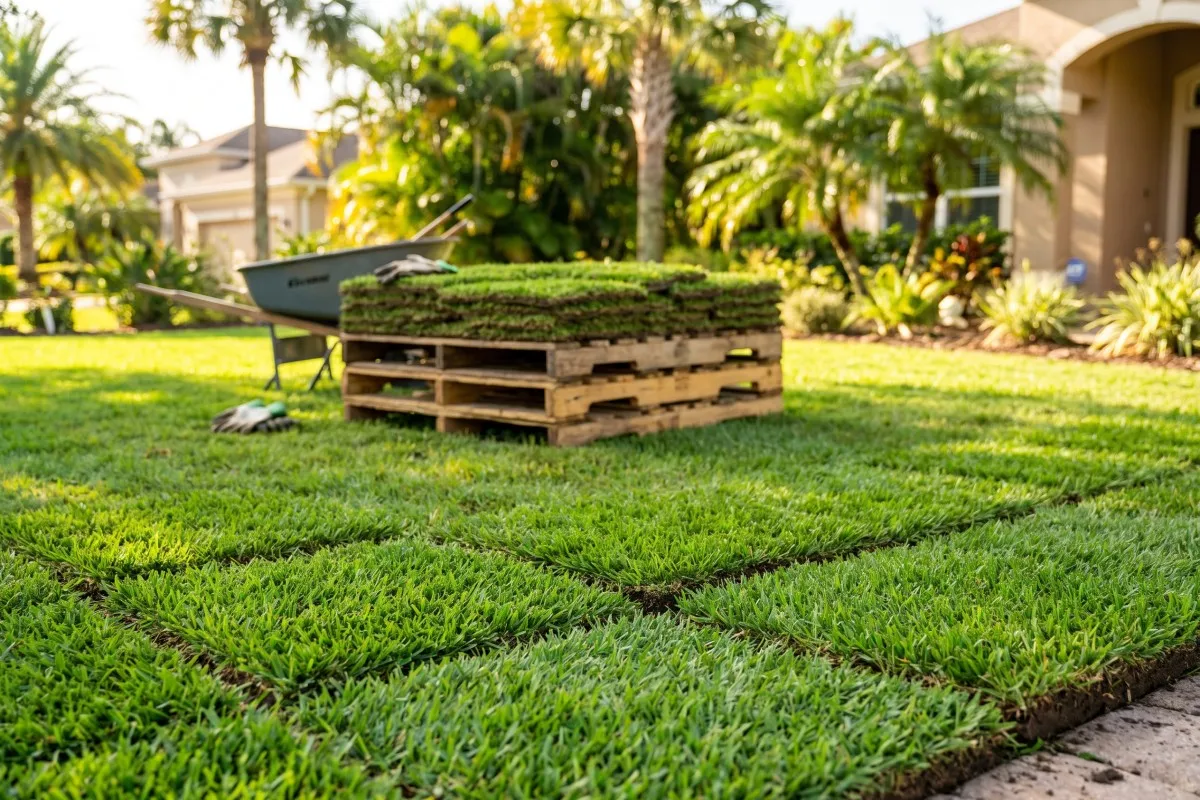
New sod is fragile until its roots take hold, and this is where impatience undoes a good install. The timeline holds the way it does anywhere warm-season sod is grown. Roots begin to anchor within about two weeks, but full establishment runs six to eight weeks (Bethel Farms).
Light foot traffic is usually fine after two to three weeks. Heavy use, meaning kids at a full sprint and a dog digging, should wait closer to four to six. You can check without guessing. Grab a corner and tug gently. If it lifts, the roots have not taken yet. If it resists, it is anchoring (Bethel Farms). We tell every customer the same thing on install day: keep everyone off the new lawn as much as you can for the first month, and water on the schedule we leave behind. That early patience buys the recovery speed you paid for. Our guide on sod for pets, children, and high-traffic yards walks the care timeline in more detail.
What Golf-Course Turf Will Not Do at Home
A fairway is mowed daily by a trained crew on a reel mower and watered on a managed budget. Your yard is not, and that is fine. The performance is real, but it comes attached to the maintenance that produces it. Nobody gets the dense, striped look without putting in the cuts.
So borrow the standard, not the fantasy. These grasses are genuinely the toughest, fastest-recovering turfs we lay in Hillsborough County. They just need the right site and a mower that shows up.
Get the match right and the grass does the hard work for you. We install sand-bottom sod cut fresh right before it goes down, because turf grown on sandy soil roots cleanly into our native sand instead of laying a dense mat that slows establishment. Our breakdown of sand-bottom versus muck-bottom sod explains why that base matters even more for a root-driven grass like Bermuda. When you are ready, one of our project managers can walk the yard, count the sun hours, and help you land on the variety that will actually thrive where your family plays.

Fresh-cut sod installation, replacement, and delivery in the Tampa Bay area.
Continue reading
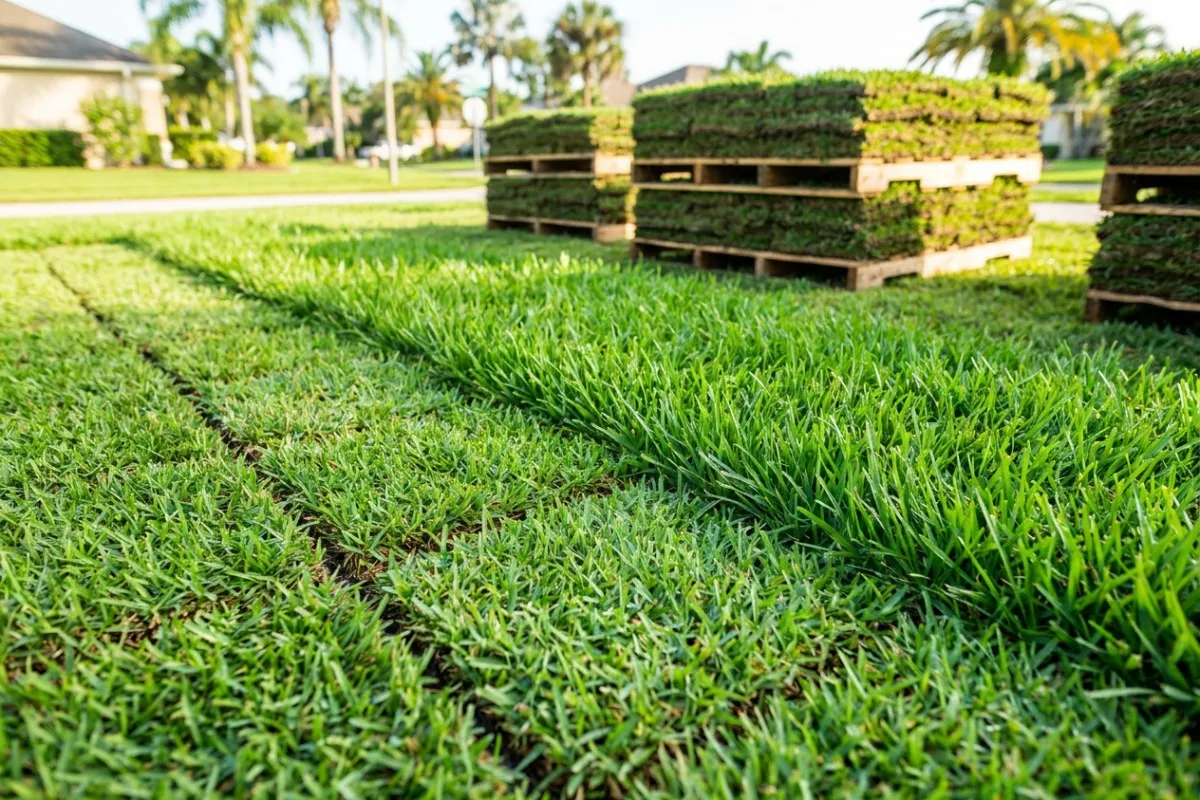
Best Sod for Tampa Bay: St. Augustine vs Zoysia vs Bermuda
The best sod variety for Tampa Bay depends on your yard's sun, traffic, and soil. Here's how St. Augustine, Bermuda, and Zoysia compare.
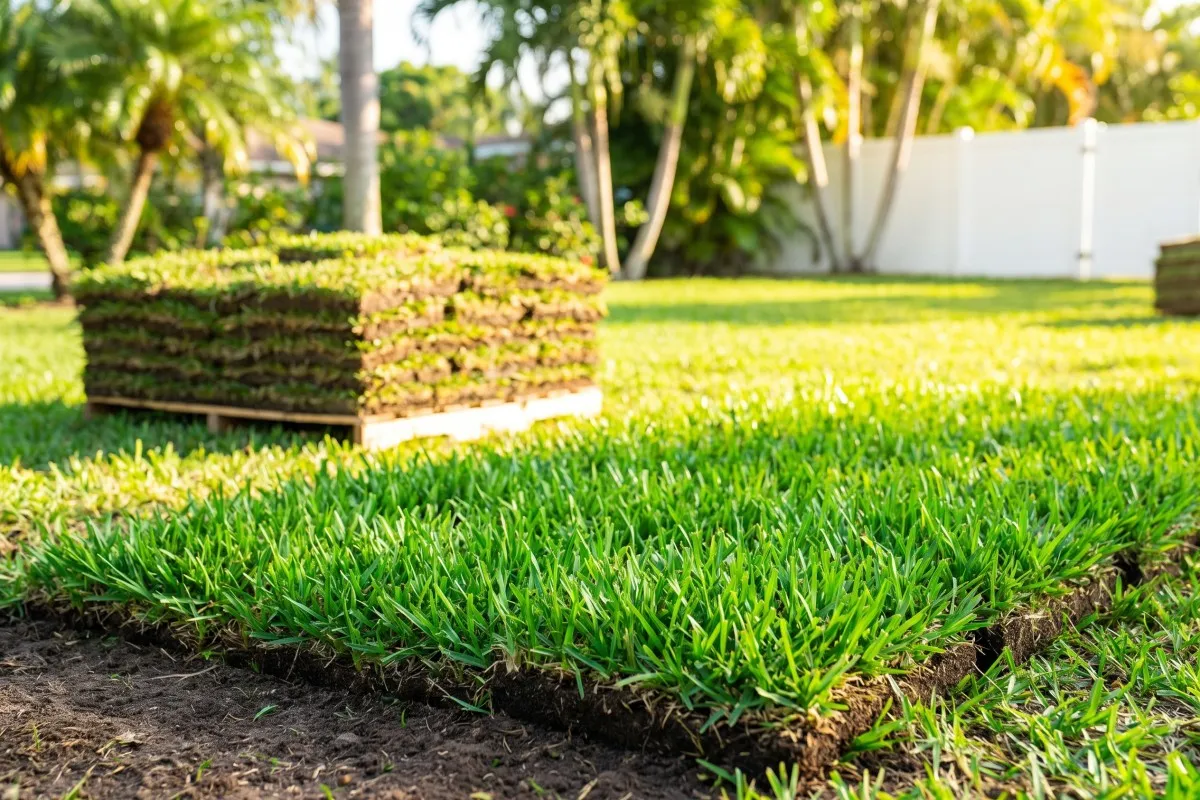
St. Augustine vs Zoysia Sod in Tampa Bay: Which to Choose
St. Augustine vs Zoysia sod in Tampa Bay comes down to sun and how hard the lawn gets used. Here's the step-by-step framework our crew uses to pick the right one.
Empire Zoysia Sod in Tampa Bay: The Low-Maintenance Grass With a Premium Look
Empire Zoysia sod in Tampa Bay gives you a dense, high-end lawn with less mowing. How it compares to Floratam, and whether it fits your yard.