St. Augustine Grass Varieties in Tampa Bay: Floratam vs. ProVista vs. Bitter Blue vs. CitraBlue
Compare the St. Augustine grass varieties Tampa Bay lawns rely on: Floratam, ProVista, Bitter Blue and CitraBlue, and how to pick the right one.
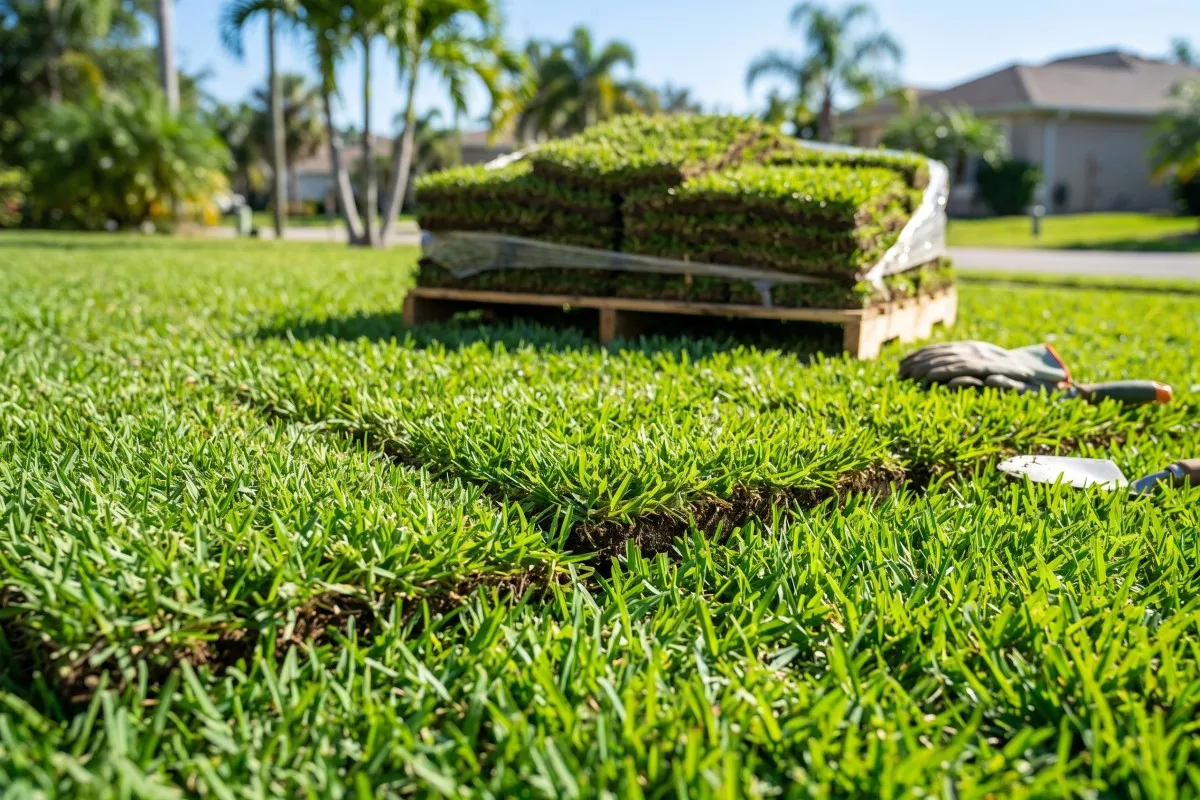
Most homeowners already know they want St. Augustine. What trips people up is that the St. Augustine grass varieties Tampa Bay lawns are built on are not interchangeable. Floratam, ProVista, Bitter Blue and CitraBlue carry different tolerances for shade, disease, cold and mowing. Match the variety to your yard’s sun and tree canopy before installation day, and you avoid the expensive mistake of tearing out a lawn that never suited the site. Here is how the four compare, the way we sort them on a site walk across Riverview and Brandon.
Tampa Bay sits in USDA Hardiness Zones 9b–10a. St. Augustine grows actively from spring through fall here, and because our winters stay mild, it roots in nearly every month of the year (UF/IFAS). There is no single right season to lay it. There is only the right variety for your specific yard.
The four St. Augustine grass varieties Tampa Bay yards see most
All four belong to the same species, so they share the broad blade and the runner-based spread that make St. Augustine the region’s default lawn. The differences live in the details, and those details decide whether a lawn thrives or thins. Here is the short version before we break each one down:
- Floratam: full-sun workhorse, coarse blade, the most common and affordable.
- ProVista: Floratam’s slower-growing, glyphosate-tolerant descendant.
- Bitter Blue: an older, finer-textured pick with better shade and cold tolerance.
- CitraBlue: the newest release, bred for shade and disease resistance.
For a wider look at how St. Augustine stacks up against Zoysia and Bermuda, see our Tampa Bay sod variety comparison. This guide stays inside the St. Augustine family.
Floratam: the full-sun workhorse
Floratam is what most people picture when they picture St. Augustine. Released in 1973 by the University of Florida and Texas A&M, it was bred to resist St. Augustine Decline virus and the southern chinch bug (UF/IFAS). That chinch bug resistance has largely broken down over the decades, and the pest is now one of Floratam’s biggest problems.
It has a coarse, thick blade and wants full sun. Plan on six hours of direct light or more; Floratam thins fast under a live oak. Mow it tall, at 3.5 to 4 inches. It stays the cheapest and most available option on most Tampa Bay pallets, and on an open, sunny front yard in Apollo Beach or Ruskin it is still a sound, honest choice.
ProVista: slower growth, one big catch
ProVista is Floratam’s engineered descendant. It uses Floratam’s genetics but grows more slowly and holds a deeper green, so you mow less often and get more even coverage in yards with patchy sun (UF/IFAS). It also carries improved shade tolerance over its parent.
The headline feature is that ProVista is genetically modified to tolerate glyphosate, the active ingredient in old-formula Roundup. That sounds tidy. In practice it comes with a real catch worth knowing before you buy: Roundup pulled glyphosate from its consumer lawn products, and the replacement chemistry now on shelves can damage or kill ProVista. We wrote a full breakdown in what ProVista owners should know about the new Roundup. Marketing likes to cite the twenty years and hundred million dollars behind the grass. Our take is simpler. It is a strong, low-mow variety whose signature perk now depends on a product that is getting harder to find.
Bitter Blue: the older shade pick
Bitter Blue predates the others by decades, selected from common St. Augustine back in the 1930s for its finer leaf and denser, darker blue-green growth. It handles shade and cold better than Floratam, which is why it hung on in older, tree-heavy neighborhoods.
Here is the honest limitation. Bitter Blue is not resistant to chinch bugs or gray leaf spot, and it has lower tolerance to some triazine weed killers than other St. Augustines (Sod Solutions). It is harder to source now, largely because the newer shade-selected cultivars do the same job with fewer weak spots. When a customer asks for it by name, we talk through whether CitraBlue would serve the same shaded spot with better disease resistance.
CitraBlue: the newest, and the shadiest
CitraBlue is the University of Florida’s most recent St. Augustine release, and for shaded Tampa Bay lots it is often the one we point to first. In UF trials run over two years, CitraBlue outperformed both Floratam and Palmetto in head-to-head shade testing (Sod Solutions). It carries a distinctive blue-green color and a dense, low canopy that crowds out weeds.
Its disease resistance is the other draw. CitraBlue resists gray leaf spot, large patch and take-all root rot, the fungal problems that flare in our summer rains (Sod Solutions Pro). If our wet season worries you, our Tampa Bay lawn fungus guide covers how those diseases show up in a yard. CitraBlue also grows slowly upward, so it mows at 2 to 3 inches and less often than Floratam. The trade-offs are price and, on a given week, availability.
Why we walk the yard before naming a variety
A variety chart cannot see your yard. It does not know that your front is open sun while your back sits under two grand oaks, or that your irrigation misses the strip along the drive. That is the gap a project-manager consultation closes.
Before we recommend anything, we map the property the way the grass will actually experience it. We watch where the sun lands across the day, read the tree canopy, check the soil and drainage, and note how the lawn gets used. A shaded backyard points toward CitraBlue. A wide sunny lot on a tight budget may be perfect for Floratam. Then, whatever variety fits, we install it as sand-bottom sod so it roots cleanly into Central Florida’s sandy ground. For more on matching turf to shade specifically, our shade-tolerant sod guide goes deeper.
That site-specific judgment is the whole point. Two yards on the same Valrico street can need two different St. Augustines. When you are ready, a project manager can walk your property, map the sun and canopy, and help you land on the variety that will actually thrive where you live.
Continue reading
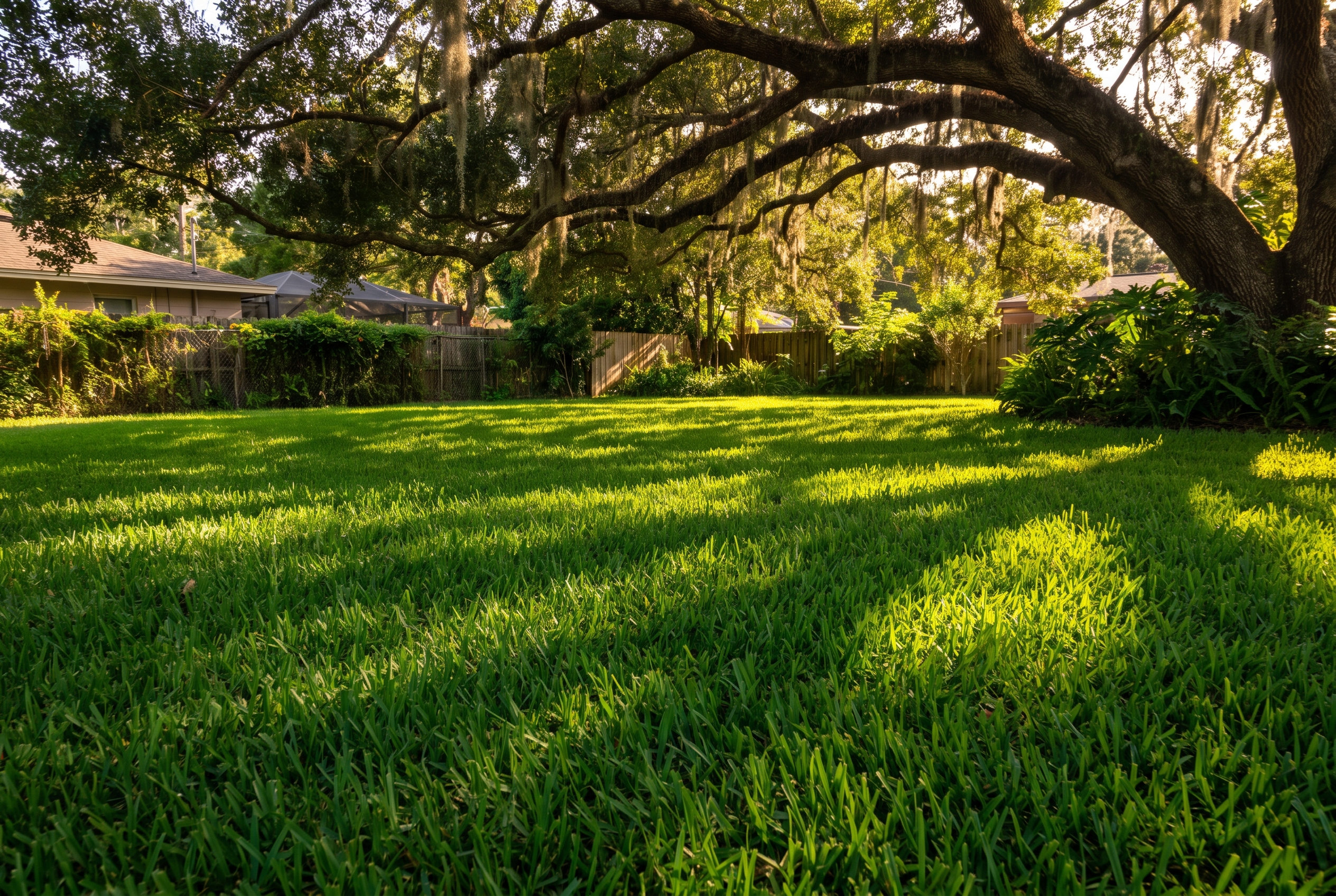
Shade Tolerant Sod in Florida: What Survives Under Tampa Bay's Tree Canopy
Shade tolerant sod in Florida is a short list. Here is what actually holds under mature oaks and palms in Tampa Bay, and what quietly fails.
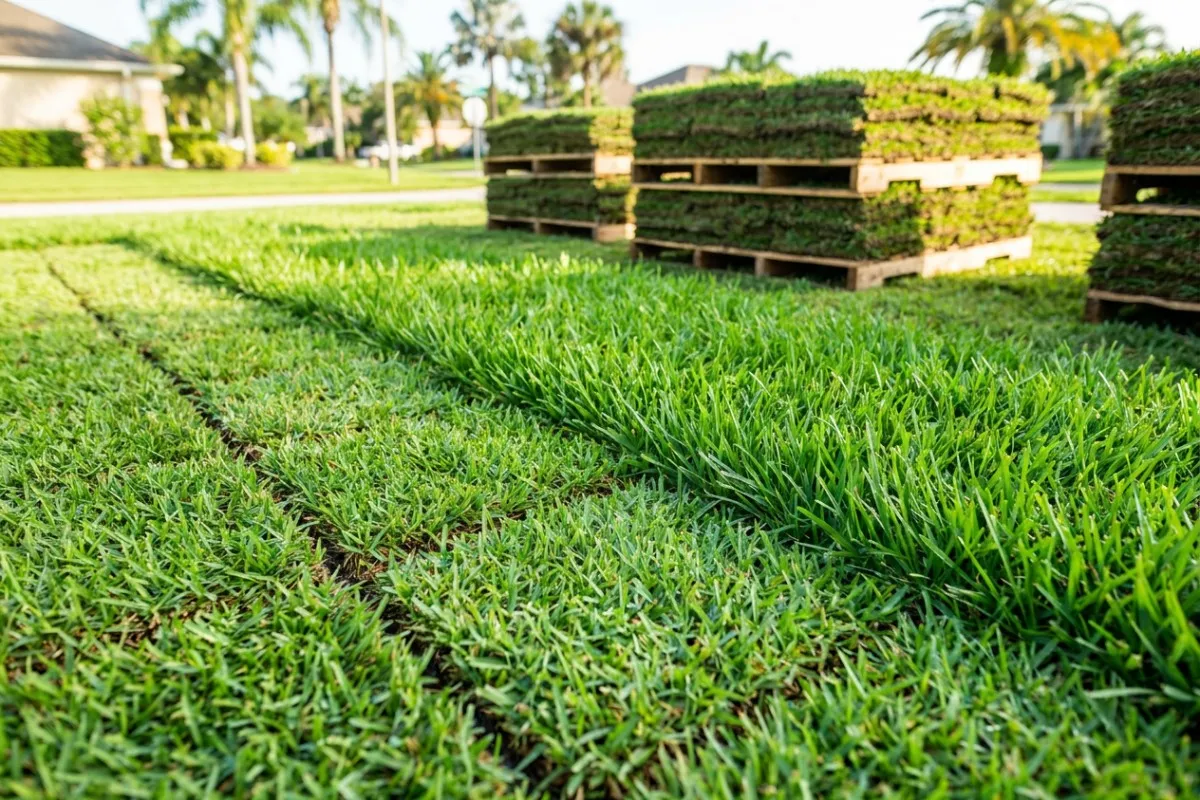
Best Sod for Tampa Bay: St. Augustine vs Zoysia vs Bermuda
The best sod variety for Tampa Bay depends on your yard's sun, traffic, and soil. Here's how St. Augustine, Bermuda, and Zoysia compare.
Why St. Augustine Sod Is the Top Choice for Tampa Bay Homeowners
Why St. Augustine is the number one sod choice for Tampa Bay area homeowners — and the different varieties available to fit your yard's needs.