
How to Water Established Sod in Florida: A Tampa Bay Homeowner's Guide
How to water established sod in Florida: the deep, infrequent schedule for Tampa Bay's dry and rainy seasons, plus how to calibrate your sprinklers.
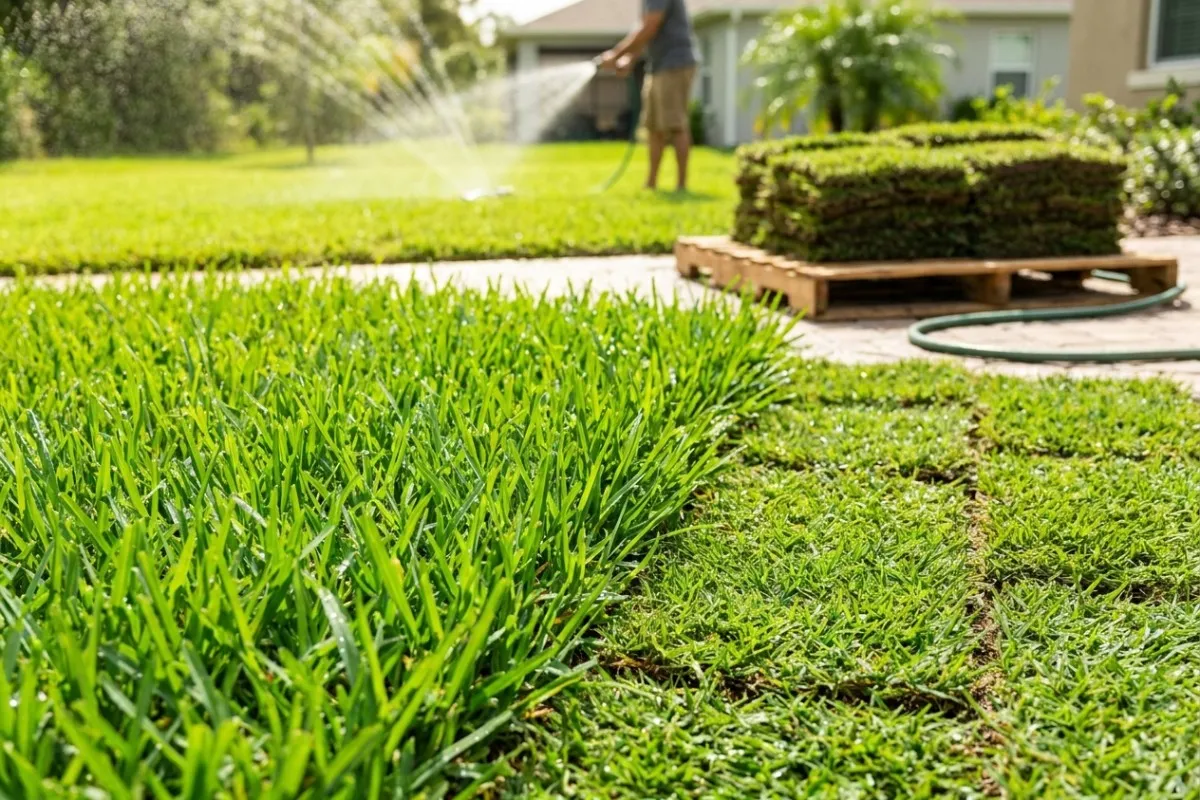
Once your sod has knit its roots into the soil, the answer to how to water established sod in Florida is simple: water deeply and infrequently, not a little every day. Apply about half an inch to three-quarters of an inch of water in a single cycle, then let the top few inches of soil dry before you water again (UF/IFAS AE436). That one shift, from daily sips to deep soakings, is what carries a Tampa Bay lawn through the summer heat and the winter cool.
The trouble starts after the first 30 days. New-sod owners spend that critical establishment window watering hard and often, then the exemption ends and no one hands them a long-term plan. So they either keep the daily schedule going and drown the roots, or they cut back too far and let the lawn wilt. This guide gives you the framework the crew leaves behind at the end of every install, calibrated to our sandy soils and our two very different seasons.
How to water established sod in Florida: the core rule
An established lawn wants water that reaches the root zone, which sits in roughly the top 8 inches of soil for St. Augustine and the other warm-season grasses we install (UF/IFAS AE436). Watering deeply pulls the roots down to chase that moisture, and deep roots are what let a lawn ride out a dry week without stress.
The target per cycle is 1/2 to 3/4 inch of water. In sandy Central Florida soils that drain fast and hold little, apply the 3/4-inch rate (UF/IFAS AE144). Shallow, frequent watering does the opposite of what you want: it keeps roots near the surface, wastes water to evaporation, and leaves blades wet long enough to invite fungus.
Two habits protect the lawn no matter the season:
- Water before dawn, in the pre-sunrise window, so blades dry as the day warms and disease pressure stays low.
- Never water on a fixed timer alone. A working rain sensor is required on Florida irrigation systems by law and skips the cycle after a storm (Florida Statute 373.62).
Read the grass, not the calendar
The most reliable schedule is on-demand: water when the lawn tells you it is thirsty, not on a set day (UF/IFAS AE436). Warm-season grass shows three clear drought-stress signals, and any one of them means it is time to run a cycle:
- Leaf blades fold or roll lengthwise instead of lying flat.
- The turf takes on a blue-gray cast rather than green.
- Footprints stay visible after you walk across the lawn, because the blades no longer spring back.
Learning these signs is the single best skill a Florida lawn owner can build. It tells you exactly when three-quarters of an inch is needed and, just as important, when to leave the controller off. If your grass is still standing up green and the soil is damp two inches down, the lawn does not need water that day, whatever the schedule says.
Dry season and rainy season: two different schedules
Tampa Bay sits in USDA hardiness zones 9b to 10a, and Central Florida averages a 330-day growing season (USDA Plant Hardiness Zone Map). Our warm-season lawns grow actively when soil is warm and slow down, without fully browning, once it cools. That long, split season is why one schedule cannot cover the whole year.
Dry, warm months (roughly March through May): this is the highest-demand stretch. Rain is scarce and the grass is growing, so plan on watering about twice a week when the drought-stress signs appear, applying the 3/4-inch rate each time (UF/IFAS AE436).
Rainy season (June through September): afternoon storms often deliver more water than the lawn can use. Let rain do the work, keep the rain sensor in charge, and irrigate only during a genuine dry gap of several days. Overwatering now is the fastest route to disease, which is exactly the risk we cover in our guide to protecting your lawn through Florida’s rainy season.
Cool months (December through February): growth slows and demand drops sharply. Established turf may need water only every 10 to 14 days, and in many weeks you can skip irrigation entirely (UF/IFAS Extension). Watering a cool, damp lawn on a summer schedule is one of the most common ways homeowners waste water and feed cool-weather fungus.
A note that matters here: none of this makes any season a wrong time to lay sod. Fresh turf can go down in any month across Tampa Bay. The watering framework simply shifts with the calendar once the lawn is established.
Calibrate your system so you know how long to run
“Three-quarters of an inch” only helps if you know how long your sprinklers take to deliver it, and every system is different. Calibrating takes fifteen minutes and removes all the guesswork (UF/IFAS Gardening Solutions):
- Place five to ten straight-sided cans (tuna or cat-food cans work) scattered across a single irrigation zone.
- Run that zone for 15 minutes.
- Measure the water depth in each can with a ruler and average the readings.
- Do the math: if you collected 1/4 inch in 15 minutes, you need about 45 minutes to reach 3/4 inch on that zone.
Repeat zone by zone, because a shaded backyard rotor and a sunny front-yard spray head almost never apply water at the same rate. Write the run times on the controller. Once they are set, you are watering by the inch instead of by guess, and you can water on-demand with confidence.
Why sand-bottom sod changes your watering math
Not all turf drinks the same, and the sod under your feet decides how forgiving your schedule can be. We install sand-bottom sod — grass grown on sandy soil rather than muck — for a specific reason: its porous base matches Central Florida’s native ground, so the roots reach deeper and the lawn pulls moisture from a larger reservoir in the soil.
That has a direct effect on established watering. A deeper, sand-grown root system tolerates the gaps between deep soakings better than shallow, muck-grown turf, and its base drains faster after heavy rain, which lowers the disease pressure that overwatering creates. It does not mean the lawn needs less care. It means the deep-and-infrequent framework works the way it is supposed to, instead of fighting a root system that never went deep.
If your address falls in Manatee County, layer the once-a-week restriction rules on top of this framework. We break down the legal watering day and the new-sod exemption in our Manatee County watering guide.
What our crew leaves with every homeowner
At the end of an install, our project managers walk each customer through the same short handoff, because the sod we cut fresh that morning deserves a plan that outlasts the first month:
- Water deeply, not daily — 3/4 inch per cycle in our sandy soil, roots follow the water down.
- Watch the grass — fold, blue-gray color, and lingering footprints mean it is time; green and springy means wait.
- Match the season — about twice a week in the spring dry spell, let rain lead in summer, every 10 to 14 days in winter.
- Calibrate once — fifteen minutes with a few cans tells you your real run times for good.
- Trust the rain sensor — it keeps you compliant and keeps disease off a saturated lawn.
Get those five right and an established Tampa Bay lawn mostly takes care of itself. If you are planning a new lawn in Valrico, Riverview, Apollo Beach, or anywhere across Hillsborough, Manatee, or Pinellas and want the watering dialed in from day one, our team is glad to walk you through it and help match the right sod to your site.

Fresh-cut sod installation, replacement, and delivery in the Tampa Bay area.
Continue reading
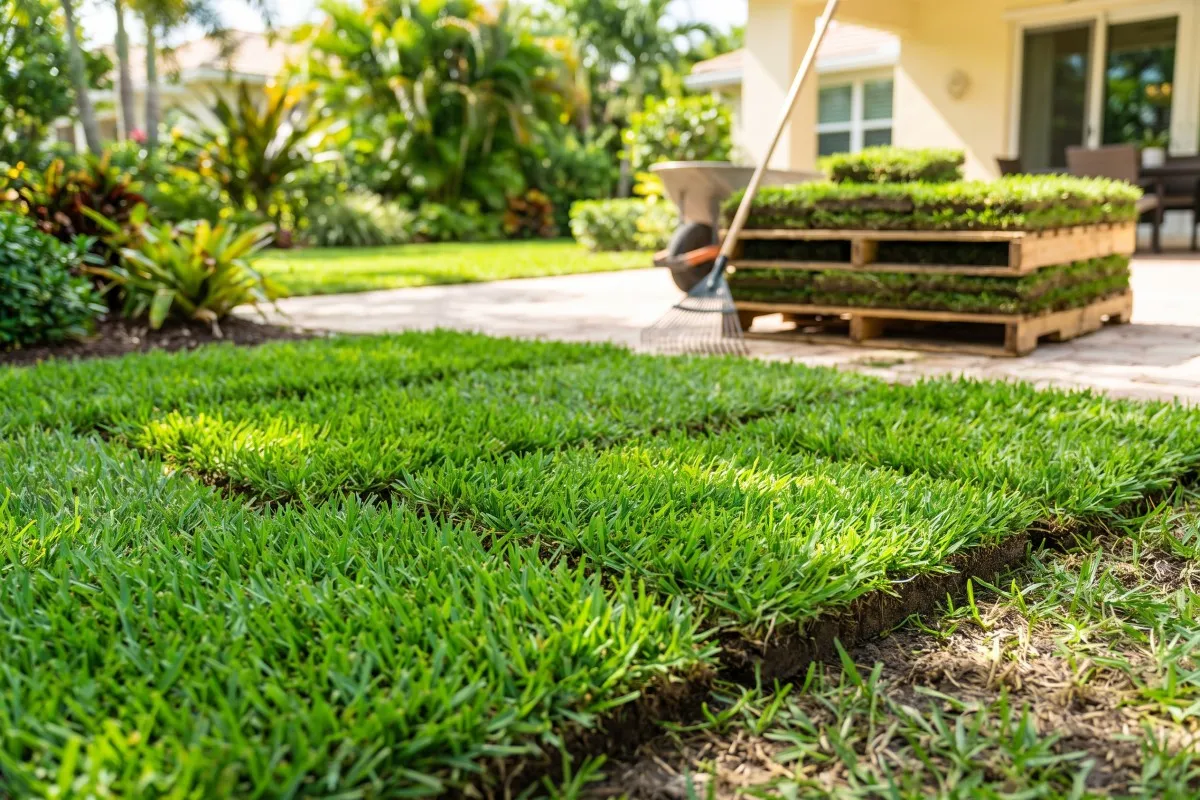
Established Sod Care in Florida: The After-Year-One Routine
Established sod care in Florida made simple: a season-by-season routine for watering, mowing, and feeding a mature Tampa Bay lawn after year one.

How Long Does Sod Last in Florida? A Tampa Bay Homeowner's Honest Guide
How long does sod last in Florida? An honest Tampa Bay answer: realistic St. Augustine lifespan, what shortens it, and how to stretch your lawn's years.
Winter Lawn Care in Tampa Bay: What Florida Homeowners Need to Do From December Through February
Winter lawn care in Tampa Bay is mostly about doing less, correctly. Here are the few critical steps that carry your sod from December through February.