
Manatee County Lawn Watering Restrictions 2026: Sod Owner Guide
Manatee County water restrictions on lawn watering in 2026: your legal watering day, allowed hours, and the new-sod establishment exemption explained.
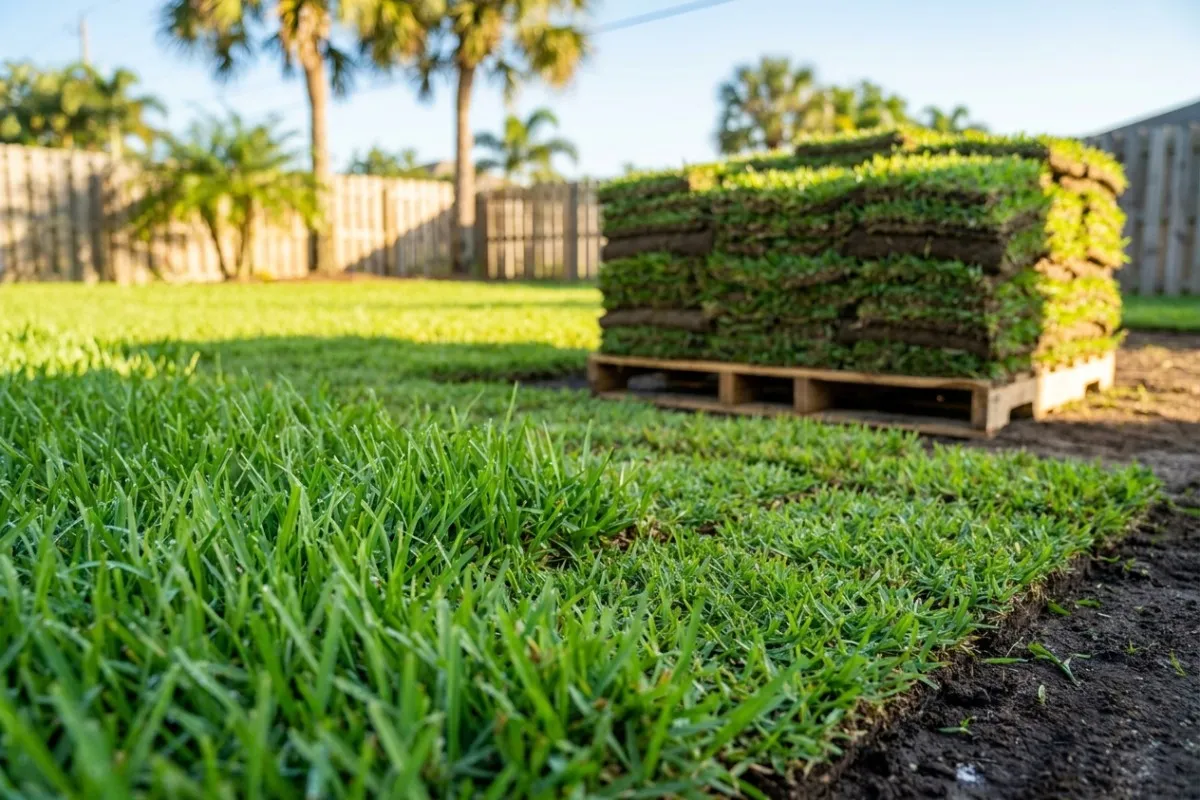
If you have new sod in Parrish, Ruskin, or Apollo Beach, the Manatee County water restrictions on lawn watering give you a clear exemption: newly installed sod can be watered on a generous schedule during its 60-day establishment window, even though established lawns are limited to one day per week in 2026. Register the install with the county first, and you can water new turf enough to root it without risking a citation. This is the single most important thing our project managers explain at the end of every Manatee County job, and it is where most homeowners get tripped up.
Below is exactly what applies to your address in 2026, the difference between the establishment exemption and the ongoing rules, and how to handle the stretch when rainy season overlaps with the restrictions.
Manatee County water restrictions and your lawn: the 2026 rules
All of Manatee County sits inside the Southwest Florida Water Management District (SWFWMD). In early 2026 the District declared a Modified Phase III “Extreme” Water Shortage, which tightens outdoor watering from the usual two-day schedule down to once a week. Those restrictions took effect April 3, 2026 and are scheduled to run through October 1, 2026 unless the District extends or lifts them (SWFWMD, Manatee County).
The rules apply to nearly everyone. Manatee County requires all residents to follow the one-day-per-week schedule, including homes on private wells. Reclaimed water is encouraged for irrigation and is generally subject to voluntary hours, but confirm your community’s policy, since some HOAs and utilities apply the same limits to reclaimed lines (Manatee County).
For context on our grass: Manatee County falls in USDA hardiness zone 9b to 10a, so the warm-season lawns we install here — St. Augustine, Zoysia, and Bahia — grow actively from spring through fall and stay green much of the year (USDA Plant Hardiness Zone Map). That long growing season is exactly why watering rules run through the warm months, and why getting the schedule right matters.
Your watering day and allowed hours
Under the once-a-week schedule, your assigned day is set by the last digit of your street address. It is worth writing this on the sprinkler timer:
- Address ends in 0 or 1 — water Monday
- Address ends in 2 or 3 — water Tuesday
- Address ends in 4 or 5 — water Wednesday
- Address ends in 6 or 7 — water Thursday
- Address ends in 8 or 9, or no address — water Friday
Timing matters as much as the day. Properties under one acre may water only within one window on their day: either 12:01 a.m. to 4 a.m. or 8 p.m. to 11:59 p.m. Properties one acre or larger may water only before 4 a.m. and after 8 p.m. (Manatee County). Hand-watering a flower bed or shrubs with a shut-off nozzle, or running micro-irrigation, is allowed any day but only before 8 a.m. or after 6 p.m.
Enforcement is real. The county issues a warning first in most cases, but repeat violations can bring a citation, so setting your controller correctly is the simplest way to stay clear (Manatee County).
New sod is the exception: the 60-day establishment window
Here is the part that protects your investment. New sod cannot survive on one day of water a week while it is knitting roots into the soil, and the rules recognize that. Manatee County grants a temporary watering variance for new landscape, but you have to ask for it. Call the county’s Water Conservation Office at (941) 792-8811, ext. 5327 to register your install and start the clock on the establishment period (Manatee County).
The county’s new-sod rules run in two stages across 60 days, beginning on the day of installation:
- Days 1 through 30: water any day of the week, before 10 a.m. or after 4 p.m.
- Days 31 through 60: even-numbered addresses water Tuesday, Thursday, and Sunday; odd-numbered addresses water Monday, Wednesday, and Saturday.
- After day 60, the lawn returns to the standard once-a-week schedule for your address.
One catch that surprises people: new sod or plants must cover at least 50% of an irrigation zone for you to run an in-ground sprinkler on that zone during establishment. A small patch repair does not unlock a full zone, so hand-water spot fixes accordingly.
During an active Phase III order the county may tighten the establishment hours further, so confirm the current window when you register. The key point holds either way: because this exemption is built into the restrictions, you can install fresh turf in any month of the year and still water it properly. There is no season you have to wait for. The variance exists precisely so a same-day install can be watered in enough to establish, whatever the calendar says.
When rainy season overlaps the restrictions
June through September, Manatee County’s afternoon storms often deliver more water than a lawn needs, and the restriction window runs straight through that wet stretch. The rules account for this: if it has rained recently, you are not required to irrigate on your day, and running the sprinklers into saturated ground does more harm than good.
Overwatering during the wet season is the fastest way to invite disease. Constant moisture in shady, poorly drained spots feeds fungal problems like brown patch and gray leaf spot. We cover the specific prevention steps in our guide to protecting your lawn through Florida’s rainy season, but the short version is to add a rain sensor or smart controller so your system skips its cycle after a storm. Rain sensors are required on Florida irrigation systems under state law, and a working one keeps you compliant while saving your turf (Florida Statute 373.62).
Drainage also decides how well your lawn tolerates both the rain and the dry-day limits. This is one reason we install sand-bottom sod: its porous base drains quickly and its roots reach deeper into our sandy soils, so an established lawn pulls moisture from a larger reservoir and needs that once-a-week cycle less than shallow-rooted turf would.
What our project managers tell every Manatee County customer
At the end of an install, our project managers walk each homeowner through the same short checklist, because we want the sod we cut fresh that morning to root before the establishment window closes:
- Register the install with the county Water Conservation Office the day it goes in, so your 60-day variance is on record.
- Set the controller to the days-1-through-30 schedule now, and put a reminder to switch to the days-31-through-60 pattern and then your once-a-week day.
- Water early, in the pre-dawn window, so blades dry through the day and disease pressure stays low.
- Confirm your rain sensor works, then let it override the schedule whenever a storm has already soaked the yard.
- Keep it simple after day 60: deep, infrequent watering on your assigned day builds the deep roots that carry a lawn through Tampa Bay’s heat.
Restrictions change with rainfall and District orders, so the numbers above are current as of August 2026 — always verify your address-specific schedule at mymanatee.org/waterrestrictions before the season turns.
If you are planning a new lawn in Parrish, Ruskin, Apollo Beach, or anywhere across Manatee County and want the establishment schedule handled correctly from day one, our team can walk you through it and pick the right sod for your site. That is the kind of hands-on guidance we build into every install — reach out when you are ready to talk it through.

Fresh-cut sod installation, replacement, and delivery in the Tampa Bay area.
Continue reading
Pinellas County Lawn Water Restrictions 2026: What Homeowners Need to Know Before and After Sod Installation
Pinellas County lawn water restrictions 2026: your once-a-week watering day, allowed hours, and the new-sod establishment window explained.
Watering New Sod in Tampa Bay: How to Follow Irrigation Restrictions and Keep It Alive
Watering new sod in Tampa Bay under irrigation restrictions: the 60-day county establishment schedule that keeps fresh sod rooted and legal.
How to Schedule Your Sod Installation Around Florida Water Restrictions Before the First Pallet Arrives
Planning a sod installation around Florida water restrictions: a step-by-step plan to pick a date, secure the new-sod exemption, and set irrigation first.