
Watering New Sod in Tampa Bay: How to Follow Irrigation Restrictions and Keep It Alive
Watering new sod in Tampa Bay under irrigation restrictions: the 60-day county establishment schedule that keeps fresh sod rooted and legal.
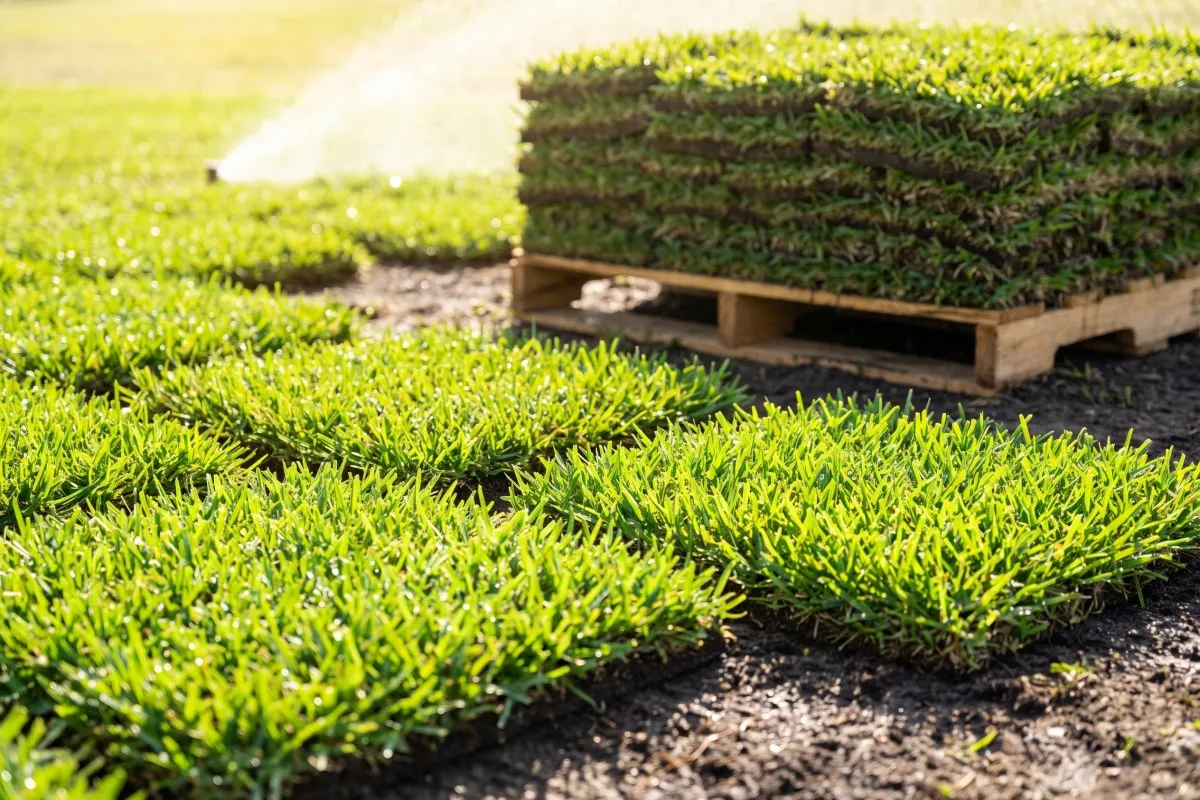
Watering new sod in Tampa Bay under irrigation restrictions comes down to one rule most homeowners never hear about: your county gives freshly installed sod a 60-day establishment window that sits outside the normal once- or twice-a-week limits. For the first 30 days you water often enough to root it. For the next 30 you drop to three set days. Get that window right and the lawn stays both alive and legal, which is exactly the tension every new-sod owner is worried about.
Every customer we hand a finished lawn to in Riverview or Brandon asks the same thing before we pull out of the driveway. How do I keep this wet without a code violation? Here is the answer we walk each of them through, county rules and all.
The 60-day establishment window is the rule that saves your sod
Fresh sod is not treated like an established lawn, and that distinction is everything. The Southwest Florida Water Management District, which writes the rules for Hillsborough, Manatee, Pinellas and Pasco, classifies newly laid sod as New Plant Material and grants it a 60-day establishment period that starts the day we install it (SWFWMD).
That window only covers the area with new sod. If you resodded the front yard, the back stays on the regular schedule. The district also asks you to keep a written establishment schedule, a simple log of the dates you water, in case an inspector or your utility ever asks (SWFWMD). We tell people to jot it on the same calendar they use for everything else. It takes ten seconds a day and settles the whole question of whether you were within the rules.
One more piece of fine print worth knowing. An irrigation zone can only run under the establishment allowance if new sod covers at least half of that zone (Hillsborough County). A single new strip does not unlock a whole zone of established grass.
The first 30 days: water often, within the allowed hours
During days 1 through 30, the district lets you water new sod on any day of the week, because roots that dry out in the first two weeks do not recover (SWFWMD). This is the make-or-break stretch. UF/IFAS is direct about it: newly laid sod has to be kept moist until the roots knit into the soil beneath it, which usually takes a couple of weeks (UF/IFAS ENH03/LH013).
Here is the taper we leave with every homeowner:
- Install day: soak the sod and the top few inches of soil the moment the last square is down. Do not wait.
- Days 1 to 10: keep the top inch damp, which in our sandy soils usually means a light cycle once or twice a day.
- Days 10 to 21: as the roots grab, pull back toward one longer cycle a day, then every other day.
- Days 21 to 30: stretch the gaps further and start reading the grass instead of the clock.
Tug-test a corner around day 14. If the sod resists when you lift it, roots are taking hold and you can ease off. A couple of caveats on timing. Even inside the establishment window, run your cycles in the early-morning hours so blades dry as the sun comes up and fungus never gets a foothold. And if you already sit under a tighter water-shortage order (more on that below), confirm your county’s current daytime allowance or lean on hand-watering, which is almost always still permitted.
Days 31 to 60: three days a week, set by your address
Once you cross day 30, new sod moves onto a three-day schedule keyed to your street number (Hillsborough County):
- Even-numbered addresses: Tuesday, Thursday and Sunday.
- Odd-numbered addresses: Monday, Wednesday and Saturday.
By this point the lawn should hold color between waterings, so three days is plenty. Apply enough to wet the root zone on each of those days, then leave the controller alone the rest of the week. Pinellas County runs the same address-based structure for its residents, so the logic travels across the bay (Pinellas County). When day 60 arrives, the training wheels come off and your lawn joins everyone else’s schedule.
Do you need a new-sod variance? Usually not
Homeowners hear the word variance and picture paperwork and a wait. For a standard residential install, you almost never need one. The 60-day establishment allowance is automatic the day the sod goes down, so there is no application to file and no approval to wait on. The district’s own guidance treats it as a built-in provision, not a special request (SWFWMD).
A formal variance exists for the unusual cases, a very large project or a need that runs past 60 days, and you request it through WaterMatters.org. Most of our customers never touch it. What they do need is the boring stuff that keeps them compliant: the written log, a system that only waters the new area, and a working rain sensor. Florida law has required a functioning rain shutoff on every automatic sprinkler system installed since 1991, and it still applies during establishment (Florida Statute 373.62). A sensor that skips a cycle after an afternoon storm is not a loophole. It is the single cheapest way to avoid drowning fresh sod and, in a district under a shortage order, to avoid a fine.
The 2026 shortage order tightens the hours, not the window
Here is where it gets current. Through much of 2026 the Southwest Florida district has operated under a modified water-shortage order that cut established-lawn watering to one day a week across the region and narrowed the legal hours (SWFWMD). As of September 2026, Hillsborough limits conventional sprinklers to the overnight window, roughly 8 p.m. to 4 a.m., on your designated day (Hillsborough County).
The good news for anyone laying sod right now: the establishment window still applies. A shortage order changes when and how long you can run water, not the fact that new sod gets its 60 days. Because phases and end dates shift, check your county page or WaterMatters.org the week you install, so you are working from today’s rule and not last spring’s.
None of this makes any month a bad time to lay sod. Tampa Bay sits in USDA hardiness zones 9b to 10a with a growing season near 330 days, so our warm-season grasses root year-round and simply slow down when the soil cools (USDA Plant Hardiness Zone Map). The establishment clock travels with your install date. Whether we lay it in January or July, day one is day one.
What our crew leaves you with on install day
The reason our project managers spend a few minutes on this at every job is simple. The install itself is one day of work, but the first 60 days of watering are what decide whether the sod we cut fresh that morning actually takes. So the handoff is short and specific: mark your install date, water hard for the first two weeks within the allowed hours, keep the written log, and let the rain sensor do its job.
We install sand-bottom sod precisely because it forgives this stretch better. Grown on sandy soil that matches our native ground, it roots deeper and drains faster, so a missed daytime cycle under a shortage order does less damage than it would to shallow, muck-grown turf. When you clear day 60, shift straight into the deep, infrequent rhythm we lay out in our guide to watering established sod in Florida. That transition is where a lot of new lawns quietly get lost, which is why we make sure you leave install day holding both plans.
If you are putting in a new lawn anywhere across Valrico, Riverview, Apollo Beach, or the wider Tampa Bay area and want the watering mapped to your address and your county’s current rules from day one, our team is glad to walk your yard and set it up with you.

Fresh-cut sod installation, replacement, and delivery in the Tampa Bay area.
Continue reading
How to Schedule Your Sod Installation Around Florida Water Restrictions Before the First Pallet Arrives
Planning a sod installation around Florida water restrictions: a step-by-step plan to pick a date, secure the new-sod exemption, and set irrigation first.
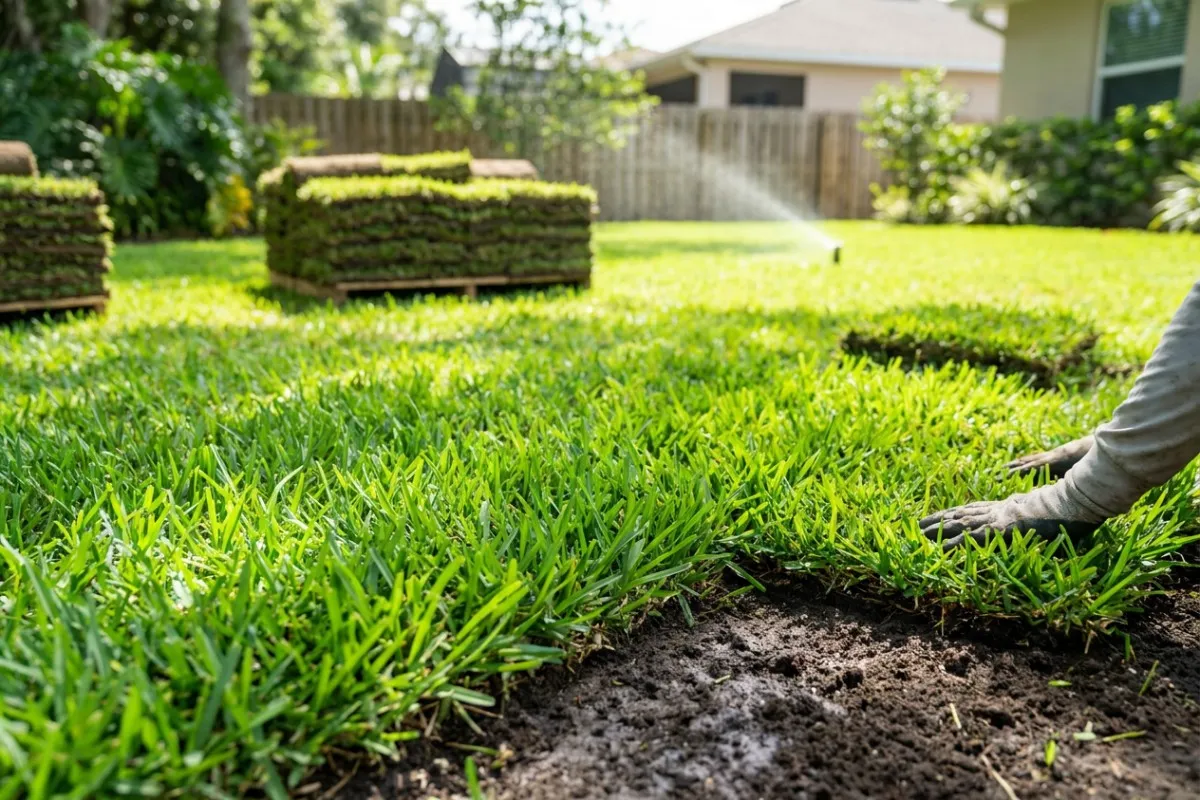
Pinellas County Lawn Water Restrictions 2026: What Homeowners Need to Know Before and After Sod Installation
Pinellas County lawn water restrictions 2026: your once-a-week watering day, allowed hours, and the new-sod establishment window explained.
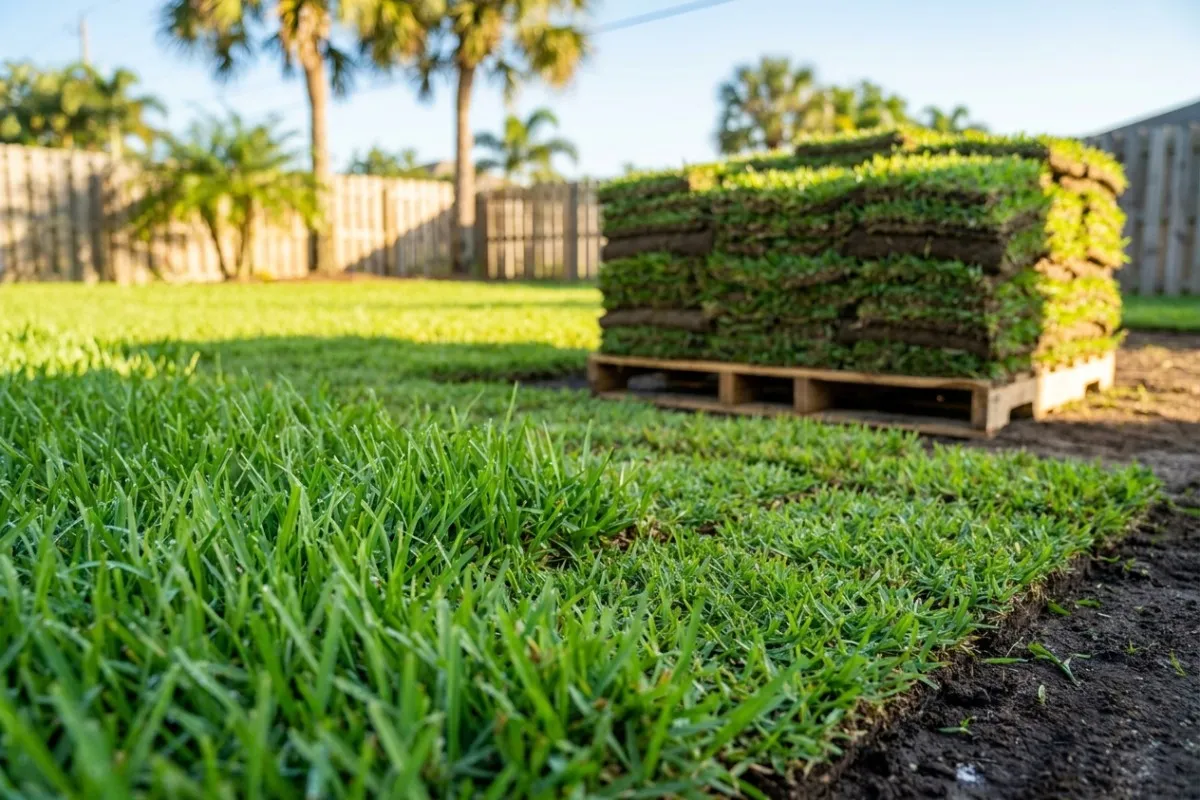
Manatee County Lawn Watering Restrictions 2026: Sod Owner Guide
Manatee County water restrictions on lawn watering in 2026: your legal watering day, allowed hours, and the new-sod establishment exemption explained.