
Lawn Disease Prevention in Florida: Why Tampa Bay Homeowners Are Switching to Preventive Routines
Lawn disease prevention in Florida is shifting from reactive to preventive. Why Tampa Bay homeowners now spray on a calendar before fungus shows.
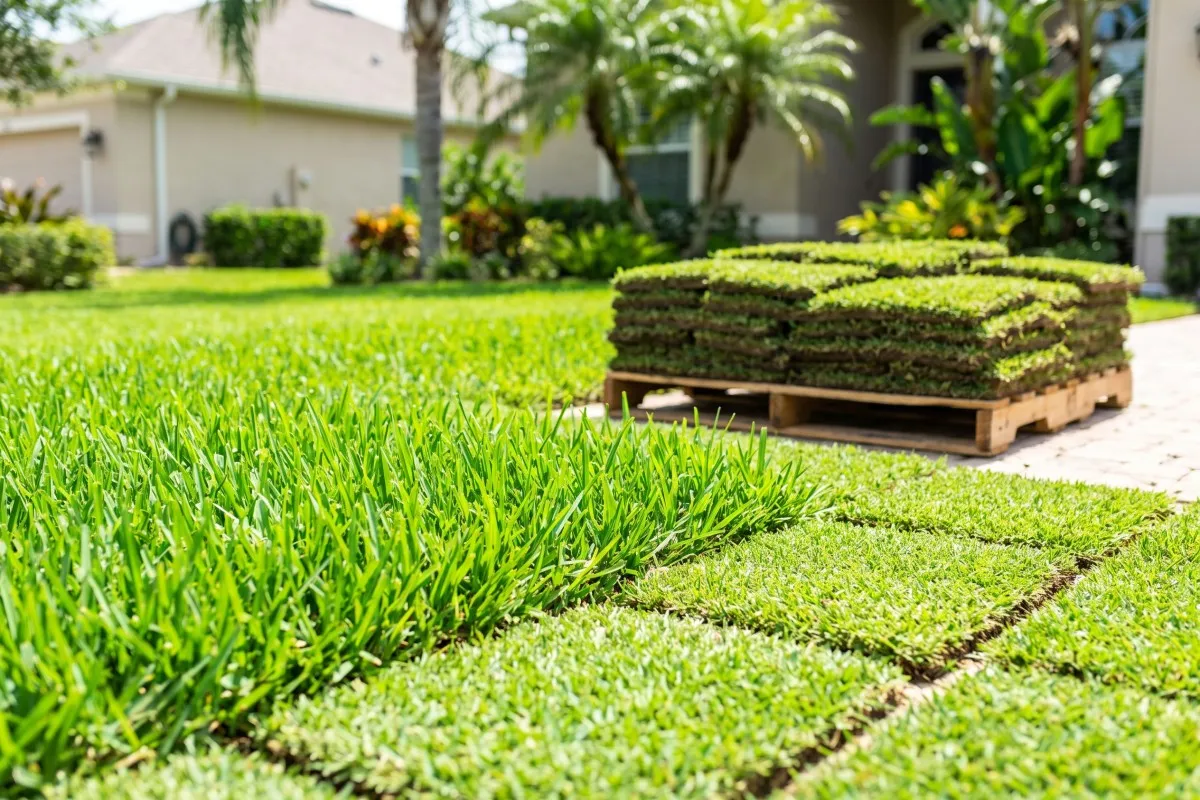
More Tampa Bay homeowners are spraying before the fungus shows, not after. That shift is the whole story here. Lawn disease prevention in Florida used to mean reacting to a brown patch once it was already twenty feet wide. The yards we walk across Riverview and Brandon taught us the reactive approach loses ground every rainy season. Preventive routines, applied on a calendar tied to temperature and humidity, hold St. Augustine far better than rescue treatments do.
The case for lawn disease prevention in Florida
By the time a patch turns brown, the fungus has been active in the crown and thatch for a week or more. Curative sprays then fight from behind. UF/IFAS recommends applying fungicide about two weeks before symptoms usually appear, which tells you where the advantage sits. Prevention is cheaper too. One well-timed application in early fall costs less than tearing out dead sod and the labor to lay new.
We are not in the fungicide business. We install sand-bottom sod, and we would rather your existing lawn never need us for a disease repair. Sand-bottom grass roots faster and drains better, which lowers disease pressure on its own. Even so, Tampa Bay’s climate does not hand any St. Augustine lawn a free pass.
Central Florida’s disease pressure windows
Here is what makes a calendar possible. These pathogens run on the weather, and the weather here is predictable. Two diseases dominate, and they trade off across the year.
Large patch (Rhizoctonia solani) is the cool-season problem. UF/IFAS notes it shows up as temperatures drop below 80°F, roughly November through May, after leaves stay continuously wet for 48 hours or more. For Central and South Florida, their guidance points to a preventive application around the end of October, before nights settle into the danger range.
Gray leaf spot is the summer counterpart. It favors daytime temperatures between 80°F and 90°F, nights above 65°F, and long stretches of leaf wetness, per UF/IFAS. That describes Tampa Bay from June into September almost to the week. Dollar spot fills the shoulder seasons, worst on nitrogen-starved turf holding heavy dew.
Notice the pattern. Cool and wet feeds one fungus. Hot and wet feeds another. A calendar routine puts protection down ahead of each window instead of chasing damage after it.
Two fungicide classes, and why we rotate
Preventive programs lean on two chemistries, and using only one is the fastest way to make it stop working.
Triazoles such as propiconazole are the DMI class, FRAC Group 3. They disrupt sterol production in fungal cell membranes and anchor most large patch and dollar spot programs. Strobilurins such as the azoxystrobin in Heritage G are FRAC Group 11. They block fungal respiration and carry gray leaf spot through the summer.
The reason to alternate them is resistance. Resistance to triazoles tends to build slowly over ten years or more, while as few as four or five back-to-back applications of a single-site strobilurin can breed it. Strobilurins are the fragile ones. Group 11 already collapsed once, when overuse against gray leaf spot on golf-course ryegrass around 2000 produced field resistance from a single gene mutation. Rotating FRAC groups between cycles keeps both tools sharp. We will not print a spray schedule here, because rates and intervals live on the product label and change by brand. Read the one on the jug you buy.
Building a calendar that fits your yard
A preventive routine is not a recipe you copy from a neighbor. Timing depends on shade, drainage, irrigation habits and how much your particular block holds moisture. Our Tampa Bay lawn care calendar lines the disease windows up with fertilization and mowing so nothing collides. For the chemistry itself, our guide on choosing and applying a fungicide for Florida lawn disease covers contact versus systemic and the rotation logic. If you are still diagnosing what you have, start with identifying lawn fungal disease in Tampa Bay.
Two habits do more than any bottle. Water in the early morning, never at night, so blades are not sitting wet through the overnight hours the fungus needs. Our notes on rainy season lawn care cover how to pull that timing back once the afternoon storms settle in.
One point on zone, because it changes the whole picture. Tampa Bay sits in USDA hardiness zones 9b to 10a. Warm-season grass grows here every month, so there is no closed season for disease and no closed season for preventing it. That is also why we install and establish sod year round. If a past outbreak has thinned your lawn past saving, our project managers will walk the yard, read what happened, and match a sand-bottom sod to your site’s sun and drainage. Don’t settle for anything less than green.

Fresh-cut sod installation, replacement, and delivery in the Tampa Bay area.
Continue reading
How to Choose and Apply a Fungicide for Florida Lawn Disease
Choosing a fungicide for Florida lawn disease means matching chemistry to pathogen, picking contact vs. systemic, and rotating FRAC groups to beat resistance.

From Farm to Front Yard: How Sod Delivery Technology in Florida Keeps Grass Alive
Sod delivery technology in Florida now decides whether your grass roots or browns. Here is how farm automation and routing keep turf alive in the heat.
MSMA Herbicide and Florida Lawns: What the EPA Review Means
Can you still use MSMA herbicide on a Florida lawn? What the EPA review and TPI advocacy mean for Bermuda and Zoysia weed control in Tampa Bay.