
Florida Dry Season Lawn Care in Tampa Bay: Keeping Sod Healthy From November Through May
Florida dry season lawn care for Tampa Bay: what thin, straw-colored winter turf really means, and the watering and mowing changes that keep sod healthy.
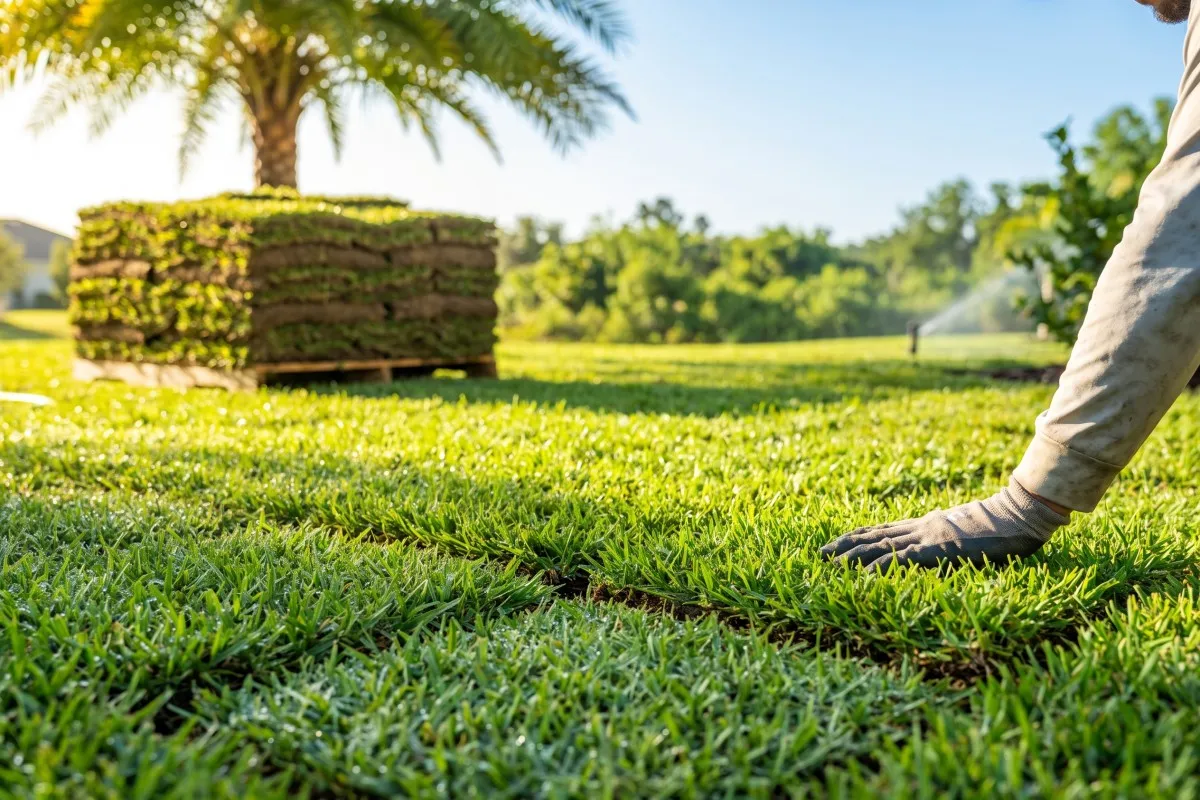
Good Florida dry season lawn care in Tampa Bay comes down to a single shift. Water less often but deeper, and read the grass instead of the calendar. From November through May the rain gets scarce and the air dries out, so your lawn slows down and loses a little of its color along the way. Most of that is normal. The yards we walk across Riverview and Brandon rarely need rescuing. They need a new rhythm.
What follows is where normal ends and damage begins, and what to change once the dry months settle in.
First, know what is normal in a Tampa Bay dry season
Tampa Bay sits in USDA hardiness zones 9b to 10a, with a growing season near 330 days, so our warm-season grasses rarely go fully dormant the way a northern lawn does (USDA Plant Hardiness Zone Map). They slow down. When soil temperatures drop below 50°F, St. Augustine and bermuda both fade toward tan or straw and stop putting on new growth (UF/IFAS St. Augustinegrass for Florida Lawns).
A cold snap in January can turn the whole lawn a uniform straw. That is dormancy. It greens back up when the soil warms into the low 60s. What is not normal is a lawn thinning in irregular patches while the blades right beside it stay green. That points to drought stress or a pest problem, and it earns a closer look.
Here is the fastest field test. Dormant turf fades evenly across the whole yard and springs back with warmth. Drought-stressed turf wilts, then recovers its look within a few days of a good soak (UF/IFAS St. Augustinegrass for Florida Lawns). Real damage stays down no matter what you do.
Florida dry season lawn care in Tampa Bay: 6 changes from November through May
These are the adjustments we leave with customers at the follow-up walk, tuned to our sandy soils and our long dry stretch.
- Water deeply and less often. Established warm-season turf wants about 1/2 to 3/4 inch of water in a single soaking, not a daily sprinkle (UF/IFAS AE436). Deep soakings pull roots down where dry-season moisture still sits.
- Cut back the frequency, not the depth. Turfgrass water demand falls to roughly 3.2 to 3.3 inches per month in the cool November-through-February window, against 5.1 to 5.7 inches per month as things warm in March through May (UF/IFAS Turfgrass Irrigation Requirements). In the coldest weeks a healthy lawn may go 10 to 14 days between cycles.
- Read the grass for thirst. Three signals mean it is time to run a zone: blades that fold lengthwise, a blue-gray cast instead of green, and footprints that stay visible for more than 30 seconds after you walk across (UF/IFAS AE436).
- Hold off on nitrogen while growth is slow. Dormant or barely-growing grass cannot use it. Fertilizer applied in the cold either leaches through our sandy soil or feeds winter weeds instead (UF/IFAS St. Augustinegrass for Florida Lawns).
- Raise the mower a notch. A taller blade shades the soil, holds moisture, and drives deeper rooting, which is exactly the drought defense UF/IFAS points to.
- Keep the rain sensor working. It is required on Florida irrigation systems by law, and in the dry season it stops you from running a cycle after one of our rare winter fronts blows through (Florida Statute 373.62).
Water by the inch, before dawn
The single biggest dry-season mistake we see is a controller still running the summer schedule into December. Short, frequent watering keeps roots shallow. Most of what you apply is lost to evaporation and drainage before the grass can use it. That is exactly backwards for the months when the lawn needs a deeper reserve to lean on.
Run each zone long enough to put down 3/4 inch. Then leave it off until the grass asks again. Water in the pre-dawn hours so the blades dry as the day warms, which keeps disease pressure low even on a cool, damp morning. Never measured your output? Our walkthrough on how to water established sod in Florida shows the fifteen-minute can test that turns “3/4 inch” into a real run time for your sprinklers.
Tell dormancy apart from real damage
This is where dry-season worry usually starts, so it is worth slowing down on. St. Augustine carries a midvein that lets each blade fold in half and cut its own exposure to the sun. A folded, blue-gray lawn is thirsty. Give it a good soak and it bounces back. A lawn gone uniformly tan after a cold night is dormant, simply waiting on warmth.
Damage looks different from both. It shows up as shapes. Rings and spreading brown patches that never recover when you water, and never green up when it warms. Cool-season fungus can still move through a lawn that stays wet overnight, which is one more reason to water at dawn and only when it is needed. If your trouble started back in the wet months and never healed, our guide to Florida rainy season lawn care covers the disease side in depth.
One point we make to every customer: a thin, off-color winter lawn is no reason to rip anything out. Wait for spring.
Why the sod under your feet changes the math
Not every lawn handles a dry stretch the same way. The base your sod was grown on is a big part of why. We install sand-bottom sod, grown on sandy soil rather than muck, because its porous base matches Central Florida’s native ground. Roots reach deeper into it, so the lawn pulls from a larger moisture reservoir when the rain is weeks away.
That deeper root system is what makes the deep-and-infrequent schedule actually work, instead of fighting turf that never rooted down in the first place. It drains faster too. After the occasional heavy winter rain, that quick drainage keeps disease pressure lower. We break down the trade-offs in our guide to sand-bottom versus muck-bottom sod.
And because our warm-season grasses never fully shut down here, the dry season is a fine time to lay new sod. Fresh turf goes in year-round across Tampa Bay. Only the rhythm shifts.
The short version to tape to your controller
Dry-season care here is mostly restraint. Slow the schedule down. Water deep when the grass tells you it is thirsty, and let the cool-weather color fade without panic.
Planning a new lawn in Valrico, Apollo Beach, Sun City Center, or anywhere across Hillsborough and Manatee? We will match the right sod to your site and hand you a watering plan built for our two seasons, not one borrowed from up north.

Fresh-cut sod installation, replacement, and delivery in the Tampa Bay area.
Continue reading
Winter Lawn Care in Tampa Bay: What Florida Homeowners Need to Do From December Through February
Winter lawn care in Tampa Bay is mostly about doing less, correctly. Here are the few critical steps that carry your sod from December through February.

How to Check If New Sod Is Rooted in Florida: A Homeowner's Field Test
How to check if new sod is rooted in Florida with a simple tug test and edge-lift, plus the Tampa Bay timeline that tells you when to mow.
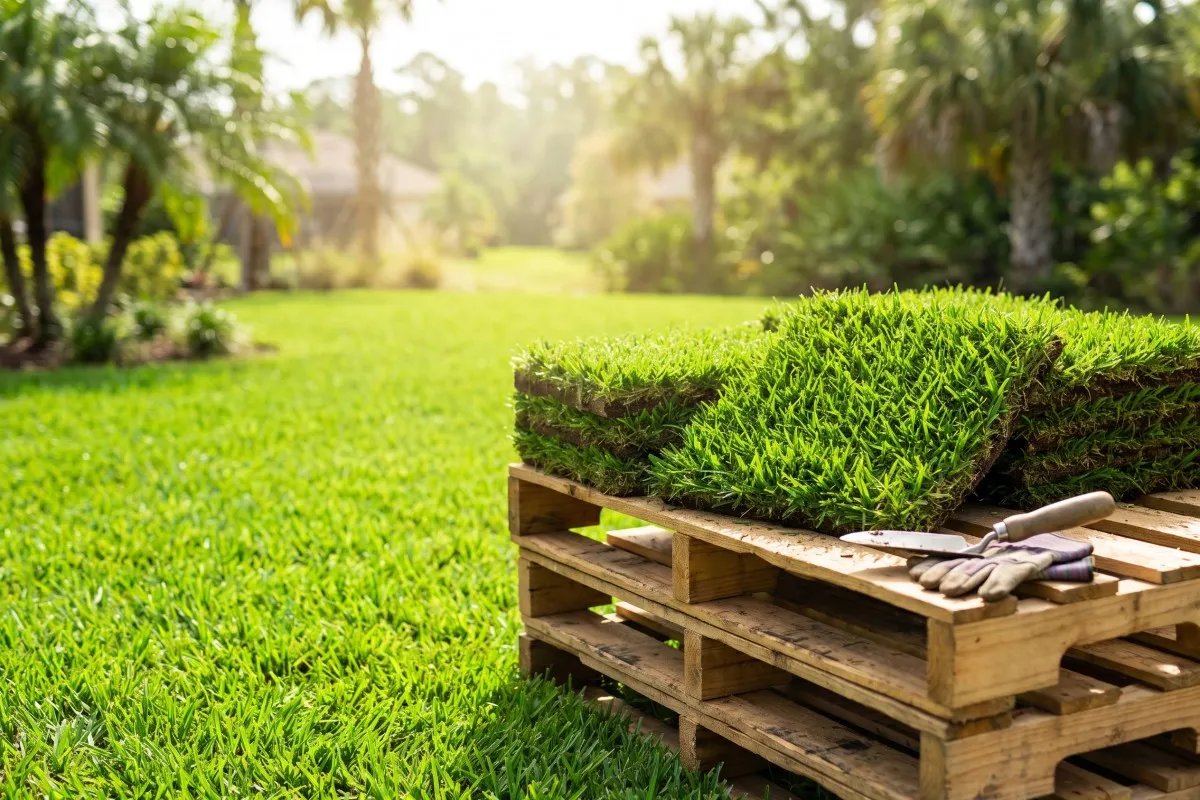
Fall Lawn Prep in Tampa Bay: How to Get Your Sod Ready Before Dry Season Hits
Fall lawn prep for Tampa Bay: the October to November steps that set your sod up to hold color, root depth, and density through the dry season.