
How to Check If New Sod Is Rooted in Florida: A Homeowner's Field Test
How to check if new sod is rooted in Florida with a simple tug test and edge-lift, plus the Tampa Bay timeline that tells you when to mow.
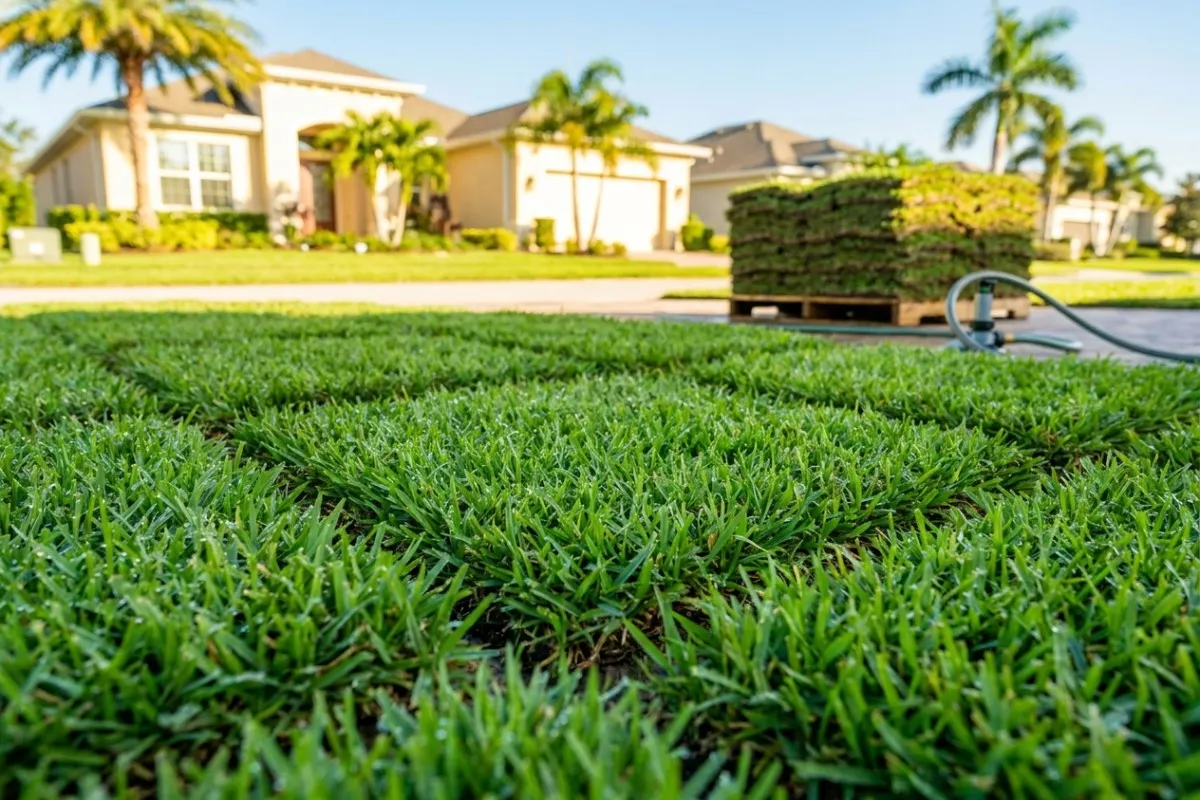
How to check if new sod is rooted in Florida comes down to one move you can do with two fingers: grab a corner, pull up gently, and feel whether the grass fights back. If the square peels off the soil like a rug, the roots have not caught yet. If it grips and the blades tear before the slab lifts, roots are threading into the ground below. That is the whole test. No digging, no tools, no guessing. Below is how we run it on the yards we finish across Riverview and Brandon, and how to read what it tells you.
We install sod almost every working day, and the question we get most in the two weeks after a job is some version of “is it working yet?” Here is the honest, non-destructive way to find out before you touch the mower or back off the water.
How to Check If New Sod Is Rooted in Florida: The Tug Test
The tug test is the field check every grower and extension office points to, and it works because it measures the one thing that matters: contact between new roots and native soil.
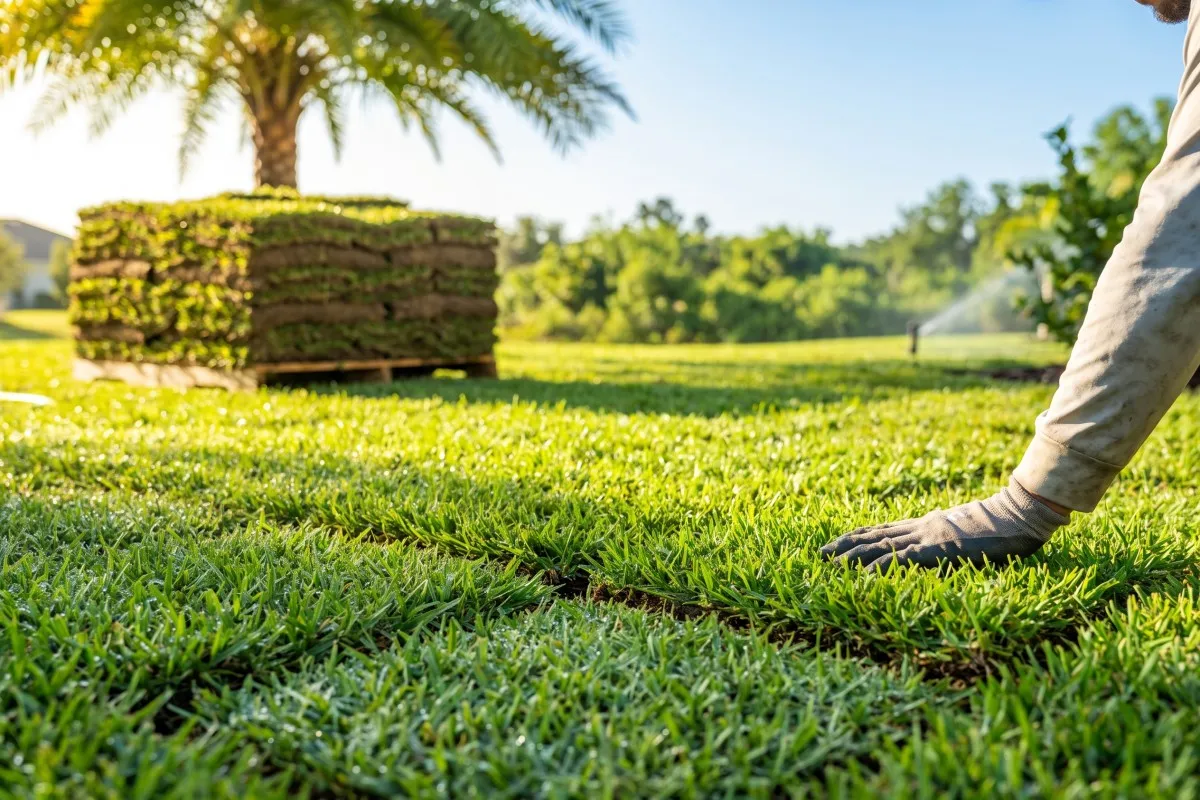
Pick a square near the middle of a sunny section, not an edge. Pinch a corner between your thumb and finger. Lift straight up with steady pressure, the kind you would use to peel tape off a wall. Then read the result against these three outcomes:
- Lifts clean, no resistance: roots have not anchored. The slab is still living off the soil attached to its underside. Keep watering on your current schedule and stay off it.
- Resists, then the blades tear before the slab lifts: roots are knitting into the ground. This is what you want to feel. Ease toward longer, less frequent cycles.
- Will not lift at all, feels welded down: the sod is anchored and establishing well. It is ready for its first mow and the start of a normal watering rhythm.
Do not yank. You are feeling for grip, not trying to win a tug of war. Pulling hard enough to tear a rooted square sets it back by ripping the young roots you are trying to confirm. A gentle, honest pull tells you everything.
When New Sod Should Start Rooting in Tampa Bay
Before you read too much into one pull, know the clock you are working against. Most St. Augustine sod, which is the bulk of what we lay, puts down shallow anchor roots in 10 to 14 days and builds a full root system in four to six weeks under good conditions. So the first meaningful tug test is around day 10, not day 3. Pull too early and you will scare yourself for no reason.
UF/IFAS lays out the same arc in its guide to establishing a Florida lawn: short, frequent irrigations for the first 7 to 10 days, a step down to roughly once a day for the next 7 to 10 days, and full establishment by three to four weeks after sodding. The tug test is simply how you watch that timeline happen under your own feet.
Tampa Bay gives warm-season grass a long runway to do this. We sit in USDA hardiness zones 9b to 10a with a growing season near 330 days, so sod roots year-round here. What changes is speed. A July install rooting into 85-degree soil may hit firm resistance by day 10. The same grass laid in January roots more slowly because the soil has cooled, and it can need an extra week or two before the tug test turns. Neither is a problem. The clock just runs at the temperature of the ground.
The Edge-Lift Test, and Where to Run It
The tug test tells you about one square. The edge-lift check tells you whether the whole lawn is moving together, which is what actually matters before you mow.
Run the same gentle pull at several spots, and be deliberate about where. Seams between slabs, outer edges of the job, and shaded areas under trees all root slower than the sunny center. If a center square is welded down but the shaded strip along the fence still peels up easily, your lawn is not uniformly ready. That is normal. We tell every customer to judge readiness by the slowest section, not the fastest.
Pay special attention to pallet seams. If the edges where two squares meet lift while the bodies of the squares hold, you likely have a spot where irrigation coverage is thin or where the ground underneath was not quite flat at install. That is a cue to check your heads before you blame the grass. Good soil grading before the sod ever goes down is what keeps seams in solid contact, and it is the difference between a lawn that roots evenly and one that roots in patches.
What Resistance Actually Tells You
Firm resistance means two jobs are done. First, the severed roots that were cut when the sod was harvested have regenerated. Second, those new roots have pushed through the thin layer of growing medium on the slab’s underside and into your native soil. That root-to-soil handshake is the entire point of the establishment period.
This is also where the kind of sod under your feet shows its hand. We install sand-bottom sod grown on sandy soil rather than muck, and it tends to grab faster in our ground because the roots meet matching soil conditions from day one instead of transitioning out of a dense organic mat. In the first two weeks, when the tug test is deciding your schedule, that compatibility is exactly when it pays off.
One honest caveat. A square can feel anchored on top while the roots are still shallow. Resistance confirms rooting has begun and that the lawn can take a mow and a lighter watering cadence. It does not mean the deep, drought-tolerant root system is finished. That takes the full four to six weeks, and sometimes longer for Zoysia, which is a slower rooter than St. Augustine. Treat a passing tug test as a green light to advance, not a finish line.
Reading the Grass, Not Just the Roots
Your hands are not the only instrument. The blades tell you plenty while you wait for the tug test to turn.
A lawn that is rooting holds its color between cycles and springs back after you walk across it. If your footprints stay pressed into the grass minutes later, the sod is still thirsty and the roots are not yet pulling moisture on their own. Lingering footprints are a water signal, not a rooting failure. A little yellowing at transplant is common too, and usually corrects as roots take over the feeding; our guide to new sod yellowing and what causes it walks through when that color shift is routine and when it is not.
What should worry you is a square that lifts clean well past day 14 and shows browning underneath. That points to a problem below the grass rather than a slow start. A low spot holding standing water, a pest issue, or a stretch of sod that never made soil contact will all stall rooting in one area while the rest of the yard moves on.
When the Tug Test Says Wait
A square still lifting at day 10 to 14 is not a crisis. It is a prompt to check the things that feed rooting before you change anything drastic.
Walk the irrigation first. Run each zone and watch for a head that is blocked, misaimed, or leaving a dry strip between zones. Most slow-rooting patches we get called out to inspect trace back to a coverage gap, not to the sod itself. Confirm you are still watering often enough for the sod’s age, and that recent rain has not quietly fooled a controller without a working rain sensor into skipping cycles your new sod still needed.
If coverage is solid and the schedule is right, the answer is usually patience plus the calendar. Hold your current watering for another three or four days, then tug again. For the full day-by-day plan that this test rides on top of, our first 30 days of new sod care guide maps the watering phases to exactly what the roots are doing underground, and the Tampa Bay watering rules for new sod cover doing all of it inside your county’s irrigation window.
Wait for firm resistance before the first mow. Cutting sod that still lifts drags the slabs with the mower and tears the young roots you have spent two weeks growing. When the tug test finally refuses to budge, you have your answer. The lawn is yours now.
If you are nursing a fresh install anywhere across Valrico, Apollo Beach, or the wider Tampa Bay area and want a second set of eyes on whether it has taken, our project managers are glad to walk your yard and run the test with you.

Fresh-cut sod installation, replacement, and delivery in the Tampa Bay area.
Continue reading
New Sod Care in Florida: A Day-by-Day Watering and Establishment Guide for the First 30 Days
A day-by-day new sod care watering schedule for Florida homeowners — anchored to UF/IFAS ET science and SWFWMD irrigation day rules for Tampa Bay.
Why Is My New Sod Turning Yellow? Troubleshooting the First 30 Days in Florida
New sod turning yellow in Florida? Learn the three causes in the first 30 days and a simple decision path to adjust water, treat, or call your installer.
Florida Dry Season Lawn Care in Tampa Bay: Keeping Sod Healthy From November Through May
Florida dry season lawn care for Tampa Bay: what thin, straw-colored winter turf really means, and the watering and mowing changes that keep sod healthy.