
Fall Lawn Prep in Tampa Bay: How to Get Your Sod Ready Before Dry Season Hits
Fall lawn prep for Tampa Bay: the October to November steps that set your sod up to hold color, root depth, and density through the dry season.
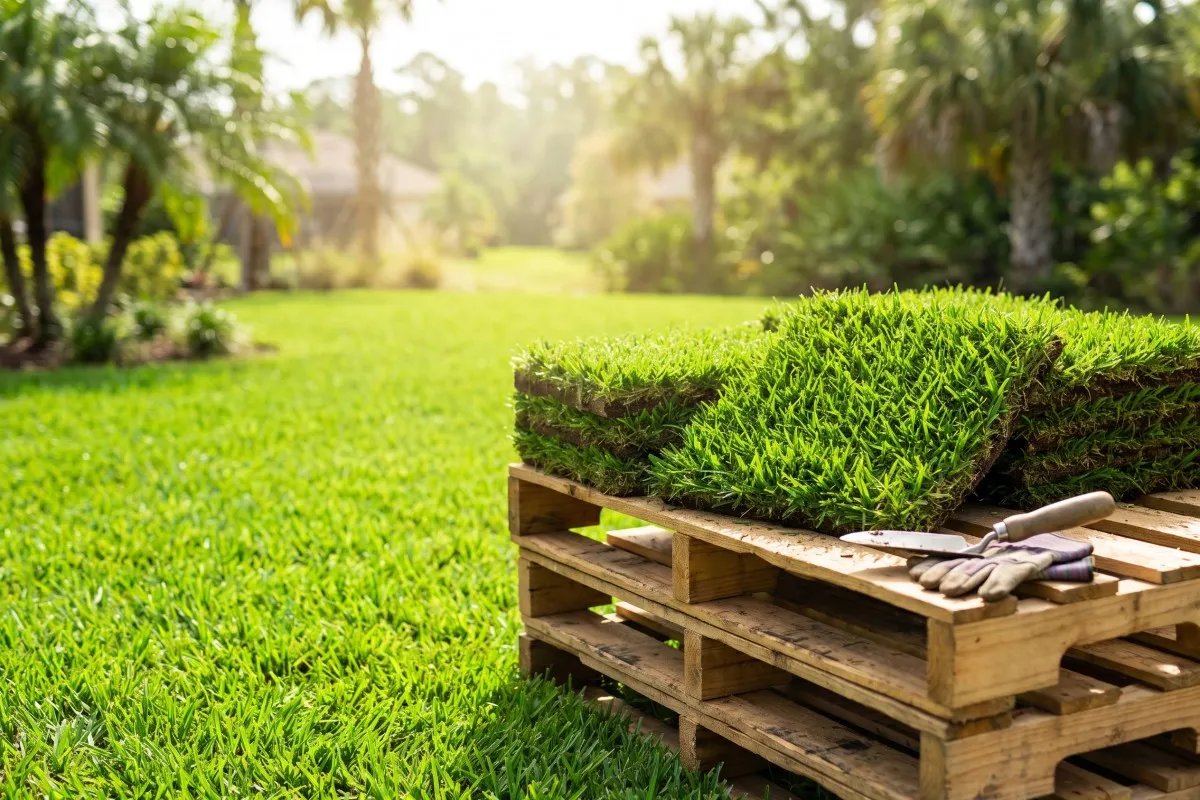
The single most useful thing we can tell you about fall lawn prep in Tampa Bay is this: the six weeks from mid-October through November decide how your sod looks all winter. Three moves carry the season. Get one good feeding down before the calendar closes, reset your irrigation when the clocks fall back, and mow high going into the cool months. Skip that window and the lawn coasts into dry season thin and shallow-rooted. The yards we walk across Riverview and Brandon that stay dense through February are almost always the ones that got these few steps right in October, while the grass still had the warmth to answer a feeding and push roots down before the ground cooled.
Here is the order we work in, and why each piece is timed to our two-season calendar rather than generic Florida advice.
First, know when the rain actually leaves Tampa Bay
The National Weather Service pins West Central Florida’s rainy season to roughly May 25 through October 10, with October behaving as a transition month before the dry stretch settles in for good (NWS Tampa Bay via WTSP). Some years it dries out early. Some years a stray front keeps things damp into late October. The date is a guideline, not a promise.
What matters for your lawn is the handoff. All summer the afternoon storms fed the grass for free. Once they stop, your irrigation and your root depth are the only things standing between the sod and eight dry months. Everything below is about walking into that handoff prepared. If you want the full picture of what comes after, our Tampa Bay dry season sod care guide covers November through May in depth.
Tampa Bay sits in USDA hardiness zones 9b to 10a, with a growing season near 330 days (USDA Plant Hardiness Zone Map). Our warm-season grasses never fully shut down. They just slow, which is exactly why a fall feeding still lands before growth stalls.
Step 1: Get one fall fertilization down before the window closes
This is the step homeowners miss most, because two deadlines squeeze it into a narrow slot. Hillsborough County bans nitrogen and phosphorus fertilizer from June 1 through September 30 every year, part of the county’s push to keep nitrogen out of Tampa Bay (Hillsborough County Fertilizer Ordinance). On the other side, UF/IFAS puts the last recommended feeding for Central Florida lawns in October (UF/IFAS SL21/LH014). Miss both edges and you have handed your lawn to winter on an empty tank.
So October is your one clean shot. And what you put down matters as much as when. Reach for a slow-release product with a 1:1 or 2:1 ratio of nitrogen to potassium, not a heavy nitrogen blend. Potassium is what builds cold and stress tolerance, and UF/IFAS notes that when it runs short, turf is more prone to low-temperature injury over winter (UF/IFAS Gardening Solutions: Your Florida Lawn in Winter).
Do not push the feeding late to squeeze out one more flush of green. Fertilizing too close to the first cool snap keeps the grass actively growing when it should be hardening off, and tender new growth is the first thing a cold night burns. Feed in October. Then stop.
Step 2: Reset your controller when the clocks fall back
Your irrigation timer needs to change the same weekend Tampa Bay changes its clocks. The Southwest Florida Water Management District allows watering two days per week during Daylight Saving Time, and cuts that to one day per week from the first Sunday in November through the second Sunday in March (SWFWMD Water Restrictions). Either way, each zone is capped at three-quarters of an inch per watering day.
Under the winter schedule, the days depend on your house number:
- Odd-numbered or no address: water Saturday.
- Even-numbered address: water Sunday.
That is the whole residential schedule from November onward. Nonresidential sites get Tuesday. The mistake we see every year is a controller still running the summer program into December, dumping water the grass cannot use and the rules no longer allow. When you set your clocks back, open the controller and cut it to the one allowed day. Your rain sensor stays in the loop too, since it is required by Florida law and it will skip a cycle after one of our rare winter fronts (Florida Statute 373.62).
One thing does not change with the calendar: water before dawn, deep and infrequent, so blades dry as the day warms and roots chase moisture downward. If you have never measured what your sprinklers actually put out, our walkthrough on watering established sod in Tampa Bay shows the can test that turns “three-quarters of an inch” into a real run time.
Step 3: Mow high and clear what summer left behind
Raise the mower a notch for fall. A taller blade shades the soil and drives the deeper rooting that carries a lawn through drought. St. Augustine wants to run tall, and the edge of dry season is the worst time to scalp it.
Then clear what summer left. A mat of wet leaves in a shady corner is a fungus factory. If brown patch or gray leaf spot moved through during the rains and never fully healed, our guide to Florida rainy season lawn care breaks down the shady-spot side that lingers into fall.
Step 4: Read the lawn as the color starts to fade
Expect some color loss, and do not panic when it comes. Once soil temperatures drop below about 50°F, St. Augustine and bermuda both fade toward tan and stop putting on new growth (UF/IFAS St. Augustinegrass for Florida Lawns). That is dormancy, and it reverses when the soil warms back up. A uniform straw color across the whole yard after a cold night is normal. It is not a reason to rip anything out.
What earns a closer look is uneven trouble. Blades that fold lengthwise and take on a blue-gray cast are thirsty, not dormant, and they mean a zone is due. Irregular patches that stay down no matter what you do point to a pest or disease problem instead. The tell is simple. Dormant turf fades evenly and springs back with warmth. Damage holds its shape and never recovers.
The reason a well-prepped Tampa Bay lawn shrugs off the dry season better comes down to what it is grown on. We install sand-bottom sod, grown on sandy soil rather than muck, because its porous base matches Central Florida’s native ground. Roots reach deeper into it, so the lawn pulls from a larger moisture reservoir when the rain is weeks away and drains faster after the occasional heavy front. That deeper root system is what makes the deep-and-infrequent winter schedule actually work. We lay out the trade-offs in our guide to sand-bottom versus muck-bottom sod.
The short version to tape to your controller
Fall prep here is four moves, all timed to the calendar. Feed once in October with a potassium-forward blend. Cut the irrigation to one day a week when the clocks fall back. Mow high and clear the debris. Then read the grass, not the calendar, as the color settles into its winter tone.
And if your lawn is coming out of a rough rainy season with thin spots that never filled in, fall is a fine time to lay fresh sod. Our warm-season grasses go in year-round across Tampa Bay, only the watering rhythm shifts. Planning new sod or a full renovation in Valrico, Apollo Beach, Sun City Center, or anywhere across Hillsborough and Manatee? We will match the right grass to your site and hand you a watering plan built for our two seasons, not one borrowed from up north.

Fresh-cut sod installation, replacement, and delivery in the Tampa Bay area.
Continue reading
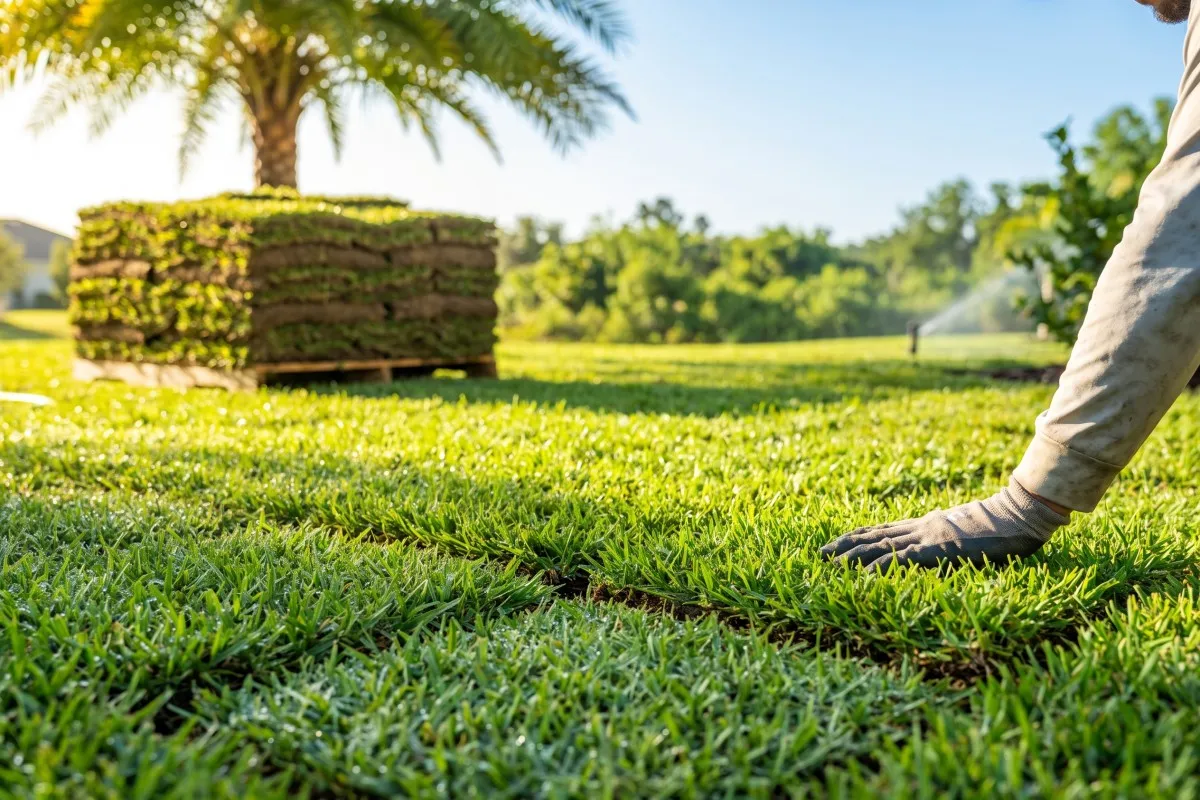
Florida Dry Season Lawn Care in Tampa Bay: Keeping Sod Healthy From November Through May
Florida dry season lawn care for Tampa Bay: what thin, straw-colored winter turf really means, and the watering and mowing changes that keep sod healthy.
Why Is My New Sod Turning Yellow? Troubleshooting the First 30 Days in Florida
New sod turning yellow in Florida? Learn the three causes in the first 30 days and a simple decision path to adjust water, treat, or call your installer.
7 Sod Installation Mistakes Tampa Bay Homeowners Make (And How to Avoid Them)
The 7 sod installation mistakes Florida homeowners make most, what each one looks like weeks later, and how our Tampa Bay crews avoid every one.