
Soil Preparation for Sod Installation in Florida: Why Grading and Prep Make or Break Your Lawn
Soil preparation for sod installation in Florida decides whether new sod roots or fails. Here is the grading and prep work our crews do before the first pallet.
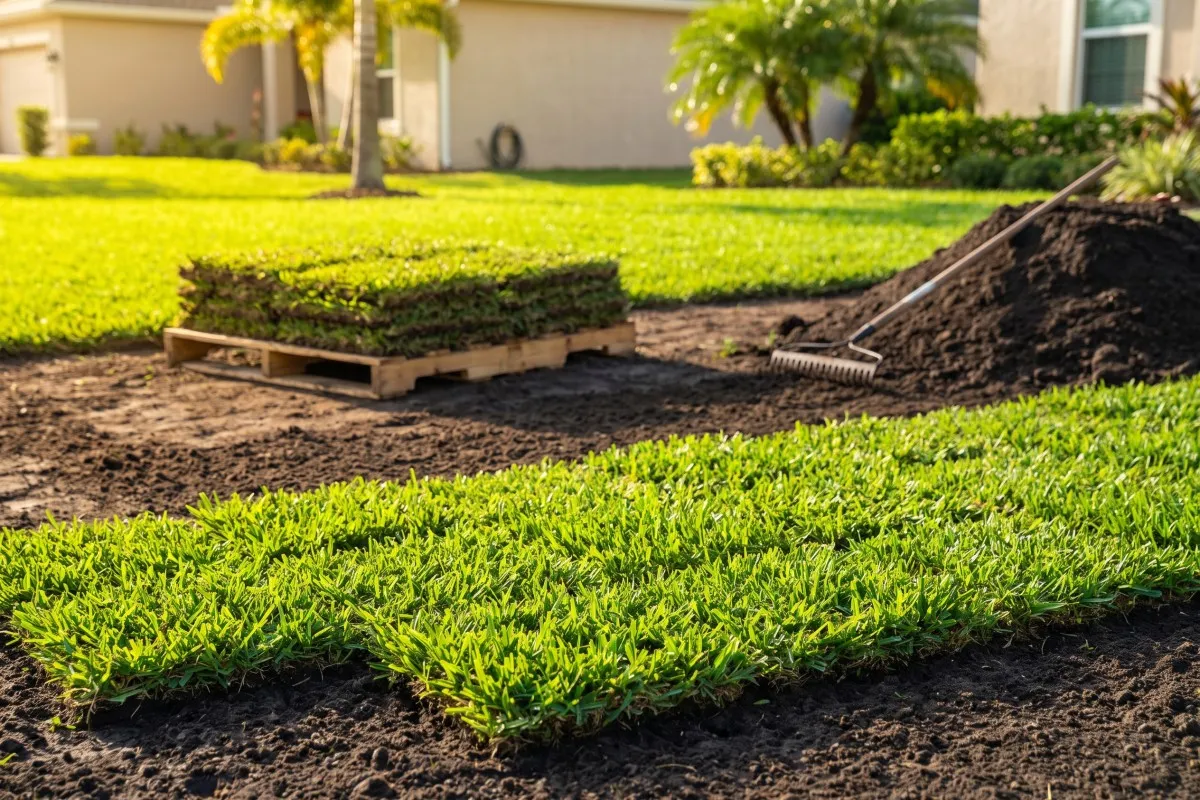
How the ground gets prepared before the first pallet lands decides more about your new lawn than the grass variety you choose. Soil preparation for sod installation in Florida is the quiet work that makes sod root deep or leaves it browning by August, and most homeowners never see it happen. We walk yards across Riverview, Brandon, and Valrico every week, and the failed lawns we get called to rescue almost never failed because of the grass. They failed because the dirt underneath was rushed.
That is the part worth understanding before you sign anything. Fresh-cut sod is a living crop with a few days of stored energy in it. Lay it on clean, graded, loosened soil and it knits down fast. Lay it on dead thatch, compacted clay, or a yard that pitches water toward the slab, and no amount of premium grass saves it. UF/IFAS puts it plainly: proper soil preparation is critical to how quickly turf establishes and how much maintenance it demands afterward (UF/IFAS ENH02/LH012).
Soil preparation for sod installation in Florida starts before the first pallet
Our crews run the prep in a fixed order, and each step exists because we have seen what skipping it does. The sequence is strip the old lawn, protect the irrigation, cut and grade the soil for drainage, loosen and level the sod bed, then lay fresh-cut sod the same morning. On most residential lots in our service area the whole thing fits inside a single day, which is the real advantage of sod over seeding. You leave with dirt and come home to grass.
The reason we treat prep as its own craft, and not a warmup, is simple. Everything you can see later depends on things you cannot see now. A tight seam looks the same over good soil and bad soil on day one. Ninety days later the difference is a lawn you mow versus a patchwork you replace.
Removing old grass before sod: down to clean dirt
New roots have to reach soil, not sit on top of a dead lawn. Removing old grass before sod in Florida means stripping the existing turf, weeds, and thatch down to bare ground so the fresh squares meet clean dirt. When crews cut corners here, they lay new sod straight over the old, and the buried layer becomes a barrier that traps water and blocks roots from ever reaching real soil.
You do not need to kill your lawn before we come. We handle removal as the first step, and it is one of the two things that most affect how long the day runs. An overgrown, root-bound yard takes real work to strip; a thin, tired lawn comes up fast.
There is a chemical shortcut some crews take that is worth knowing about. If a yard is treated with a non-selective herbicide instead of physically removed, the label typically calls for a wait of several days before new sod goes down, and the dead material still has to be raked out. Spraying and sodding the same afternoon is how weeds and old runners come right back up through your new lawn. We would rather cut it out.
Lawn grading in Tampa Bay: where drainage is won or lost
This is the step that quietly settles whether your lawn thrives or holds water for years, and it is the one most likely to be skipped when a bid is cheap. Lawn grading in Tampa Bay is about one thing above all: moving rain away from your house and hard surfaces so it sheets toward the swale instead of pooling against the foundation.
UF/IFAS recommends a fall of roughly 1 to 2 percent away from structures, on the order of a half-foot to a foot of drop over 50 feet, and reminds installers to account for the thickness of the sod itself when they set the final grade (UF/IFAS ENH02/LH012). That last detail catches a lot of people. Sod adds height. Grade the dirt flush to a walkway and the finished lawn ends up an inch proud of it, so water runs the wrong way and sits.
We hand-grade across the yards we walk because a rake reads low spots a machine rolls right over. Here is what proper grading is protecting you from:
- Standing water against the slab, which invites fungus and, over time, works against your foundation.
- Soggy corners that never green up because roots in saturated soil suffocate.
- Sod that settles unevenly as low pockets slump under their first heavy rain.
Central Florida sits in USDA hardiness zones 9b to 10a with a growing season near 330 days (USDA Plant Hardiness Zone Map), so our warm-season grasses are rooting and growing across most of the calendar. That long season is a gift only if water leaves the yard. Get the grade wrong and you spend that whole season fighting the drainage instead of enjoying the lawn.
Testing and loosening the sod bed
Once the grade is right, the sod bed itself has to be ready to accept roots. Sod bed preparation in Florida works with the sand we already have underfoot. Most yards here are sandy, which is exactly why we install sand-bottom sod: grass grown on a sandy base integrates with your soil instead of layering a dense mat of muck on top of it, and roots move straight down into ground they recognize.
Compaction is the hidden enemy. UF/IFAS offers a field test anyone can run: push a thin rod into moist soil, and if it will not go 6 inches without real force, compaction will hold your turf back by choking off water, oxygen, and root depth (UF/IFAS ENH02/LH012). Where soil is packed hard, loosening the top few inches gives new roots somewhere to go. The same UF/IFAS guidance notes that tilling too much backfires, since repeated passes pulverize soil structure and can leave it more prone to re-compacting.
Soil chemistry belongs in this window too, because it is far easier to fix now than later. Most turfgrasses prefer a soil pH between 6.0 and 7.0, and any pH adjustment should be made before the lawn is planted, not after (UF/IFAS ENH02/LH012). Once sod is down, you are dressing the surface. With bare ground open, an amendment can actually be worked in.
Protecting what is already in the ground
Before any blade touches the yard, we find the irrigation heads and mark them. This sounds minor. It is not. A careless crew shears heads off during grading and hands you a repair bill plus dry patches exactly where the spray no longer reaches.
We set the finished grade so heads sit at the right height once the sod is laid, spraying over the grass instead of firing into a wall of it. Low-voltage lighting and pet-fence wire get flagged the same way. The whole point of good prep is that nothing you already paid for gets destroyed to install something new.
What good sod bed preparation buys you
None of this shows up in a photo of the finished lawn, which is precisely why it is the first thing a low bid cuts. When you compare quotes, ask each installer to walk you through their prep, because that answer tells you more than the price does. If two bids are far apart, the gap is usually buried right here, in whether the old lawn gets stripped, the grade gets shaped by hand, and the bed gets tested and loosened before the first square goes down.
We will not promise you a specific outcome, and you should be wary of anyone who does. What we will tell every customer is that fresh sod on a properly prepared bed gives itself the best chance to root deep and hold through a Florida summer. The rest is water, which we hand off as its own plan, and which we break down in our guides to watering established sod and getting through the rainy season without drowning young roots. If you want to see how this would run on your own dirt, anywhere across Hillsborough, Manatee, or Pinellas, we are glad to walk the yard with you and map the prep before you commit.

Fresh-cut sod installation, replacement, and delivery in the Tampa Bay area.
Continue reading
7 Sod Installation Mistakes Tampa Bay Homeowners Make (And How to Avoid Them)
The 7 sod installation mistakes Florida homeowners make most, what each one looks like weeks later, and how our Tampa Bay crews avoid every one.
DIY Sod Installation vs. Hiring a Pro in Tampa Bay: What Florida Homeowners Should Really Know
DIY or professional sod installation in Tampa Bay? Here is the real cost, the grower's own warning, and the three prep steps that decide if sod lives.
The Sod Installation Process in Florida: What Happens on Install Day in Tampa Bay
The sod installation process in Florida, behind the scenes: what our Tampa Bay crew does on install day and how to spot a job done right.