
Lawn Care Calendar for Tampa Bay: A Month-by-Month Guide
A lawn care calendar for Tampa Bay Florida homeowners: what to mow, water, fertilize, and watch for pests and disease, month by month, all year.
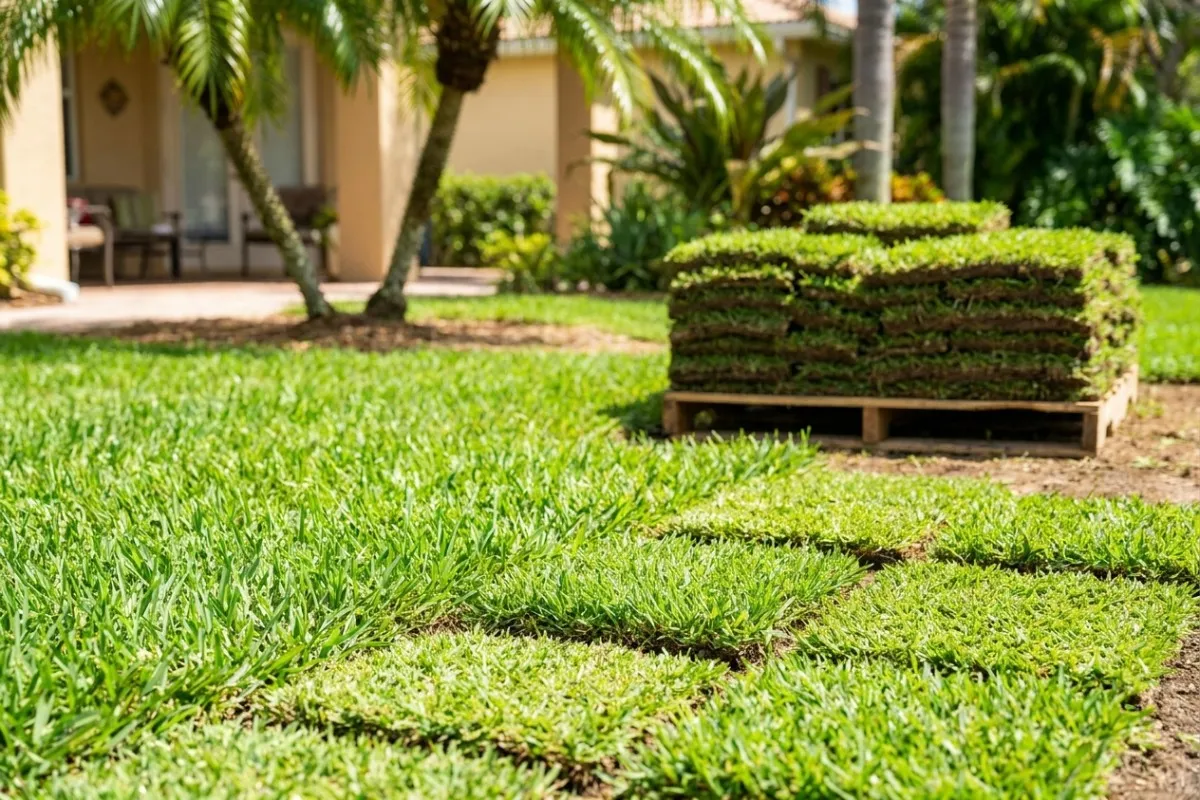
Here is a lawn care calendar for Tampa Bay Florida built around one fact: our warm-season grasses never fully go dormant, so lawn care here is a year-round schedule, not a spring-to-fall sprint. The greater Tampa Bay area sits in USDA hardiness zones 9b through 10b, where winter lows rarely drop below the mid-20s (UF/IFAS USDA Hardiness Zones). That mild winter is why St. Augustine, zoysia, and bermuda keep growing, and why the calendar below never asks you to stop caring for the lawn. It asks you to adjust.
Use this as a bookmarkable reference. Every task is tuned to the varieties we install across Valrico, Riverview, Brandon, Apollo Beach, and the rest of Hillsborough and Manatee counties, and to the two events that drive our year: the dry season that runs roughly October through May, and the rainy season that arrives in June.
The two dials you adjust all year
Before the months, understand what actually changes. Three things move with the calendar, and the rest follows:
- Mowing height and frequency. Keep standard St. Augustine cultivars like Floratam at 3.5 to 4 inches, and dwarf types at 2.5 inches (UF/IFAS ENH5). Never remove more than one-third of the blade in a single pass.
- Irrigation frequency. Water deeply and infrequently, then back off entirely when the rains take over. Our full guide to watering established sod in Florida covers the calibration.
- Fertilizer timing. This one is legally constrained. Hillsborough, Manatee, and Pinellas counties enforce a summer fertilizer blackout from June 1 through September 30, banning nitrogen and phosphorus during the rainy months (Hillsborough County). Your whole feeding schedule is built around that window.
January through March: dry season and cold snaps
Winter here is dry, not dead. Growth slows, so mowing drops to every two or three weeks, but the grass still needs your attention. This is the season of cold snaps and dry-season stress.
- January: Watch the forecast for frost. When lows approach freezing, water the lawn before dawn on the cold night; moist soil absorbs more heat during the day and re-radiates it slowly overnight, slightly raising temperatures at the blades (UF/IFAS Cold Protection of Landscape Plants). Hold off on fertilizer; the grass is not growing fast enough to use it. Keep mowing on the tall side to protect the crown.
- February: Still dry. Irrigate only when blades fold or turn blue-gray, roughly once a week under Southwest Florida Water Management District rules. This is a good month for spring pre-emergent weed control to stop summer weeds before they germinate; see our guide to pre-emergent weed control for timing.
- March: The driest, most stressful stretch of the year, with heat climbing before the rains arrive. Sharpen the mower blade before growth accelerates. Wait to fertilize until the lawn greens fully and has needed mowing twice, which in Central Florida usually means late in the month or into April (UF/IFAS ENH5).
April through June: green-up, chinch bugs, and the rains
Growth takes off, and so do pests. Mowing returns to weekly. This is when your first real fertilizer application lands, and when the season pivots hard in June.
- April: Apply your spring fertilizer now that the grass is actively growing, using a slow-release nitrogen product. Start scouting for chinch bugs, which begin damaging St. Augustine in April and favor hot, sunny, dry spots (UF/IFAS Extension). Their damage looks like expanding yellow-to-brown patches.
- May: The last month to fertilize before the blackout, so make any planned feeding count. Keep watering deeply and infrequently. Continue chinch bug checks; populations climb as it heats up.
- June: The rainy season begins, and everything changes. Turn the irrigation controller off or to its rain-sensor default, since afternoon storms often supply all the water the lawn needs (SWFWMD). The fertilizer ban is now in effect through September 30. Constant moisture raises disease pressure, so watch shady, low-lying areas closely.
July through September: rainy season and disease watch
This is the high-humidity, high-disease stretch, and it overlaps the entire fertilizer blackout. Your job shifts from feeding to protecting.
- July: Mow more often; wet grass grows fast. Mow only when the blades are dry to avoid clumping and spreading fungus. Fungal diseases like gray leaf spot and brown patch thrive now, especially where water sits. Our post on protecting shady St. Augustine through the rainy season walks through drainage and airflow fixes.
- August: Peak rain and heat. Keep irrigation off unless a genuine dry spell sets in, and never water in the evening, which leaves blades wet overnight and invites disease. Improve airflow by thinning tree canopies over the lawn.
- September: The ban is still on, and disease pressure stays high through the warm, wet start of the month. Keep scouting for the circular, spreading patches of lawn fungal disease. The blackout lifts September 30, so plan your fall feeding for the first days of October.
October through December: dry season returns
The rains taper, the fertilizer window reopens, and growth gradually slows again. This is your setup season for a strong winter and spring.
- October: Apply your fall fertilizer in early October, once the ban lifts, to help the lawn store energy before cooler weather (UF/IFAS ENH5). Turn irrigation back on now that daily storms are gone, watering deeply about once or twice a week. A potassium-forward feeding supports winter hardiness.
- November: Growth slows; stretch mowing intervals back out. Keep mowing tall to insulate the crown ahead of any cold. Rake or mulch fallen leaves so they do not smother the grass.
- December: The lawn is at its slowest but still alive. Water sparingly, only to prevent drought stress in this dry month, and watch the forecast for the year’s first hard cold snaps. Hold fertilizer until the lawn wakes and greens in spring.
Your Tampa Bay lawn care calendar at a glance
The pattern is easy to remember once you see it: feed in the shoulder seasons, protect through the summer, and always match watering to whether the rains are here. Fertilize in April, May, and October; hold off from June through September; mow tall and deep-water year-round; and scout for chinch bugs in the heat and fungus in the wet. Do that on the varieties suited to our sandy Central Florida soils, and a Tampa Bay lawn stays green through every month of the year.
If you are starting fresh or renovating a struggling lawn, we can walk your site with you and help match the right sod to your sun, shade, soil, and traffic, so the calendar above has the best possible grass to work with. Reach out to InstantGreen Sod when you are ready.

Fresh-cut sod installation, replacement, and delivery in the Tampa Bay area.
Continue reading
Spring Lawn Care for Tampa Bay Sod: When to Feed & Water
Spring lawn care for Tampa Bay sod starts with one rule: don't feed too early. Here is when to fertilize, water, and wake up last season's lawn.
Established Sod Care in Florida: The After-Year-One Routine
Established sod care in Florida made simple: a season-by-season routine for watering, mowing, and feeding a mature Tampa Bay lawn after year one.
When to Fertilize New Sod in Florida: A Season-by-Season Guide for Tampa Bay
When to fertilize new sod in Florida: wait about 30 days, then feed by the season your sod went down. A Tampa Bay timeline that protects your new lawn.