
Spring Lawn Care for Tampa Bay Sod: When to Feed & Water
Spring lawn care for Tampa Bay sod starts with one rule: don't feed too early. Here is when to fertilize, water, and wake up last season's lawn.
Here is the short version of spring lawn care for Tampa Bay sod: the fastest way to hurt an established lawn in March is to feed it too early. The grass you installed last season is only half awake in late winter. Wait. In Central Florida the real green-up usually lands in April, not February, and fertilizer dropped before the roots are working just feeds weeds and runs off in the next rain. We walk yards across Riverview and Brandon every spring, and we see the same two mistakes: the homeowner who treats a warm February week like April, and the one who stalls so long the lawn thins. This guide is the action plan in between.
Tampa Bay sits in USDA hardiness zones 9b through 10b, where winter lows rarely dip below the mid-20s (UF/IFAS USDA Hardiness Zones). Our warm-season grasses never fully go dormant here. They slow down and lose color. Then they wait. That mild winter is exactly why timing trips people up.
Why February feels like spring but isn’t
A warm week in February wakes the blades a little. The roots are still cold and slow underneath. Soil temperature, not the air you feel on your skin, decides when the grass can actually use nutrients and push new growth.
St. Augustine, zoysia, and bermuda all read the soil, not the forecast. When a few 80-degree afternoons show up in late winter, the top inch of thatch warms fast and the lawn looks ready. It isn’t. This is the shoulder-season trap, and it is where we see established lawns stalled or scorched. Feed a half-dormant lawn and you push tender new blades the roots can’t support, then a cold snap or a dry spell burns them back.
Step 1: Wake the lawn up before you feed it
Read the lawn, not the calendar. Two signals tell you the grass has truly broken winter and is growing on its own:
- Even, full green-up. No straw-colored or brown patches lingering across the lawn. The color should look consistent from the sunny front to the shadier sides.
- Two real mowings. The lawn has grown enough to need cutting at least twice since it woke, not once after a single warm week.
There is a number behind those signals. Warm-season turf starts actively growing and taking up nitrogen when soil temperature at four inches deep holds at or above 65 degrees Fahrenheit (University of Georgia Extension). In Central Florida that usually arrives in early to mid April. A cheap soil thermometer pushed into the root zone midmorning settles the argument better than any calendar does.
Step 2: When and what to fertilize
Apply your first feeding in early April in Central Florida, after the lawn has needed mowing twice and greened up fully (UF/IFAS ENH5). Use a slow-release nitrogen product and apply no more than one pound of slow-release nitrogen, or a half pound of a water-soluble source, per 1,000 square feet (UF/IFAS ENH5). That rate feeds the lawn without forcing the soft, floppy growth that invites disease later.
Why does early matter so much? Fertilizer on a lawn that isn’t growing wastes the product and sends nitrogen into runoff instead of into the plant. Worse, it builds shallow roots at the expense of the deep ones your grass needs to survive summer. You pay for it twice. Once at the store, then again when the lawn struggles in June.
Plan the whole spring around the county fertilizer ordinance, too. Hillsborough, Manatee, and Pinellas counties enforce a summer fertilizer blackout from June 1 through September 30, banning nitrogen and phosphorus through the rainy months (Hillsborough County). So your real feeding window is short. Fertilize in April, then feed once more in May if the lawn is still hungry. After that, stop. If you want the full year mapped out, our Tampa Bay lawn care calendar lays every month out in order.
Step 3: Reset your watering for the dry-season shoulder
Spring is the driest, most stressful stretch of the Tampa Bay year. The rains don’t arrive until June. Heat climbs week over week through March and April while the lawn tries to grow on the least water it will see all year. Watering right now matters as much as fertilizer does.
This spring the margin is even tighter. The Southwest Florida Water Management District declared a Modified Phase III water shortage effective April 3, 2026, and later extended it through October 1 (SWFWMD). That cuts most of the region to one watering day per week. Your day is set by the last digit of your street address, and the district allows watering only from 12:01 to 4 a.m. or from 8 p.m. to midnight, unless your city or county posts stricter hours. So a missed window is a missed week. Check your address and day before you set the timer. The rules shift as drought conditions change, so confirm the current stage on our Tampa Bay water restrictions guide.
Within whatever day you are allowed, water deeply and infrequently. Put down about half to three-quarters of an inch in that single session so moisture reaches the root zone, rather than a daily sprinkle that trains roots to stay shallow. A tuna can on the lawn tells you when you have hit that depth. Our full walkthrough on watering established Florida sod covers the calibration and how to read a struggling lawn between watering days.
Sand-bottom sod helps you here. Because we install sod grown on sandy soil that matches Central Florida’s ground, it roots deeper and drains faster, which is exactly what you want going into a dry, restricted spring.
Step 4: Mow sharp and clean up as it wakes
Before growth takes off, sharpen the mower blade. A dull blade shreds the leaf tips, and torn St. Augustine browns at the edges and loses water faster during the dry spring weeks. Set the deck tall. Keep standard St. Augustine cultivars like Floratam at 3.5 to 4 inches and never cut more than a third of the blade in one pass (UF/IFAS ENH5).
Two jobs round out the spring startup:
- Scout for chinch bugs. They begin damaging St. Augustine in April and love hot, dry spots, showing as expanding yellow-to-brown patches that watering won’t fix.
- Rake out winter debris. Pull leaves and dead thatch off the surface so light and air reach the crowns as they green up.
Spring is also the window for pre-emergent weed control, which has to go down before summer weeds germinate, not after you see them. The timing is its own small science, and we break it down in our guide to pre-emergent weed control in Florida lawns.
Your spring lawn care plan, in order
The whole plan rests on patience at the front. Wake the lawn, confirm it is growing with two mowings and full color, feed in April with slow-release nitrogen, water deep on your one allowed day, and keep the mower sharp and tall. Do that, and your sod goes into the June rains with deep roots and real strength instead of a flush of soft growth it can’t hold.
One more thing worth saying plainly. There is no single right season to put sod down in Tampa Bay. We install year-round, and a lawn started in any season can thrive with the right startup care. Spring care is simply about getting last year’s lawn moving at the right moment, not rushing it.
If you are weighing a renovation or fresh sod for a tired yard this spring, we are glad to walk your property with you and match the right grass to your sun, shade, soil, and traffic. Reach out to InstantGreen Sod when you are ready, and we will tell you straight what your lawn actually needs.

Fresh-cut sod installation, replacement, and delivery in the Tampa Bay area.
Continue reading
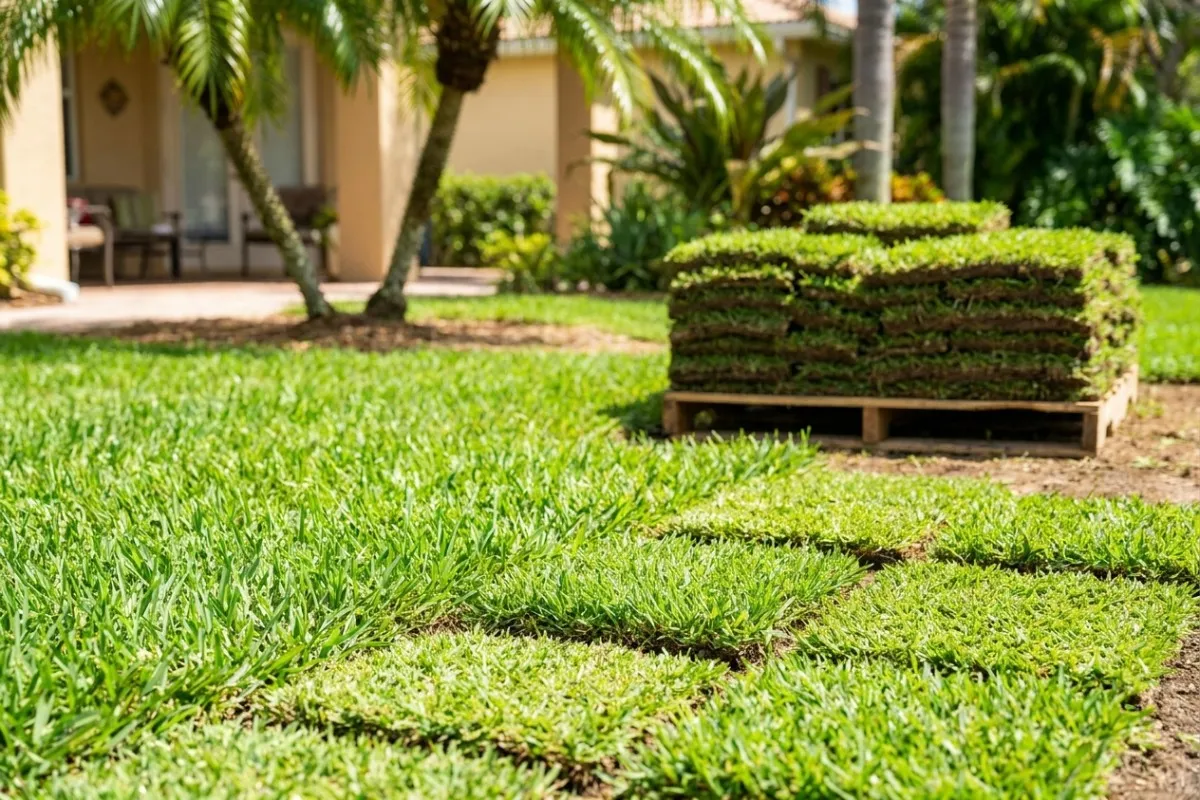
Lawn Care Calendar for Tampa Bay: A Month-by-Month Guide
A lawn care calendar for Tampa Bay Florida homeowners: what to mow, water, fertilize, and watch for pests and disease, month by month, all year.
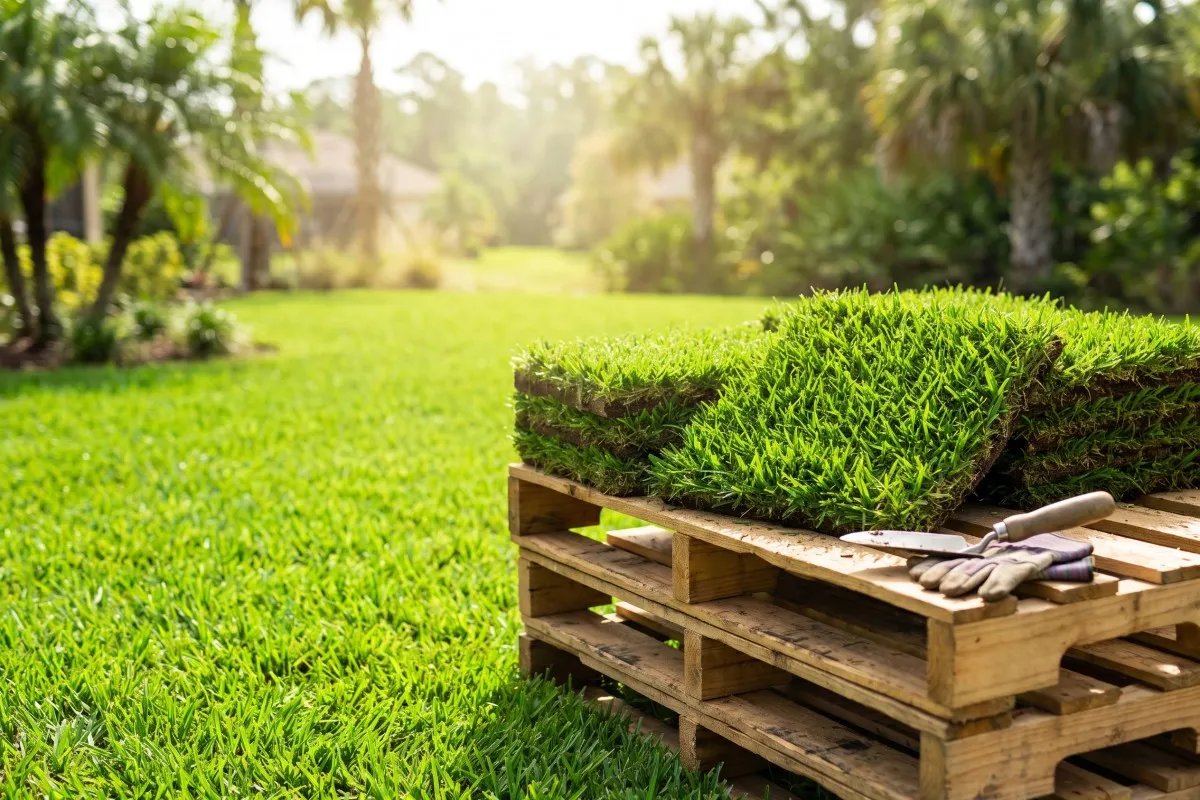
Fall Lawn Prep in Tampa Bay: How to Get Your Sod Ready Before Dry Season Hits
Fall lawn prep for Tampa Bay: the October to November steps that set your sod up to hold color, root depth, and density through the dry season.
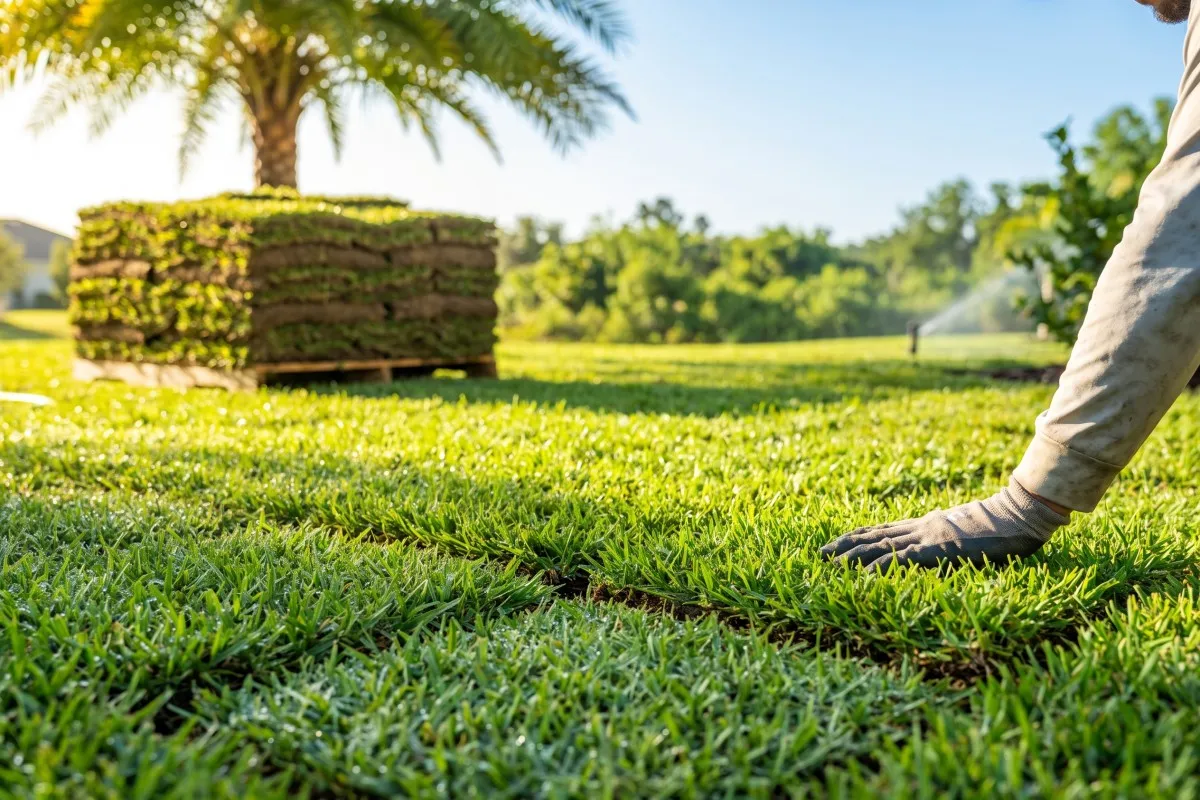
Florida Dry Season Lawn Care in Tampa Bay: Keeping Sod Healthy From November Through May
Florida dry season lawn care for Tampa Bay: what thin, straw-colored winter turf really means, and the watering and mowing changes that keep sod healthy.