
Established Sod Care in Florida: The After-Year-One Routine
Established sod care in Florida made simple: a season-by-season routine for watering, mowing, and feeding a mature Tampa Bay lawn after year one.
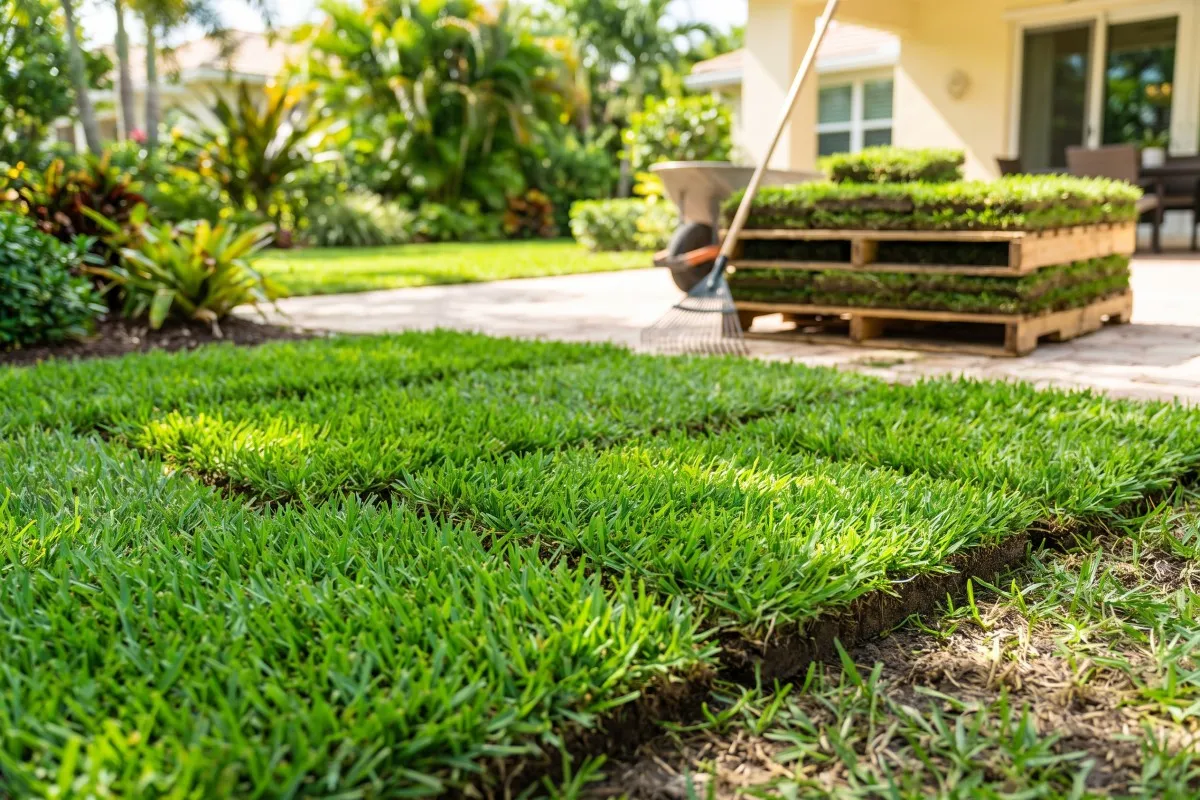
Once your lawn is past its first year, established sod care in Florida comes down to three moves done on the right rhythm: water deeply and only when the grass asks, mow to the height your variety wants, and feed inside the windows our climate and county rules allow. That is the whole job. The intensive 30-day watering is long behind you, and a mature lawn wants far less babysitting than the anxious first month suggested.
Most homeowners we talk with at follow-up have the opposite problem from new-sod owners. They are not underwatering a fragile lawn. They are still running the establishment schedule a year later, drowning healthy roots and feeding fungus. This guide is the routine our project managers hand off after a mature lawn has settled, calibrated to the sandy soils and the two hard seasons we work across Valrico, Riverview, Brandon, Apollo Beach, and the rest of Hillsborough and Manatee.
How established sod care in Florida changes after year one
The single biggest shift is watering. During establishment, roots have not knit into the soil yet, so the sod needs frequent, light watering to stay alive. A mature lawn is the reverse. Its roots reach into the top 8 inches of soil for St. Augustine and the other warm-season grasses we install, so it wants deep, infrequent soakings that pull those roots down and keep them there (UF/IFAS AE436).
Greater Tampa Bay sits in USDA hardiness zones 9b through 10b, where winter lows rarely fall below the mid-20s (UF/IFAS USDA Hardiness Zones). Central Florida averages a 330-day growing season (USDA Plant Hardiness Zone Map). Our lawns slow in the cool months but never truly go dormant. That is why established care is a year-round rhythm you adjust, not a routine you switch off in December.
Mowing height is set by your variety, not your mood
The fastest way to weaken an established lawn is to scalp it. Mow too low and you thin the canopy and stress the crown right when heat or disease is waiting. A thin canopy also hands weed seed the bare soil it needs. So the first thing to know is the correct height for what is actually growing in your yard.
- Standard St. Augustine cultivars like Floratam: 3.5 to 4 inches. Dwarf types such as Captiva or Seville: 2 to 2.5 inches (UF/IFAS ENH5).
- Zoysia, the medium to coarse types most homeowners run: 1.75 to 2.5 inches (UF/IFAS LH011).
- Bermuda under normal home management: 1 to 2 inches (UF/IFAS LH007).
Two rules cut across every variety. Never remove more than one-third of the blade in a single pass, and leave the clippings on the lawn to return nitrogen to the soil (UF/IFAS ENH5). Keep the blade sharp. A dull mower tears the leaf tip, and torn tips brown out and open the door to disease faster than a clean cut ever will. If you are not sure which grass you have, our sod variety comparison guide walks through how each one looks and behaves.
One more adjustment matters here. Mow taller heading into winter and into any forecast cold snap. The extra blade insulates the crown, and that is cheap insurance in a January frost.
Watering the mature lawn: read the grass, not the clock
Water a mature lawn on demand. That means you irrigate when the grass tells you it is thirsty, not on a fixed day of the week (UF/IFAS AE436). Learning the three drought-stress signals is the most useful skill an established-lawn owner can build: blades that fold or roll instead of lying flat, a blue-gray cast replacing green, and footprints that stay visible after you cross the yard.
When any one of those shows up, apply about three-quarters of an inch in a single cycle on our fast-draining sandy soils (UF/IFAS AE144). Water before dawn so the blades dry as the day warms. Then leave the controller alone until the signals return. In the March dry stretch that usually means roughly twice a week. In the rainy months from June onward it can mean almost never, because the afternoon storms already deliver more than the lawn can use. In the cool weeks it may stretch to every 10 to 14 days.
The full calibration method, timing your own sprinklers with a few cans so you know how long three-quarters of an inch takes, lives in our guide to watering established sod in Florida. If you installed the sand-bottom sod we cut fresh, this framework works the way it should, because the porous base lets roots run deep and drains fast after heavy rain.
The fertilization windows that fit Tampa Bay
Feeding a mature lawn is less about the product and more about the calendar, because two forces box in your timing: our summer rains and the county fertilizer ordinances. Hillsborough and Manatee both enforce a summer blackout from June 1 through September 30, banning nitrogen and phosphorus during the rainy months (Hillsborough County). Everything else is built around that closed window.
For an established St. Augustine lawn on Central Florida sand, plan on an annual total in the range of 2 to 5 pounds of nitrogen per 1,000 square feet, split across the open months rather than dumped in one heavy pass (UF/IFAS EP110). Keep any single application at or below one pound of nitrogen per 1,000 square feet, and lean on slow-release nitrogen so the feeding lasts and less leaches through the sand (UF/IFAS EP110). In practice that lands most Tampa Bay lawns on two spring feedings, one in April and one just before the May 31 cutoff. A single fall feeding follows in early October, once the ban lifts.
Skip fertilizer in the depth of winter. The grass is growing too slowly to use it, so you are just feeding weeds and washing money into the aquifer.
A season-by-season schedule for Central Florida
This is what established sod care in Florida looks like across a full calendar year, laid out the way we describe it at follow-up. The core habits hold. What shifts is the emphasis, month by month.
- January to March, dry and cool: Mow tall, every two to three weeks. Water only when the drought signs appear, roughly once a week and always before dawn. Hold fertilizer until the lawn greens and has needed mowing twice, usually late March into April.
- April to May, green-up: Mowing returns to weekly. This is your spring fertilizer window, so make the April and May feedings count before the blackout. Start scouting for chinch bugs in hot, sunny spots.
- June to September, rainy season and blackout: Turn the controller to its rain-sensor default and let storms lead. No nitrogen or phosphorus. Mow when blades are dry, and watch shady, low-lying areas for the fungus the humidity brings on.
- October to December, dry season returns: Feed in early October once the ban lifts, favoring a potassium-forward product for winter hardiness. Turn irrigation back on at deep, infrequent intervals. Stretch mowing back out as growth slows.
The rainy months are the ones that catch people. Overwatering a saturated lawn is the fastest route to disease we see, which is why we cover drainage and airflow in our rainy-season lawn care guide. For the full task-by-task version, the Tampa Bay lawn care calendar breaks it down month by month.
Established sod care in Florida, stripped to what matters
A mature Tampa Bay lawn is not fragile. It rewards restraint. The owners whose yards look best a few years out stopped watering daily and matched the mower to their grass.
If you are planning a new lawn or renovating a tired one across Hillsborough and Manatee, we are glad to walk your site and match the right sod to your sun, shade, soil, and traffic.

Fresh-cut sod installation, replacement, and delivery in the Tampa Bay area.
Continue reading
How Long Does Sod Last in Florida? A Tampa Bay Homeowner's Honest Guide
How long does sod last in Florida? An honest Tampa Bay answer: realistic St. Augustine lifespan, what shortens it, and how to stretch your lawn's years.
Lawn Care Calendar for Tampa Bay: A Month-by-Month Guide
A lawn care calendar for Tampa Bay Florida homeowners: what to mow, water, fertilize, and watch for pests and disease, month by month, all year.
How to Water Established Sod in Florida: A Tampa Bay Homeowner's Guide
How to water established sod in Florida: the deep, infrequent schedule for Tampa Bay's dry and rainy seasons, plus how to calibrate your sprinklers.