
Lawn Repair After Storm Damage in Florida: A Tampa Bay Recovery Guide
Lawn repair after storm damage in Florida: a step-by-step triage plan for torn turf, flooding, and erosion, plus how fast fresh sod restores a Tampa Bay yard.
Lawn repair after storm damage in Florida starts with one honest question, asked while the yard is still soft: what can be saved, and what has to come out? Most of the torn, flattened, silt-covered turf we walk across Riverview and Brandon after a tropical system looks far worse than it is. Some of it is already gone. The difference between the two is knowable, and it comes down to a few field tests you can run yourself in the first week. This is the triage plan we give every homeowner who calls us after the water drains.
A quick note before the steps. This guide picks up where our lawn care before a hurricane piece leaves off. If a storm is still in the Gulf, start there. If the wind has already passed and you are standing in the mess, start here.
Lawn Repair After Storm Damage in Florida: Walk the Yard First
Before you move a single branch, walk the whole lawn and photograph it. The photos matter if a tree or a neighbor’s screen enclosure landed on your sod and you decide to file a claim later. Then sort what you see. Standing water is one bucket, debris and silt a second, bare or scoured soil a third. Each is a different fix on a different clock, and treating them in the wrong order wastes the exact days that decide whether the grass lives or dies.
Tampa Bay sits in USDA hardiness zones 9b to 10a. Our warm-season grasses stay in active growth for most of the year and never go fully dormant. That is the single biggest thing working in your favor right now. A lawn still metabolizing can push new roots the moment conditions improve, so a stressed yard here recovers faster than the same damage would in a cooler zone up north. There is no wrong month to repair a storm-killed patch in this climate.
Step 1: Get the Water Off the Crown
Submerged turf is on a clock, and heat runs that clock fast. Research on flooded lawns finds that substantial turf loss begins after roughly four days of continuous submersion, with water temperature as the deciding factor. Florida floodwater after a late-summer storm sits at 80 degrees or higher. Warm water drowns grass far quicker than cool water does. So moving water off the low corners is the first job, ahead of mowing and well ahead of fertilizing.
If a spot will not drain on its own, break the crust at the edge with a shovel and let it run toward the street or a swale. Do not drive on it. Saturated sandy soil compacts under a truck or a trailer, and compacted sand loses the fast drainage that makes it work in the first place. Keep vehicles and tree crews on plywood paths until the ground firms up.
Step 2: Clear Silt and Debris Before It Smothers the Grass
Grass breathes and feeds through its blades. Anything sitting on top blocks the sunlight it needs to restart. So debris and mud come off as fast as you can manage them. UF/IFAS, in Promoting Turf Recovery Following a Hurricane, is blunt about the threshold: a layer of silt two inches or deeper should be removed as soon as possible. Lighter films still hurt. A lawn silted under more than an inch has little chance of coming back on its own.
Here is the order we work in on a silted lawn:
- Lift the big pieces by hand first, so you can see what is underneath
- Skim mud with a flat shovel, keeping the blade shallow so you do not tear live runners
- Rinse the leaf blades with a stream of fresh water to wash off the remaining film
- Rake the last of the silt loose and haul it off, rather than leaving it to cap the soil
Step 3: Flush the Salt If the Surge Reached You
Storm surge is the one floodwater that keeps hurting after it drains. St. Augustine and most Tampa Bay lawn grasses tolerate only brief contact with concentrated saltwater before the root zone starts to burn. Sand saves you here. UF/IFAS Extension notes that grasses rebound quickly once the soil is flushed with potable irrigation or a good rain, because a sandy profile leaches salt downward instead of holding it the way muck does. So flush heavily. Clemson’s saltwater remediation guidance calls for pushing a foot or more of fresh water through the root zone to carry the salts below the grass. On the deep sand we install sand-bottom sod into, that water moves fast.
Step 4: Run the Salvage Test
Now wait, and watch. This is the step most people skip, and it is the one that saves the most money. Once the water is gone and the blades are clean, give the lawn its window to declare itself. If new green growth appears within 7 to 10 days, the turf is recovering, and your only job from there is patience. Stay off it while it is soft. Keep the mower parked. Do not fertilize a stressed lawn, because feeding it only pushes top growth the damaged roots cannot support.
Turf that sat submerged past that 7-to-10-day mark usually does not come back, and no amount of watering revives it. The same goes for sections buried under thick silt or scorched by concentrated surge. Tug a questionable patch. Live sod resists and shows white roots. Dead sod lifts like a rug with brown, mushy undersides. For the gray-area spots, our guide on diagnosing bare and brown spots walks through the field tests that separate temporary stress from dead roots.
Step 5: Fix the Grade Before You Lay a Slab
Fast-moving water scours. Where it ran hard, it carried off the loose topsoil and left ruts, low spots, and exposed roots. That washout is its own repair, separate from the dead grass. Laying fresh sod over a changed grade just sets up the next problem, because the new low spot becomes the next pond.
Bring scoured areas back up to grade with clean fill or topsoil, then rake it smooth and firm, directing runoff away from the house and toward a swale. Sod Solutions covers the same regrading step in its hurricane recovery guidance. Learn your yard’s low corners, the ones that flooded first. Our write-up on grading and soil prep before sod goes down goes deeper on getting the base right, which decides more about the final result than the grass ever will.
Step 6: Cut Out the Dead, Lay Fresh Sod
What is left is the honest part. The size of the dead area sets the fix. A few isolated brown patches often close on their own as surrounding runners creep in over the weeks, and small gaps take plugs. When a whole low zone drowned or a scoured strip washed to bare dirt, fresh slabs of matching sod are the real answer, and our comparison of plugs versus full sod for repairs helps you judge which your situation calls for.
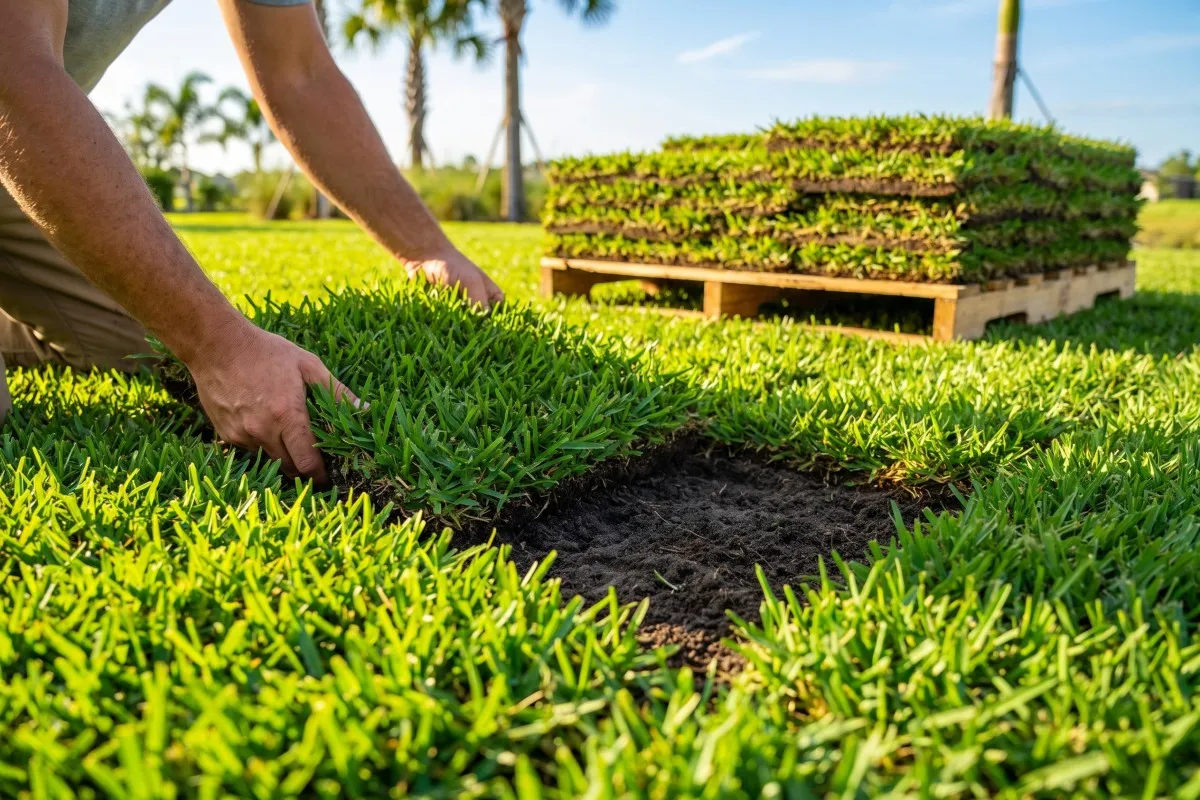
Cut the dead turf out cleanly, squaring the edges so new pieces butt tight against the living grass. We cut sod fresh right before installation and can lay most residential repairs the same day, matching your existing variety so the patch does not read as a patch once it knits in. Timing barely matters here. Because our grass grows nearly year-round, a repair put down in October roots just as well as one laid in April. One of our project managers walks the yard with you first and says plainly what will recover and what needs replacing, instead of selling you sod you do not need.
Most of the storm repairs we run in Riverview and Brandon are St. Augustine, with Zoysia and Bahia close behind. Matching the blade width and the color is the difference between a repair that disappears into the lawn and one you spot from the driveway for a year.
Caring for Storm-Repair Sod
New sod over a storm-stressed base needs the same attention any fresh install does, with one added watch. Keep it consistently moist while the severed roots regenerate, following the day-by-day plan in our new sod care guide. Then watch for fungus. All that trapped moisture in warm weather is exactly what brown patch and gray leaf spot wait for, the pattern we cover in our rainy season lawn care guide. If rings or greasy patches show up after the yard dries, treat them as disease, not lingering flood damage.
A storm-damaged lawn is rarely as lost as it looks on day one. Move the water, clear the silt, flush any salt, and give the turf its window before you decide anything. Most of it comes back. When part of it does not, that is the part we are here for. Walk your yard with us, and we will tell you honestly what to save and what to replace.

Fresh-cut sod installation, replacement, and delivery in the Tampa Bay area.
Continue reading
Lawn Care Before a Hurricane in Florida: Protecting Tampa Bay Sod
Lawn care before a hurricane in Florida: pre-storm mowing, irrigation shut-off, and how we triage waterlogged Tampa Bay sod once the water drains.

How to Check If New Sod Is Rooted in Florida: A Homeowner's Field Test
How to check if new sod is rooted in Florida with a simple tug test and edge-lift, plus the Tampa Bay timeline that tells you when to mow.
Install Sod During Rainy Season in Florida: What Tampa Bay Homeowners Need to Know
Planning to install sod during rainy season in Florida? Here is how Tampa Bay's summer storms help, where they hurt, and how to adjust watering.