How to Choose a Sod Variety in Florida: Read Your Yard's Sun, Shade, Soil, and Traffic
How to choose a sod variety in Florida starts in your own yard. Our four-factor checklist: sun, shade, soil, and traffic, done before any quote.
Learning how to choose a sod variety in Florida starts in your own yard, not in a catalog. Before any cultivar name comes up, we read four things: how much direct sun the area gets, how deep the shade runs under your trees, what your soil is like, and how hard the lawn gets used. Get those four right and the variety almost picks itself. Get them wrong and you pay to redo it. This is the same sun-shade-soil-traffic assessment our project managers walk on every site visit across Riverview and Valrico, turned into a checklist you can finish before you ever call for a quote.
One thing that will not narrow your options is the calendar. Tampa Bay sits in USDA Hardiness Zones 9b to 10a, and every grass we install is warm-season, growing most actively from spring through fall (UF/IFAS). Our mild winters mean sod roots here in nearly every month of the year. So the question is never when to sod. It is what, and that is decided by the four factors below.
How to Choose a Sod Variety in Florida: The Four Questions We Walk
Every good sod decision we have made starts with the yard answering four questions for us. Spend a day with these before you shop, and you will arrive at the estimate informed instead of guessing.
- Sun: How many hours of unobstructed, direct sunlight does the area get?
- Shade: Where does tree canopy or a wall throw the area into dense, low shade?
- Soil: Is the ground fast-draining sand, and what is its pH?
- Traffic: Who walks, plays, and digs on it, and how often?
Each one on its own can rule a grass out. Work them in order. Sun first, because it eliminates options faster than anything else.
Step 1: Count the Sun
Pick a sunny day. Check the area in mid-morning, then once more in late afternoon. Note how many hours get direct sun with nothing between the grass and the sky. That single number does more to decide your variety than any measurement that follows.
Florida’s most common St. Augustine, Floratam, wants six to eight hours of direct sun and has relatively poor shade tolerance (UF/IFAS). Count honestly. A yard that feels bright often clears only four or five hours of true direct sun once you watch it.
Step 2: Name the Shade
Sun hours tell you the ceiling. Shade tells you the floor, and in Tampa Bay the floor is usually set by a live oak. Most St. Augustine performs fine when up to about 30 percent of full sunlight is filtered through a high, thin canopy, per UF Extension, which is why the dappled light under a mature oak can carry a lawn that a dense, low laurel oak would smother in a season (UF/IFAS). Bermudagrass gives you none of that latitude. It thins fast under any meaningful shade, which is why UF/IFAS flags its poor cold and shade tolerance (UF/IFAS).
So look at the kind of shade, not just the hours. High filtered light is workable. Deep, all-day shade against a north wall is not. Here is the plain scale we use on the walk.
- Six or more hours of sun or bright filtered light: nearly any St. Augustine, including budget Floratam.
- Four to six hours: shade-selected cultivars only, led by CitraBlue and Palmetto. Older Bitter Blue still earns asks here too, tolerating areas with only six to seven hours of sun and keeping a deep blue-green color (UF/IFAS Extension).
- Under four hours of usable light: no St. Augustine reliably holds, and UF/IFAS recommends a shade-adapted groundcover instead (UF/IFAS).
That last line is the one homeowners most want to argue with, and we understand why. A thin patch under a big tree is frustrating. But watering a shade problem harder usually feeds brown patch, not the grass. We would rather tell you that up front than sell sod that browns out by the second summer. For the full cultivar breakdown, see our guide to shade-tolerant sod in Florida.
Step 3: Read Your Soil
Most yards we walk across Hillsborough and Manatee sit on sandy soil that drains fast and holds few nutrients. Good news: almost every grass we install tolerates sandy ground, so soil rarely rules a variety out. It does shape two things worth checking before you buy.
First, pH. St. Augustine and zoysia do best in near-neutral to slightly alkaline soil, roughly 6.5 to 7.5, while bahia and centipede prefer a more acid range around 5.0 to 6.0 (UF/IFAS). A ten-dollar soil test through your county Extension office tells you where you stand and saves a lot of guessing later. Second, drainage. Dig a hole about a foot deep and fill it with water. Does it drain within a few hours, or sit overnight? A spot that stays soggy changes which grass makes sense and whether the grade needs work first.
The bigger soil question, though, is not your ground. It is what the sod itself was grown on. We install sand-bottom sod, grown on sandy soil rather than organic muck, because it knits cleanly into Central Florida’s sandy base instead of laying a dense organic mat on top that traps water at the seam and slows rooting. Whichever variety you land on, the base it was grown on affects how fast it takes to your yard. We break that down in sand-bottom versus muck-bottom sod.
Step 4: Map the Traffic
How a lawn gets used matters as much as how much sun it gets. A grass that photographs beautifully but shreds under a dog run will disappoint you inside a season, so picture an honest week in the yard. Kids cutting the same corner to the gate. A dog patrolling the fence line every afternoon.
The traffic ranking runs almost opposite the shade ranking. Zoysia forms a dense, cushiony turf with good traffic tolerance and recovers well from compaction (UF/IFAS). Bermuda has the best wear tolerance and fastest recovery of the common Florida grasses, which is why it carries athletic fields. St. Augustine takes occasional foot traffic but thins in heavily walked paths and play zones. When a yard has both heavy shade and heavy traffic, which is a common pairing on older tree-lined lots, you have a genuine trade-off rather than a clean answer. We dig into managing it in our guide to sod for pets and high-traffic yards.
Put the Four Together Before You Call
Now line up your four answers and look for where they agree. A sunny, open, well-drained yard that takes a soccer game points one way. A shaded, tree-root-laced backyard with light foot traffic points another. Most yards are not uniform, either. The front may want one variety and the shaded side yard another, and splitting a property across two grasses is a normal, sensible outcome rather than a failure to decide.
Bring those notes to the estimate. When you can tell us “about five hours of sun on sandy, fast-draining ground, with a dog running the east fence,” we skip the guesswork and get straight to matching sod to the site. That is also the moment to be skeptical of anyone selling a one-size answer or a tidy performance guarantee, since no honest grower can promise how living grass will perform in a yard they have not read. For the questions worth asking once you are on the phone, see what to ask a sod installer in Tampa Bay.
You do not need to arrive with the cultivar picked. You need the four factors counted. Do that, and the conversation moves fast, because the yard has already told both of us most of what matters. When you are ready, we are happy to walk your property and cut fresh sod to fit what you found.

Fresh-cut sod installation, replacement, and delivery in the Tampa Bay area.
Continue reading
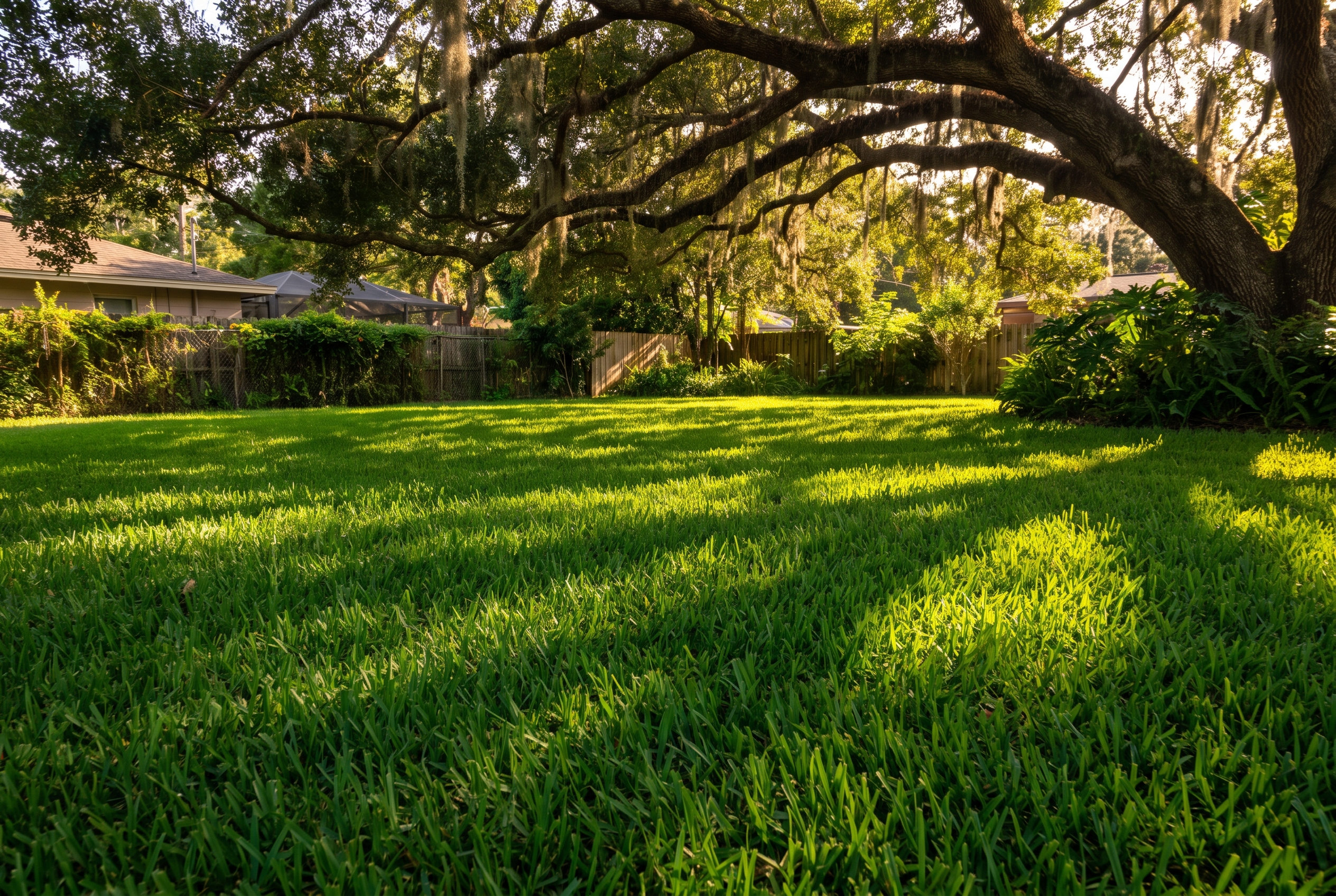
Shade Tolerant Sod in Florida: What Survives Under Tampa Bay's Tree Canopy
Shade tolerant sod in Florida is a short list. Here is what actually holds under mature oaks and palms in Tampa Bay, and what quietly fails.
Bitter Blue St. Augustine: The Underrated Shade Sod for Tampa Bay Yards
Bitter Blue St. Augustine in Tampa Bay is an underrated shade sod. Here is how we match it to a tree-heavy yard and install it to hold.
St. Augustine vs Zoysia Sod in Tampa Bay: Which to Choose
St. Augustine vs Zoysia sod in Tampa Bay comes down to sun and how hard the lawn gets used. Here's the step-by-step framework our crew uses to pick the right one.