
7 Questions to Ask Before Hiring a Sod Installer in Tampa Bay
The questions to ask a sod installer in Tampa Bay before you sign: seven that separate a real crew from a cheap one, from a family-owned team.
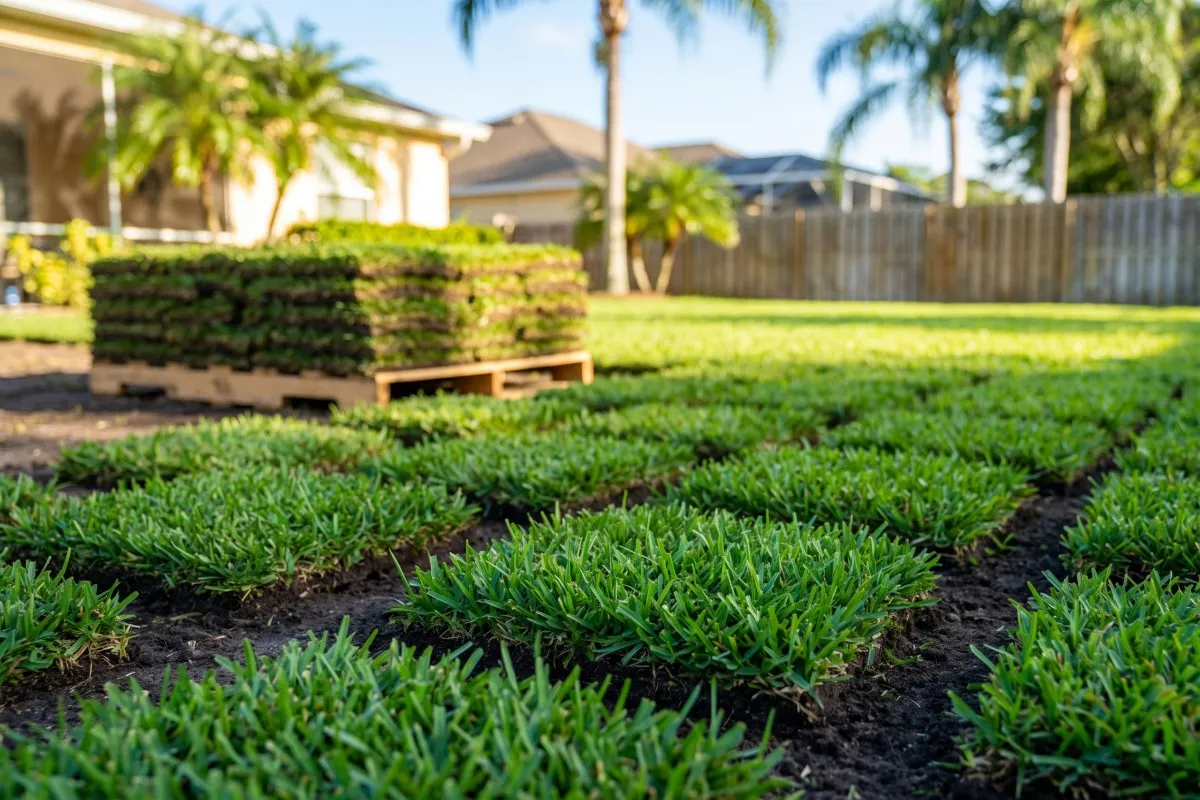
Before you let anyone tear up your yard, ask how the sod gets from the field to your soil. The questions to ask a sod installer in Tampa Bay are not really about price. They are about timing and drainage, and about who is liable when a crew and a truck spend a day on your property. We install sand-bottom sod across Riverview and Brandon. The same handful of things we check before buying from a field will tell you whether a bidder actually knows the work. Use them on every quote. Ours included.
Why the right questions separate the pros from the pretenders
Tampa Bay sits in USDA hardiness zones 9b through 10a, with a growing season that runs most of the year (UF/IFAS, USDA Hardiness Zones). That is why we can install nearly year-round. It is also the catch. The same heat and afternoon rain that let fresh sod root fast will punish a sloppy job just as fast. A lawn that browns at the seams three weeks after install almost never failed because of the grass. It failed on install day.
So when you are vetting a sod installation company, you are really testing for judgment. Cheap bids hide the corners a crew plans to cut. The questions below pull those corners into the open before you hand over a deposit. This is how to choose a sod company in Florida without learning the hard way.
1. “Is the sod cut fresh the morning you install it?”
This is the first thing we would ask, because it quietly decides everything else. Sod is a perishable crop. UF/IFAS and every serious grower press installers to lay it within about 24 hours of harvest, before it starts cooking from the inside on a hot pallet (UF/IFAS, Establishing Your Florida Lawn). A pallet cut this morning still holds its color and its stored sugars. One that sat two days at a depot has already spent both. You will not see that difference in the driveway.
A quality installer schedules the cut against your install date and coordinates delivery so the grass barely rests. If a bidder cannot tell you when the sod was harvested, assume it has been sitting. We go deeper on why harvest timing makes or breaks a lawn elsewhere.
2. “What soil is your sod grown on, sand or muck?”
Ask what the sod was grown on, then listen for whether they even know. Central Florida ground is sandy. Sod grown on sandy soil roots into your yard faster because the two soils match, and it drains better when the summer storms stack up. Muck-grown sod, farmed on dark organic soil, has to bridge two very different textures once it hits your lot, which slows rooting and can hold water.
We install sand-bottom sod for exactly this reason. It is one of the clearest ways to tell a thoughtful installer from one who buys whatever is cheapest that week. If the answer is a shrug, that is a quiet sod contractor red flag in Tampa Bay.
3. “Will you strip the old lawn down to bare soil first?”
New sod roots into clean ground. Not dead grass and old thatch. UF/IFAS is blunt that proper soil prep before planting drives how fast turf establishes and how much trouble it gives you later (UF/IFAS, Preparing to Plant a Florida Lawn). Laying fresh squares over an old lawn is the shortcut that saves a crew an hour and costs you the whole install.
We strip the existing material down to dirt as step one, so the new roots meet soil. When you read a proposal, look for demolition and removal spelled out in writing. A quote that stays vague about the old lawn is hiding a corner.
4. “How do you protect my sprinkler heads during removal?”
This one is short. It catches people off guard. Before any grading blade moves, a careful crew finds the irrigation heads and marks them. A rushed one shears them off during removal and hands you a repair bill. If an installer has never thought about your sprinklers, they have not thought about your yard.
5. “Do you hand-grade the soil for drainage?”
Grading decides whether rain sheets off toward the swale or pools against your slab for years. UF/IFAS recommends a slope of roughly 1 to 2 percent away from the house, and reminds installers to account for the thickness of the sod itself when setting final grade (UF/IFAS, Preparing to Plant a Florida Lawn). We grade by hand across the yards we walk. Machines skim. A rake reads the low spots a machine rolls right over. Ask a bidder how they handle drainage, and ask how they deal with the soggy corner you already know about. A real answer names the fall away from the foundation and the low spot you keep pointing at. A weak answer is “we’ll level it out.” On our flat Hillsborough and Manatee lots, where water has nowhere obvious to go, that difference decides whether your slab stays dry.
6. “Are you licensed for this work and carrying insurance?”
A skid steer and a crew will spend a day on your property. You want to know who covers it if a worker is hurt or a line is cut. Florida requires workers’ compensation coverage once a company has employees doing this kind of work, and general liability protects your property during the job (Florida Landscaping Insurance Requirements).
Plenty of low-priced “guys with a truck” carry neither. The low number is exactly why. Ask for proof of insurance and a local business you can actually find later. You want a real business standing behind the work, not a phone number that goes dark in October.
7. “What does the quote include, and are you selling me a warranty?”
Get the scope in writing: total square footage, the grass variety, removal and haul-off, grading, and cleanup. Vague quotes are where the surprises live. Demolition is the line most often left off. This is the backbone of any honest sod installation checklist in Hillsborough County.
Then flip the usual advice. A lot of guides tell you to demand a warranty. But sod is a living plant, and no crew controls your water and weather once the truck pulls away. We think most guarantees are a marketing line priced into a padded bid, and we explain why sod has no honest warranty in detail. An installer who levels with you about that is usually more trustworthy than one selling paper. What protects your money is fresh sod, the right soil, correct grading, and the first two weeks of watering. Not a certificate.
Walking the yard with you first
Here is the short version to keep on your phone while you collect bids:
- Freshness: cut the morning of install, not stored on a pallet
- Soil: grown on sand to match our ground, not muck
- Prep: old lawn stripped to bare dirt, in writing
- Sprinklers: heads located and protected before grading
- Grade: hand-graded to fall away from the house
- Coverage: liability and workers’ comp you can verify
- Scope: square footage and demolition both spelled out
We are a family-owned crew, and owner Clint is hands-on with the yards we install. If you are weighing quotes across Riverview, Brandon, Valrico, or Sun City Center and want someone to walk the property and help you pick the right sod for your sun, shade, and traffic, we are glad to be one of the bids you compare against this list.

Fresh-cut sod installation, replacement, and delivery in the Tampa Bay area.
Continue reading
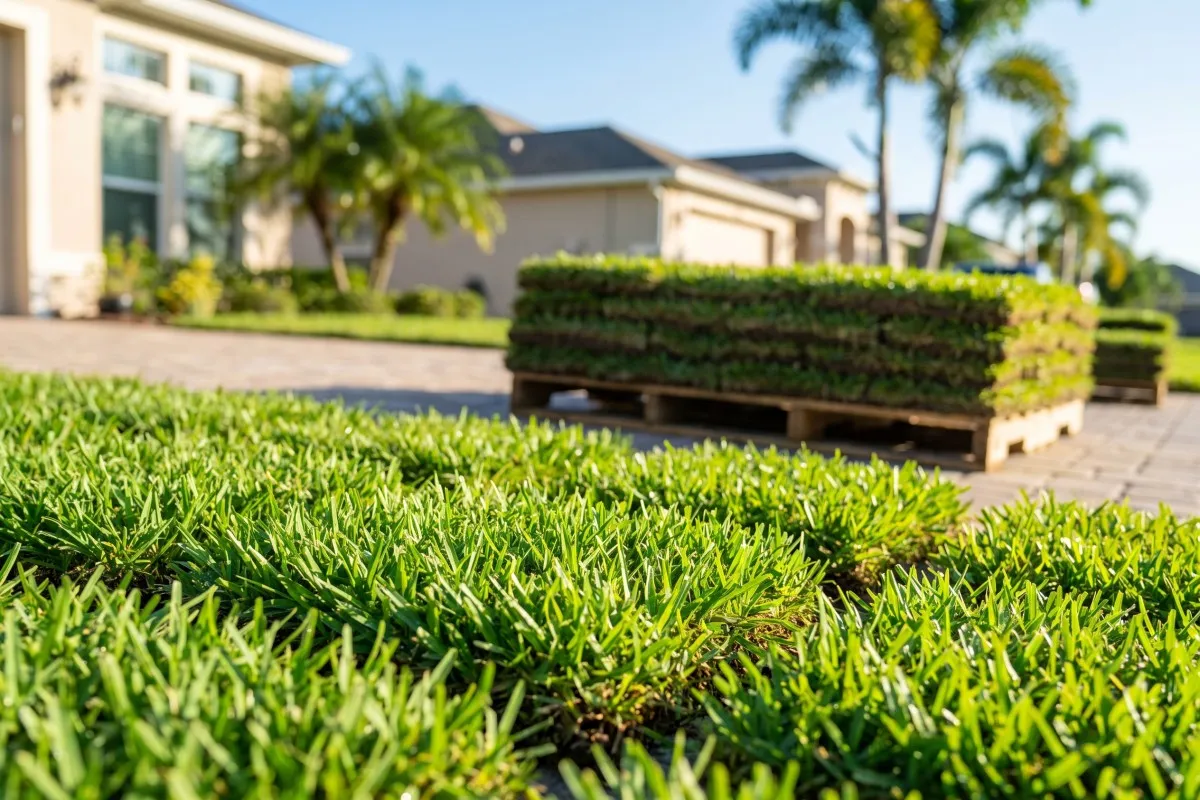
The Best Time to Install Sod in Florida? Why Tampa Bay Is a Year-Round Window
The best time to install sod in Florida isn't a single season. Here's how Tampa Bay's climate opens a year-round window, season by season.
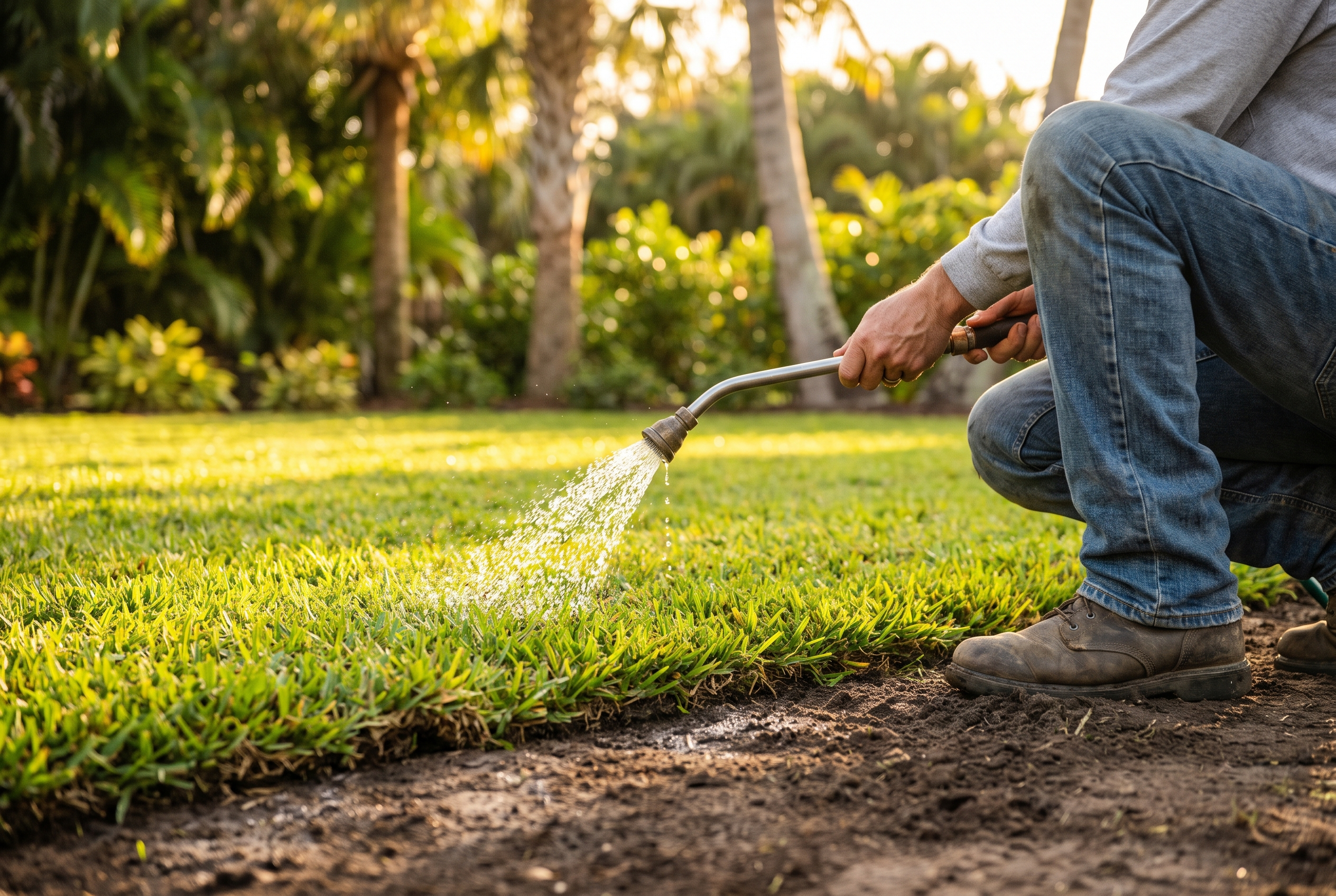
Sod Warranty in Florida: Why It Won't Save Your Lawn
The truth about a sod warranty in Florida: why sod is a living product, why guarantees are often gimmicks, and what actually protects your new lawn.
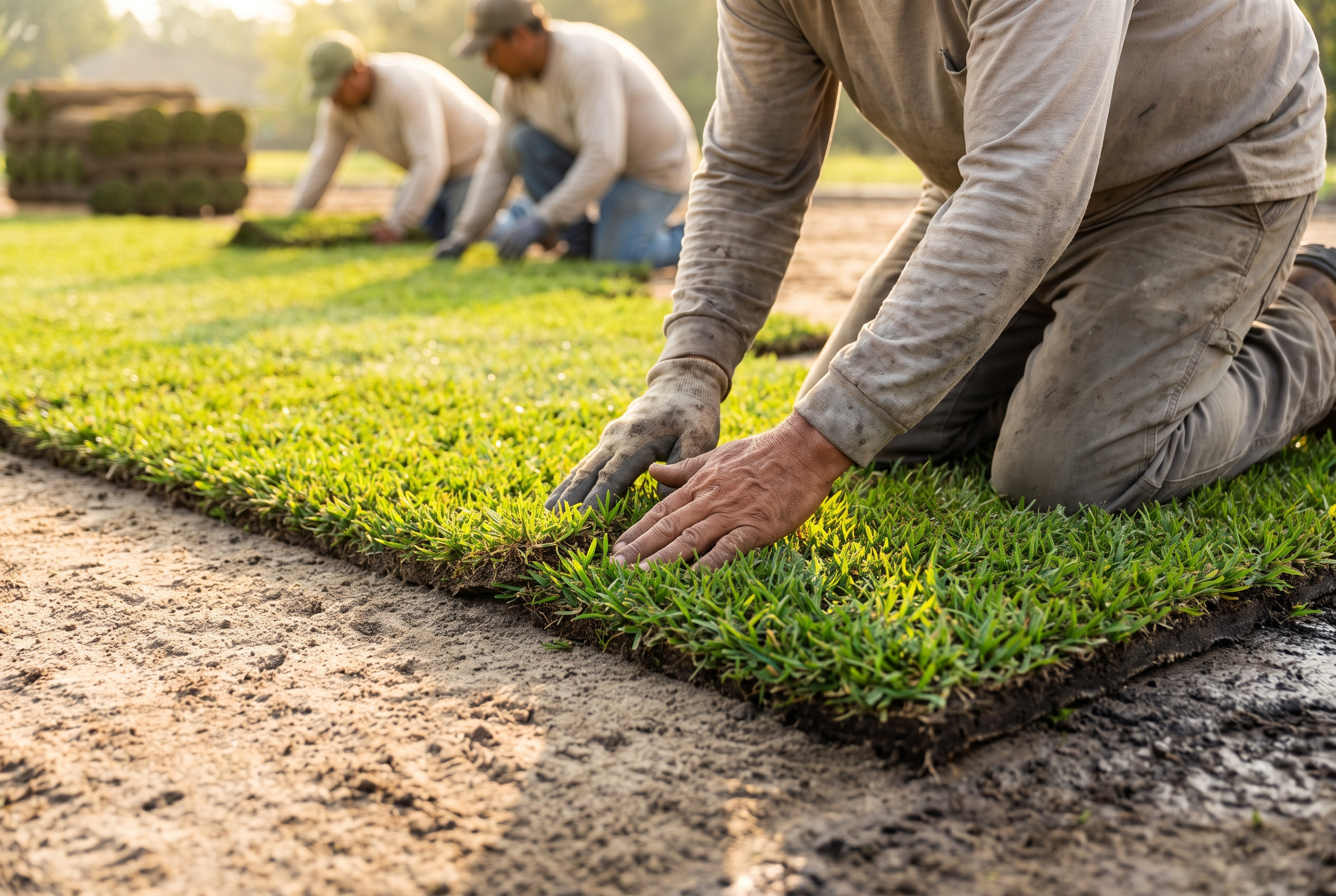
The Sod Installation Process in Florida: What Happens on Install Day in Tampa Bay
The sod installation process in Florida, behind the scenes: what our Tampa Bay crew does on install day and how to spot a job done right.