
Kid- and Pet-Friendly Sod: How to Keep Your Tampa Bay Lawn Green Under Heavy Use
The pet friendly sod Tampa Bay families need: which varieties survive dogs and kids, plus how we recover a beaten lawn without a full reinstall.
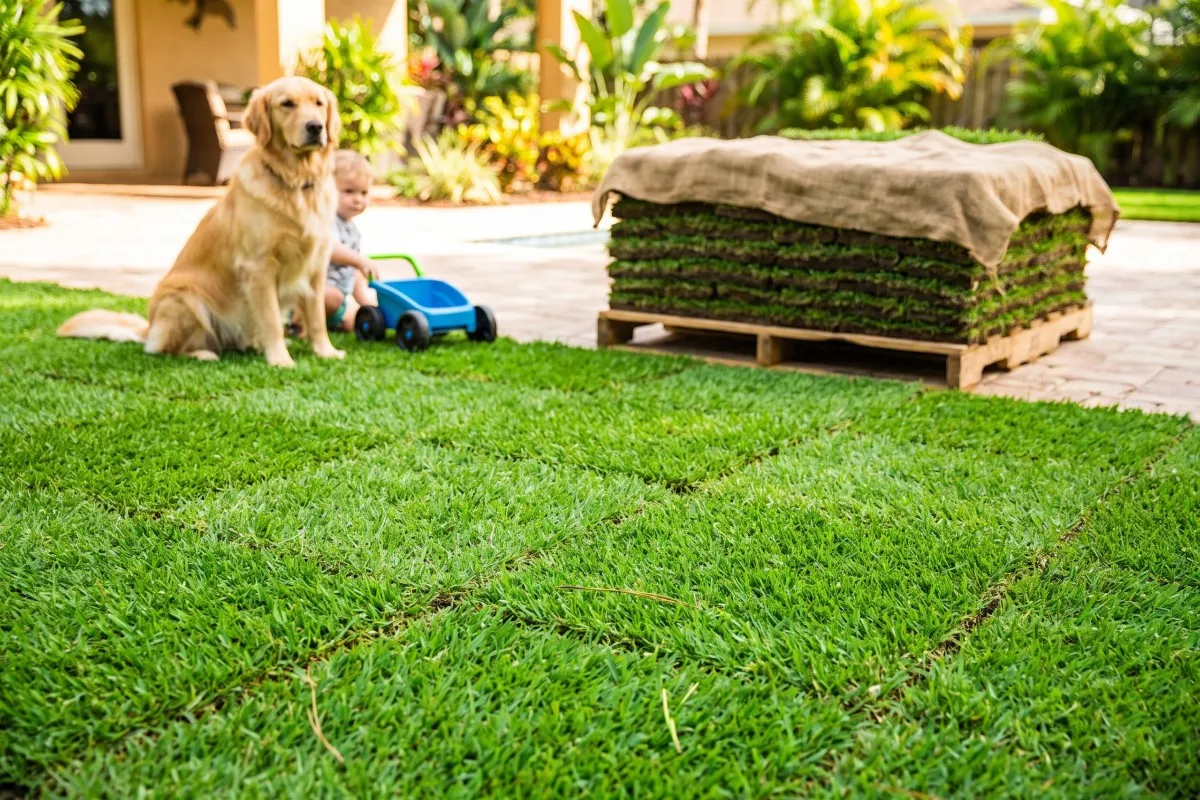
The most durable pet-friendly sod in Tampa Bay is Bermuda or Zoysia, not St. Augustine. Both spread by runners that knit worn patches closed on their own, which is exactly what a yard run hard by dogs and kids needs. St. Augustine still has its place, and we install plenty of it. It just wears thin under constant play and fills back in slowly, so it is the wrong pick for a true high-traffic lawn (UF/IFAS).
We are a family-owned crew, and most of the lawns we walk across Riverview and Brandon belong to families. Kids sprint the same line to the trampoline. A dog patrols the same fence every afternoon. This guide walks you through choosing sod that holds up, when it is safe to turn the family loose on it, and how we bring a beaten lawn back without tearing it out again.
Tampa Bay sits in USDA Hardiness Zones 9b-10a, and every grass we install is warm-season, growing most actively from spring through fall (UF/IFAS). Our winters stay mild. That means sod roots into local soil in nearly every month of the year, so a damaged lawn can be repaired whenever the damage happens, not only in some narrow window.
What Pet-Friendly Sod Means for Tampa Bay Families
Pet-friendly is not one trait. It is two working together: wear tolerance and recovery speed. Wear tolerance is how much traffic the blades and crowns take before they thin. Recovery is how fast the grass refills the damage once it happens. In an active yard, recovery matters more. Every grass gets torn up eventually. The durable lawn is the one that grows back before the bare spot spreads.
That is why grasses that spread by rhizomes and stolons, the underground and above-ground runners, beat bunch-type grasses in a family yard. A worn lane is not permanent damage on those grasses. It is a gap the turf is built to close.
Matching the Grass to Your Household
Here is how the three warm-season grasses we install sort out for homes with kids and dogs. We cover the full lineup in our sod variety comparison guide, but this is the traffic-and-recovery read.
- Bermuda is the toughest recovery grass we lay. It spreads aggressively by both rhizomes and stolons and refills worn lanes faster than any other warm-season turf in our zone, which is why it turns up on athletic fields and golf fairways. The trade-off is sun. It needs full sun and thins badly in shade. If your lot is open and your dog runs it hard, this is our first call. We go deeper in our Bimini Bermuda field read.
- Zoysia is the balance pick. It takes traffic well, holds a dense carpet-like canopy that hides minor wear, and tolerates a little more shade than Bermuda. It recovers slower than Bermuda but faster than St. Augustine, and its fine blade feels good under bare feet. For families who want durability without a full-sun-only grass, this is usually where we land. See our Empire Zoysia guide.
- St. Augustine is the shade and comfort grass. Floratam and the newer cultivars give you a lush, soft lawn that handles the shaded coastal yards Bermuda cannot. But UF/IFAS rates its wear tolerance as poor, and it does not hold up to repeated foot traffic (UF/IFAS). We still install it for light-to-moderate use, especially under trees. On a real dog run, it thins.
One honest note. No grass survives a shaded yard run by a large dog. If that is your lot, the fix is often part sod and part hardscape, like a mulch or gravel path along the fence line the dog patrols. We would rather tell you that up front than sell you sod set up to fail.
How Long Before the Family Can Use New Sod
New sod is fragile at first. It needs its roots in the ground before it takes a beating, and the timeline here holds the way it does anywhere warm-season sod is grown: roots begin to anchor within about two weeks, but full establishment runs six to eight weeks (Bethel Farms). Light foot traffic is usually fine after two to three weeks. Heavy use, meaning kids at full sprint and dogs digging, should wait closer to four to six weeks.
You can check without guessing. Grab a corner and tug gently. If it lifts, the roots have not taken. If it resists, they are anchoring (Bethel Farms). We tell every customer the same thing on install day: keep the kids and the dog off the new lawn as much as you can for the first month, and water on the schedule we leave you. That patience is what buys a lawn that lasts. Our first 30 days of new sod care guide lays out the watering step by step.
Repairing Dog Damage Without a Full Reinstall
Most pet damage never needs new sod at all. Two problems show up most often: yellow-to-brown urine spots, and bare dug-out patches along fences and gates.
Urine burn is a nitrogen and salt problem, not a disease (Sod Solutions). Dog urine is concentrated nitrogen, and too much in one spot burns the grass the same way over-fertilizing does. The fix starts with water. Soak fresh spots deeply to flush the salts down through our sandy soil before they scorch the crowns (Sod Solutions). For spots already dead, rake out the dry thatch. On Bermuda or Zoysia the surrounding runners will usually creep back over the warm months. St. Augustine spots often need a plug or a fresh square dropped in.
That is where the repair method matters. Our sod plugs versus full sod guide covers when a patch beats a reinstall. When damage is scattered and small, we keep a few fresh-cut squares from your install and drop them into the worst spots. When a whole zone is gone, like a shaded dog run that never had a fair chance, we treat the cause first. Our bare and brown spot repair guide walks the full process.
A little management cuts the damage a lot. Keep the water bowl full so urine runs more dilute. Rotate where the dog goes when you can, or set up a gravel potty corner along the fence (Lawn Love). Neither trick is glamorous. Both save you patching the same spot all summer.
Treatments That Are Safe Around Pets
Fertilizer and weed control are where families get nervous, and they are right to read labels closely. The re-entry interval, the time pets must stay off after a treatment, is the one number on the bottle with real regulatory weight behind it (Lawn Care Journal). Follow it exactly.
The rules of thumb we give customers:
- Liquid herbicides: keep pets off until the spray is fully dry, which can be a couple of hours in dry heat and much longer on a humid, still day.
- Granular weed-and-feed: water it in, then keep pets off until the lawn dries again, generally around 24 hours per the label.
- Plain fertilizer: it carries no EPA re-entry interval, but keep the dog off until it is watered in anyway, since the granules smell interesting to them.
Damp grass or visible residue means it is not dry yet, and any rain or irrigation soon after application restarts the clock (Lawn Care Journal). When in doubt, wait the extra hour.
Florida’s Climate Cuts Both Ways
Our long warm season cuts both ways. From May through September, Bermuda and Zoysia grow fast enough to close a worn lane in weeks instead of months. But the same heat that speeds the repair is the heat that keeps everyone outside wearing the lawn down. Kids stay out longer. The dog stays out longer.
Getting It Right for Your Yard
Choosing pet-friendly sod comes down to reading your yard honestly: sun, shade, how hard the dog runs it, and how much repair you are willing to do yourself. Get the grass right and Tampa Bay’s climate does much of the recovery work for you. Get it wrong and you patch the same bare lane every year.
If you want a second set of eyes, our project managers walk the yard with you, check the sun and soil, and match the sod to how your family actually uses the space. When you are ready, we install sand-bottom sod cut fresh right before it goes down. Reach out and we will help you pick a grass that holds up.

Fresh-cut sod installation, replacement, and delivery in the Tampa Bay area.
Continue reading
Why Is My New Sod Turning Yellow? Troubleshooting the First 30 Days in Florida
New sod turning yellow in Florida? Learn the three causes in the first 30 days and a simple decision path to adjust water, treat, or call your installer.
7 Sod Installation Mistakes Tampa Bay Homeowners Make (And How to Avoid Them)
The 7 sod installation mistakes Florida homeowners make most, what each one looks like weeks later, and how our Tampa Bay crews avoid every one.
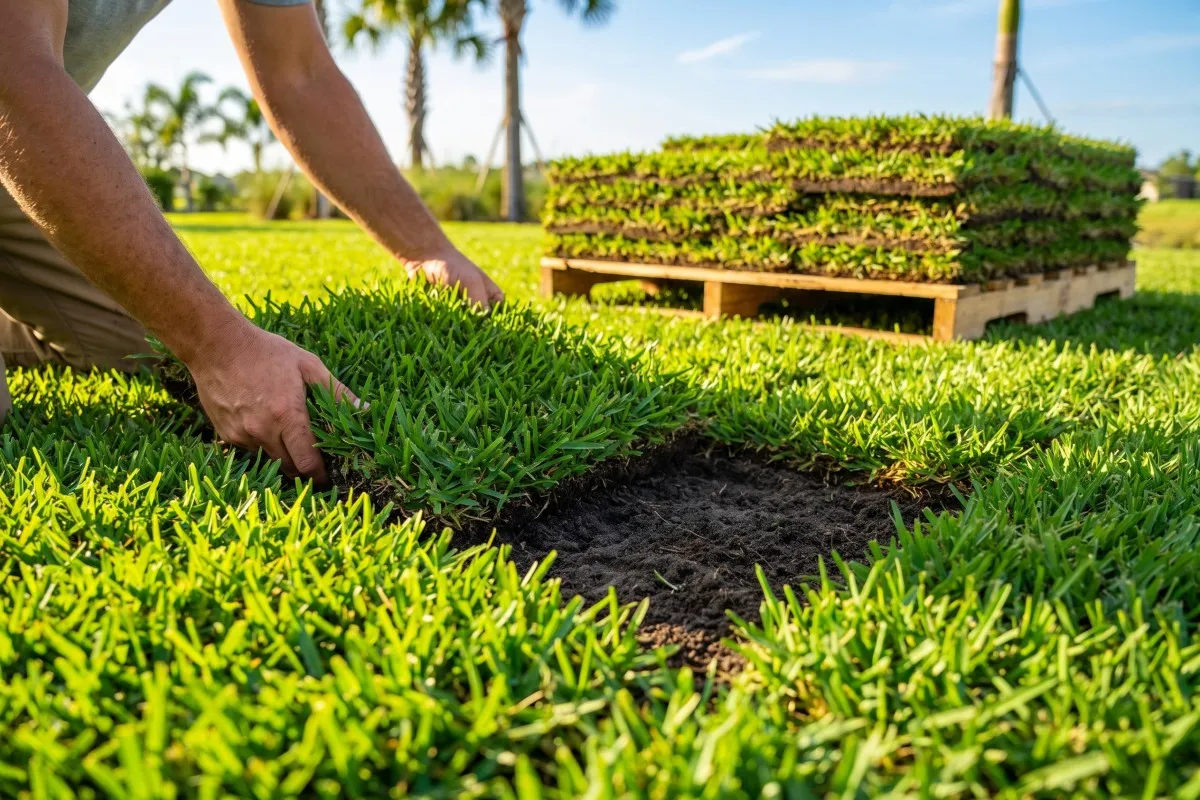
Lawn Care Before a Hurricane in Florida: Protecting Tampa Bay Sod
Lawn care before a hurricane in Florida: pre-storm mowing, irrigation shut-off, and how we triage waterlogged Tampa Bay sod once the water drains.